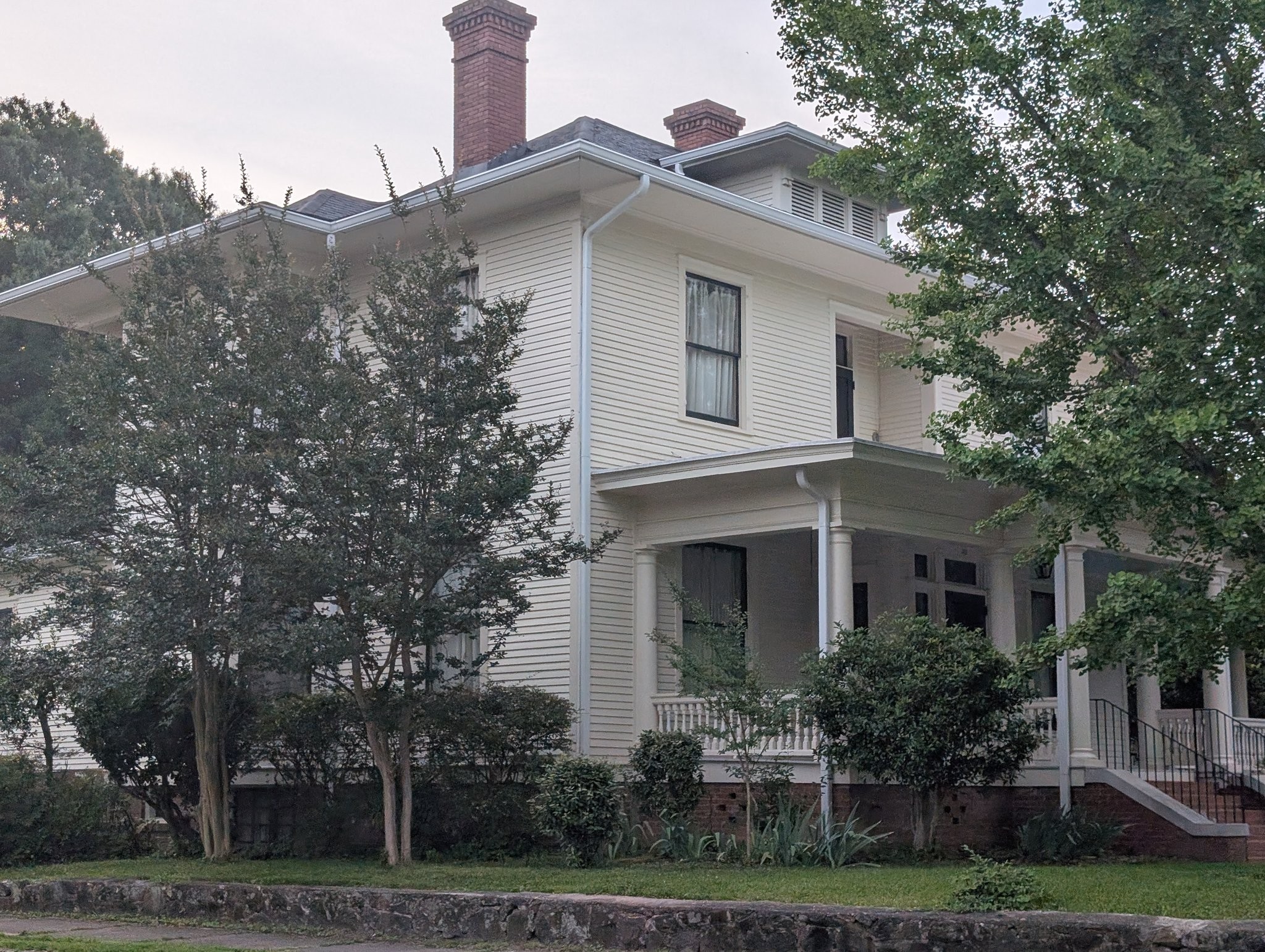
William E. Simpson house ca 1910
Constructed around 1910, the William E. Simpson House reflects a pivotal era in Rock Hill’s history when the city was experiencing significant growth driven by textile manufacturing, railroad commerce, and expanding educational and commercial institutions. As Rock Hill emerged as one of the most prosperous communities in the South Carolina Piedmont, residential development flourished, producing neighborhoods characterized by well-crafted homes that reflected the ambitions and success of their owners. The Simpson House stands as a representative example of this period of expansion and civic confidence.
Architecturally, the residence embodies characteristics commonly associated with the Colonial Revival movement, one of the most popular architectural styles of the early twentieth century. The house likely features balanced proportions, a prominent front porch, and restrained decorative detailing inspired by America’s colonial architectural heritage. These traditional design elements are often combined with practical vernacular construction methods and materials, creating a residence that is both elegant and functional. Such homes conveyed permanence, respectability, and a sense of tradition that appealed to many families during the period.
The house is associated with William E. Simpson and the generation of residents who helped shape Rock Hill’s development during the decades surrounding the turn of the twentieth century. As the city’s economy diversified and its population increased, homes such as the Simpson House became important components of emerging residential neighborhoods. These dwellings provided comfortable accommodations for families whose work and civic involvement contributed to the growth and stability of the community.
Today, the William E. Simpson House remains an important reminder of Rock Hill’s early twentieth-century residential heritage. Its architectural character and historical associations illustrate the transformation of the city from a modest railroad town into a thriving industrial and commercial center. As a surviving example of the homes built during this formative period, the residence contributes to the historic character of Rock Hill and preserves a tangible connection to the people and neighborhoods that shaped the city’s development.