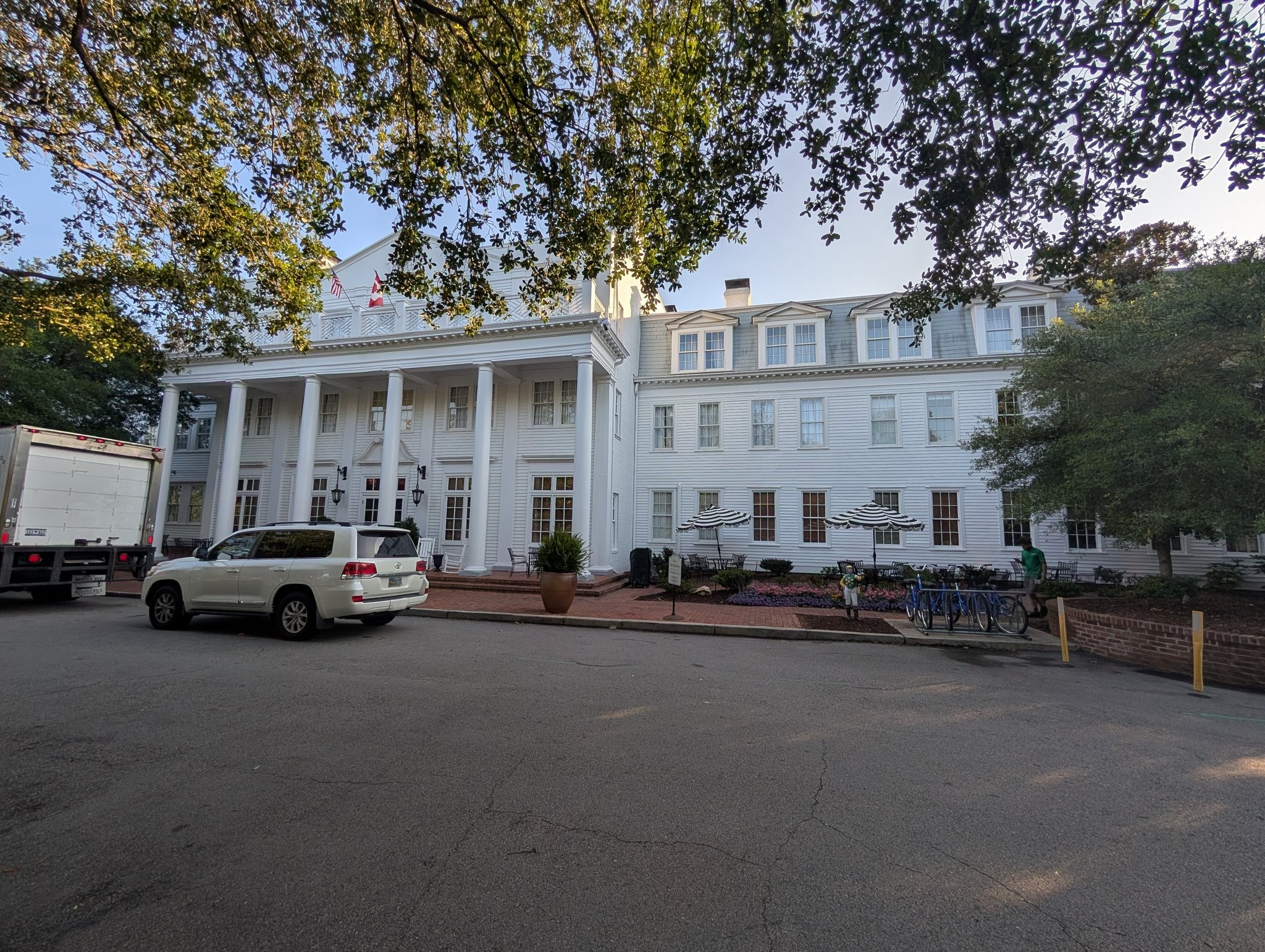
Wilcox Hotel ca 1898 in Aiken
Constructed in 1898, the Wilcox Hotel stands as one of Aiken’s most distinguished landmarks and a lasting symbol of the city’s celebrated Winter Colony era. Established by Frederick Sugden Wilcox in the wake of the devastating fire that destroyed the nearby Highland Park Hotel, the inn quickly became the social and cultural heart of winter life in Aiken, welcoming generations of wealthy northern visitors who came south to enjoy the region’s mild climate, equestrian pursuits, and refined society. Among its guests were industrialists, politicians, international dignitaries, and members of some of America’s most prominent families.
Architecturally, the hotel evolved over several decades into an elegant blend of Colonial Revival and Second Empire influences. The three-story, wood-frame structure rests upon a masonry foundation and features weatherboard siding, a standing-seam metal roof, and an irregular plan composed of a central block flanked by asymmetrical wings added during successive expansions between 1900 and 1928. Broad verandas, gracious public rooms, and a welcoming porte cochere contributed to the building’s reputation for sophistication and Southern hospitality.
Occupying a prominent site along Colleton Avenue overlooking the former railroad corridor, the Wilcox became synonymous with Aiken’s emergence as one of the South’s premier winter resorts. Remarkably, it is the sole surviving example of the grand resort hostelries that once defined the city’s seasonal social life. Listed in the National Register of Historic Places in 1982, the hotel remains an enduring architectural and cultural icon, preserving the elegance and traditions of Aiken’s Gilded Age resort heritage.