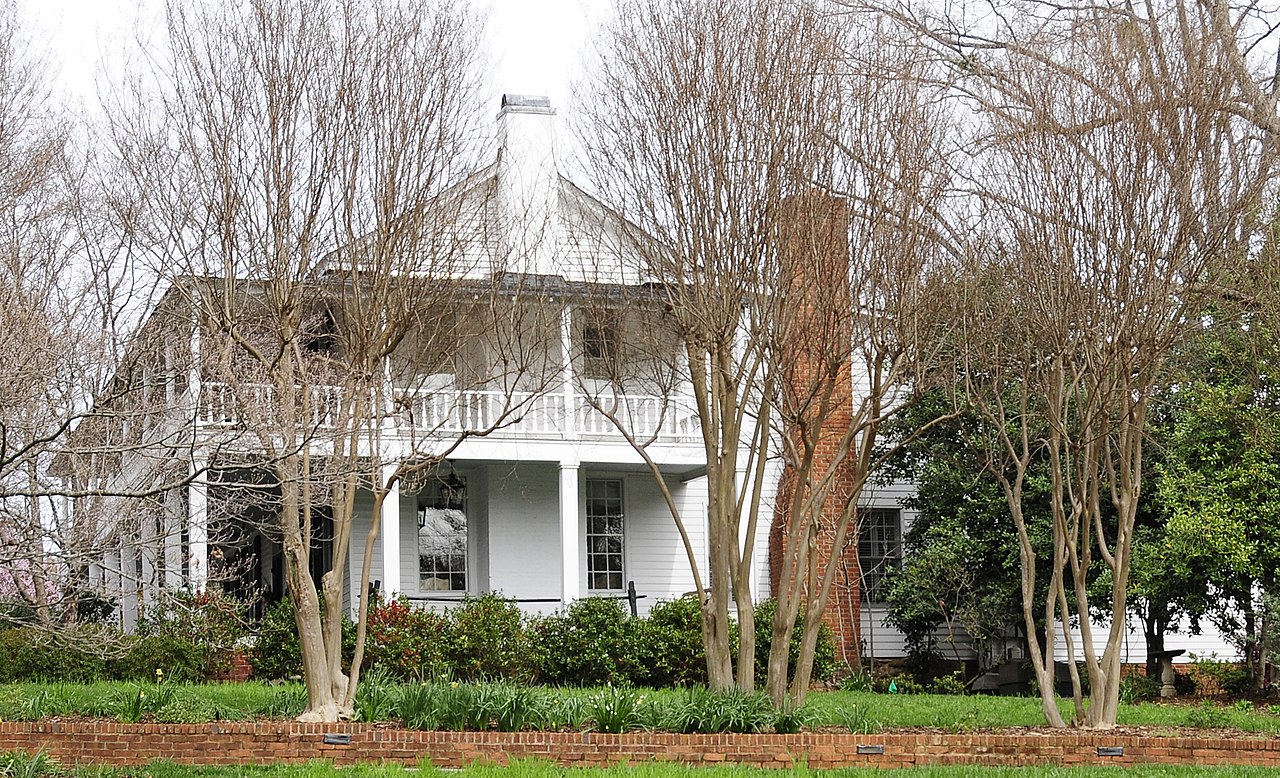
Whitehall
Whitehall, located at 310 West Earle Street in Greenville, is one of the city’s oldest and most distinguished historic residences—a graceful symbol of cooler summer retreats and Early Republic prominence. Built in 1813 as a summer home by Charlestonian statesman Henry Middleton, the house sits on land once owned by early Greenville pioneer Elias T. Earle, weaving together threads of national history and local development.
Designed in a Barbadian architectural style favored by Lowcountry elites escaping oppressive heat, Whitehall features wide first- and second-story piazzas—open galleries that create shaded, breezy living spaces. The simple white clapboard façade, shuttered windows, and gabled roof evoke a serene and spacious country home suited for restful summers in the Upcountry
Henry Middleton, a descendant of signer Arthur Middleton and once U.S. Senator, Governor of South Carolina, and Minister to Russia, used the home until selling it around 1820 to George Washington Earle, son of Elias T. Earle. The Earle family retained the property for generations thereafter. Governed and maintained by locally prominent owners, Whitehall has served as a quiet witness to Greenville’s early transformation and was recognized on the National Register of Historic Places in 1969.
The house remains sited in a lush, tree-shaded lot, evoking the pastoral charm once more common in Greenville before its urban expansion. Architectural experts note that dwellings like Whitehall—early, intact, and well-situated—are increasingly rare in the Piedmont region. Its continued preservation offers a vital glimpse into the area’s residential history and landscape architecture of the early nineteenth century.
Whitehall is more than an antique frame dwelling—it’s a serene architectural testament to colonial politics, seasonal migration patterns, and early Upstate life. From its 1813 construction as a breezy weekend escape for one of South Carolina’s most influential leaders to its enduring presence on Earle Street, the house embodies both quiet elegance and deep historical resonance. Today it stands as one of Greenville’s rare architectural treasures, offering a window into the genteel rhythms and social prestige of an era long past.