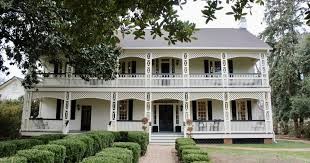
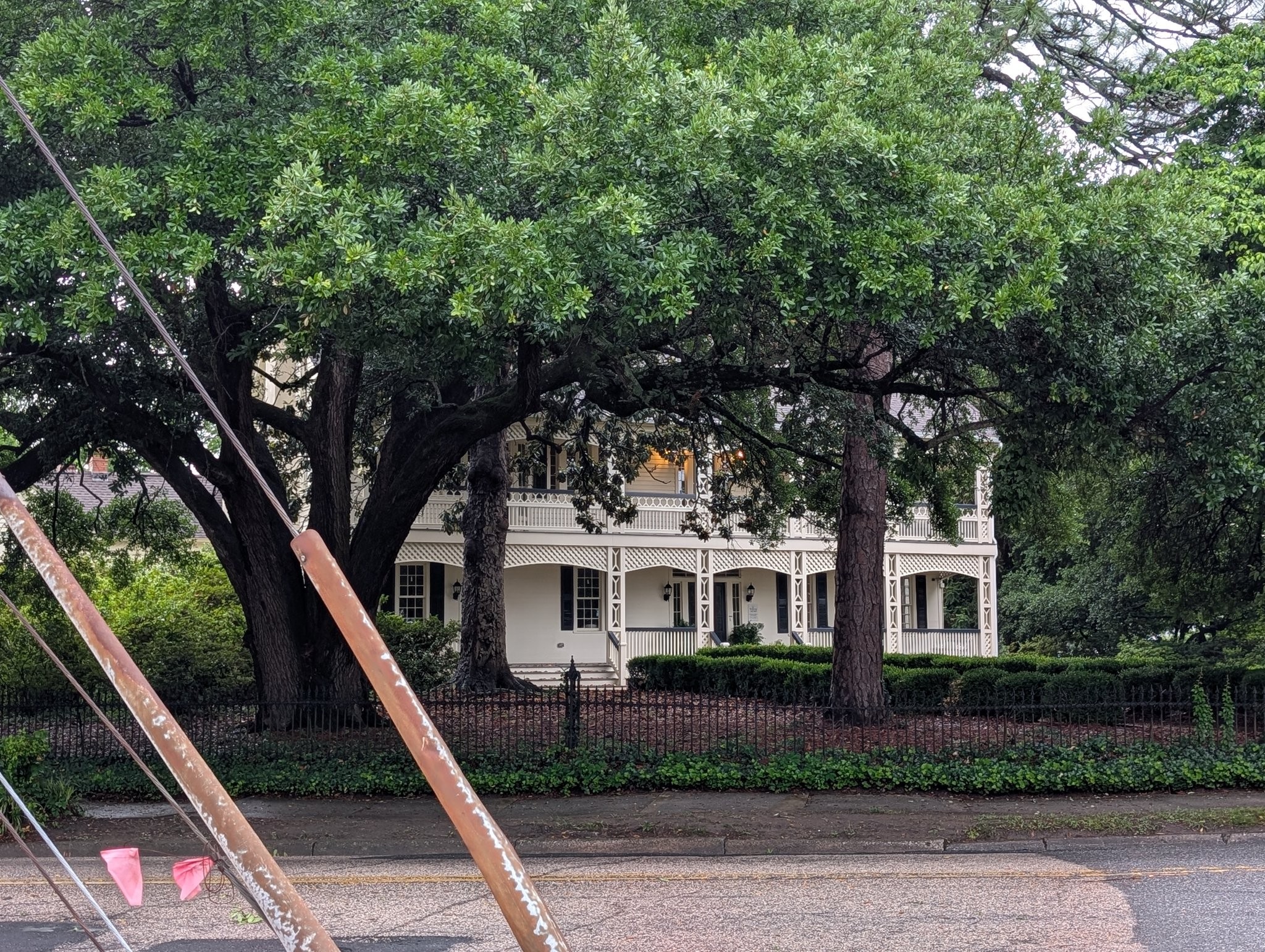
White House ca 1829
Constructed around 1829, the White House represents one of the earliest surviving-era domestic landmarks associated with the pre–railroad settlement period in what would later become Rock Hill. Built decades before the rise of the textile industry and the arrival of the railroad, the residence reflects the agrarian foundation of York County during the early nineteenth century, when the landscape was defined by scattered farmsteads, plantation holdings, and small rural communities tied to regional trade routes.
The White House is associated with the White family, an early settler lineage whose presence reflects the patterns of landholding and agricultural development that shaped the region prior to Rock Hill’s incorporation and industrial expansion. In this early period, residences such as this functioned as both domestic centers and working farmsteads, reflecting a self-sustaining rural economy in which agriculture formed the backbone of daily life and local commerce.
Architecturally, a house of this era in the South Carolina Piedmont would typically reflect vernacular Federal or early Greek Revival influences, interpreted through local building traditions and available materials. Such structures were often characterized by simple, symmetrical forms, gabled roofs, central or side-hall plans, and restrained exterior detailing. Construction methods emphasized hand-hewn timber framing, weatherboard siding, and practical layouts designed for function and durability rather than ornamentation.
The White House predates the dramatic transformation that would come with the railroad’s arrival in the 1850s and Rock Hill’s subsequent emergence as an industrial and commercial center. As such, it stands as a rare architectural and historical link to the rural landscape that once dominated the area. Over time, surrounding lands were gradually reshaped by development, transportation corridors, and the growth of Rock Hill, making early nineteenth-century structures like this increasingly significant as tangible reminders of the region’s pre-industrial past.
Today, the White House remains an important symbol of York County’s early settlement history. It offers valuable insight into the domestic life, building traditions, and agricultural foundations that defined the region in the decades before Rock Hill’s rise, preserving a direct connection to the area’s earliest architectural and cultural landscape.