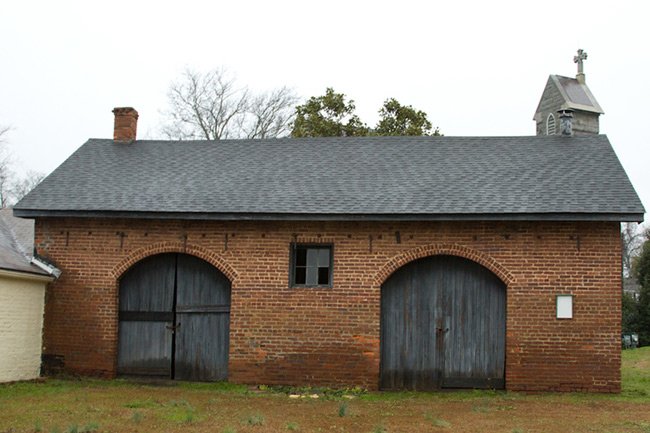
Village Blacksmith in Edgefield
Tucked into the historic streetscape of Edgefield, the Village Blacksmith stands as a vivid reminder of the craftsmanship and daily labor that once powered small-town life. Dating to the late nineteenth or early twentieth century, this modest yet essential structure represents a time when the rhythmic ring of hammer on anvil was a familiar and necessary sound in communities across the rural South.
As a working blacksmith shop, the building would have served as a vital hub of activity, where skilled tradesmen forged and repaired tools, fashioned hardware, and shod horses for local farmers and travelers alike. In an era before industrial mass production reached into every corner of the countryside, the village blacksmith was indispensable part artisan, part problem-solver, and wholly woven into the fabric of everyday life.
Architecturally, the structure reflects the straightforward vernacular style typical of utilitarian buildings of its kind. Simple in form and constructed for function above all else, the shop likely featured wide openings to accommodate wagons and equipment, along with a central forge that defined the interior workspace. Its materials and design speak to durability and practicality, shaped by the needs of both the craftsman and the community he served.
Beyond its physical presence, the Village Blacksmith site carries a broader cultural significance. It evokes a time when trades were learned by hand, passed down through generations, and sustained by close-knit local economies. The blacksmith’s role extended beyond mere labor he was a trusted figure whose work supported agriculture, transportation, and the steady rhythm of rural life.
Today, the Village Blacksmith endures as a quiet historical touchstone within Edgefield, offering a tangible link to the town’s industrious past. Though the forge has long since cooled, the building continues to tell the story of skill, resilience, and the enduring value of craftsmanship in shaping the community’s heritage.