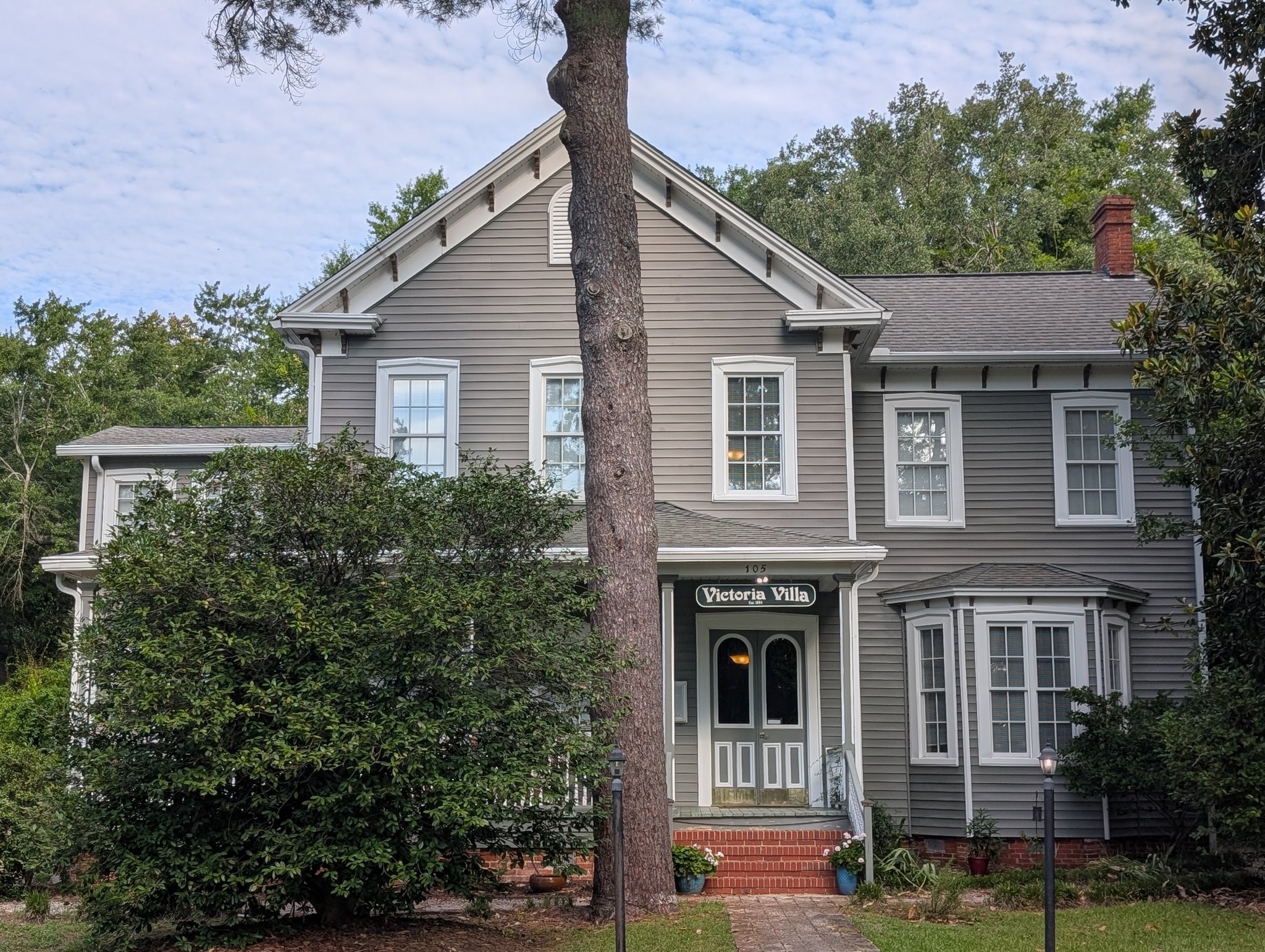
Victoria Villa ca 1884
Victoria Villa, constructed circa 1884, is a significant late nineteenth-century residence that reflects the early growth of Aiken as an internationally recognized winter resort. Built during the formative years of the city’s celebrated Winter Colony, the house was erected as affluent northern families began establishing seasonal homes in Aiken, attracted by its mild climate, healthy environment, and expanding reputation for equestrian sports and outdoor recreation. Situated within one of Aiken’s historic residential neighborhoods, Victoria Villa represents the transition from the city’s railroad-era origins to its emergence as one of the South’s premier winter destinations.
Architecturally, Victoria Villa embodies the picturesque character favored during the Victorian era. The frame residence displays an irregular massing, steeply pitched rooflines, decorative wood detailing, and expansive porches that provided shaded outdoor living spaces suited to Aiken’s climate. Elements of the Queen Anne style are evident in its asymmetrical composition, varied roof forms, and ornamental craftsmanship, while later Colonial Revival influences introduced through early twentieth-century updates reflect the evolving architectural tastes of successive owners. Set amid mature landscaping, the residence maintains the informal elegance that became a hallmark of Aiken’s historic estates and cottages.
Victoria Villa is historically significant as an early contributor to the architectural and cultural landscape established by Aiken’s Winter Colony. Constructed during the period when the city’s identity as a resort community was taking shape, the house illustrates the type of comfortable yet architecturally sophisticated residences that attracted prominent seasonal visitors from the Northeast. Together with neighboring homes, churches, stables, and sporting facilities, Victoria Villa contributes to the historic character that defines Aiken’s nationally recognized Winter Colony heritage. Its continued preservation provides an important link to the city’s late nineteenth-century development and to the traditions that earned Aiken lasting prominence as one of America’s distinguished sporting communities.