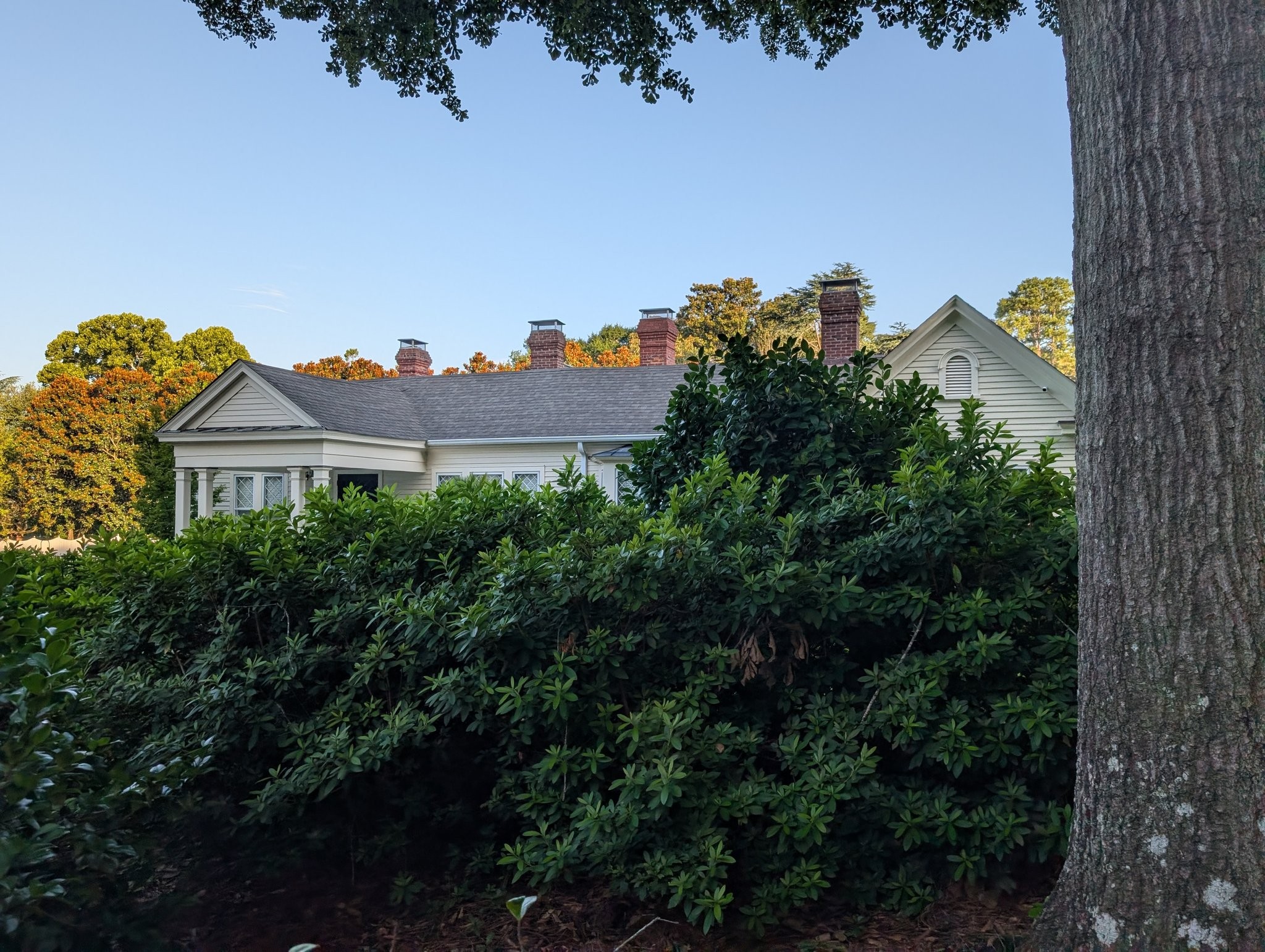
Uncle John’s Cabin ca 1917
Constructed circa 1917, Uncle John’s Cabin is a picturesque example of the small-scale residential and retreat architecture associated with Aiken’s Winter Colony during the early twentieth century. Built during the First World War era, the property reflects the continued appeal of Aiken as a seasonal refuge for leisure, health, and equestrian pursuits, even during a period of national uncertainty and global upheaval.
Architecturally, Uncle John’s Cabin embodies the informal cottage tradition that became a defining feature of Aiken’s residential landscape. The structure is typically characterized by its modest scale, wood-frame construction, and weatherboard siding, with design elements emphasizing simplicity, comfort, and harmony with the surrounding pine-dominated environment. A broad porch or veranda likely serves as a central feature, reinforcing the importance of outdoor living and seasonal relaxation in the mild South Carolina climate.
The cabin’s evocative name suggests a personal and affectionate association, consistent with Aiken’s tradition of naming cottages and retreat homes to reflect family connections, individual character, or whimsical sentiment. Such properties often functioned as guest houses, secondary dwellings, or seasonal retreats connected to larger estates, offering a more intimate and informal living environment within the broader social fabric of the Winter Colony.
During the time of its construction, Aiken’s identity was firmly rooted in its equestrian culture and outdoor sporting traditions, including polo, fox hunting, horseback riding, tennis, and golf. Residences such as Uncle John’s Cabin provided essential support to this lifestyle, serving as quiet refuges where residents could enjoy rest between social events and sporting activities.
Set within the historic residential and recreational landscape of Aiken, the cabin contributes to the architectural diversity that distinguishes the city’s Winter Colony heritage. Its modest scale and informal character stand in contrast to the grand estates of the period, yet it remains an important part of the layered domestic environment that defines Aiken’s historic identity.
Today, Uncle John’s Cabin endures as a charming reminder of Aiken’s early twentieth-century resort culture, preserving the simplicity, warmth, and relaxed elegance that have long been hallmarks of the city’s architectural and social history.