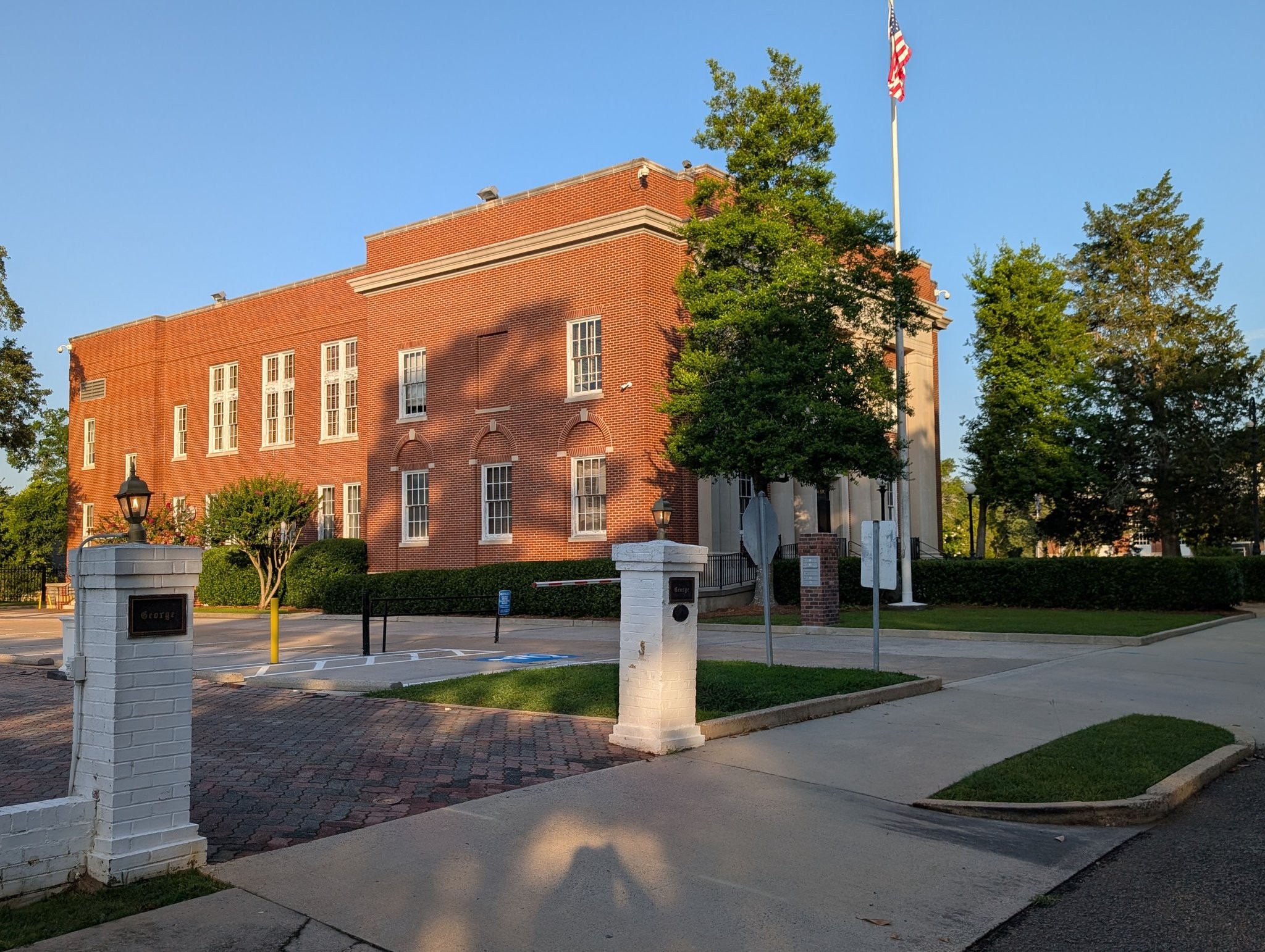
U.S. Courthouse ca 1935
Constructed circa 1935, the U.S. Courthouse in Aiken stands as a commanding expression of federal architecture during the mid-Depression era, reflecting both the permanence of national institutions and the expanding civic importance of Aiken within South Carolina during the early twentieth century. Erected during a period of substantial federal investment in public works, the building embodies the restrained dignity and monumental character associated with New Deal–era governmental architecture.
Architecturally, the courthouse is representative of the simplified Classical Revival and Stripped Classical styles favored for federal buildings in the 1930s. Its composition emphasizes symmetry, proportion, and durability, typically expressed through a strong rectilinear form, masonry construction, and understated classical detailing. While ornamentation is restrained compared to earlier Beaux-Arts precedents, the design maintains a sense of civic authority through its ordered façade, prominent entry treatment, and balanced arrangement of windows and structural bays.
The building’s materials and craftsmanship reflect the federal government’s commitment to creating enduring civic landmarks during a time of economic hardship. Smooth stone or brick surfaces, carefully articulated cornices, and simplified pilasters or recessed panels contribute to a dignified yet modernized classical aesthetic. The interior would have been designed to accommodate federal judicial functions, with courtrooms, offices, and public circulation spaces arranged to emphasize accessibility, order, and institutional clarity.
As a federal courthouse, the building played a central role in the administration of justice for Aiken and the surrounding region, serving as a venue for civil and criminal proceedings and reinforcing the presence of federal authority at the local level. Its construction in the mid-1930s also reflects the broader expansion of federal infrastructure during the New Deal era, when courthouses, post offices, and civic buildings were constructed across the country as symbols of stability and public investment.
Situated within Aiken’s civic landscape, the U.S. Courthouse contributes to the architectural narrative of the city’s historic core, complementing earlier commercial and institutional structures while marking a transition toward more modern governmental design principles. Its presence underscores Aiken’s continued importance as a regional center during a pivotal period in American history.
Today, the U.S. Courthouse remains a significant landmark within Aiken’s built environment, valued for its architectural restraint, historical associations, and enduring role in the civic life of the community. It stands as a tangible reminder of the federal presence during the 1930s and the era’s commitment to creating enduring public architecture rooted in classical tradition and modern efficiency.