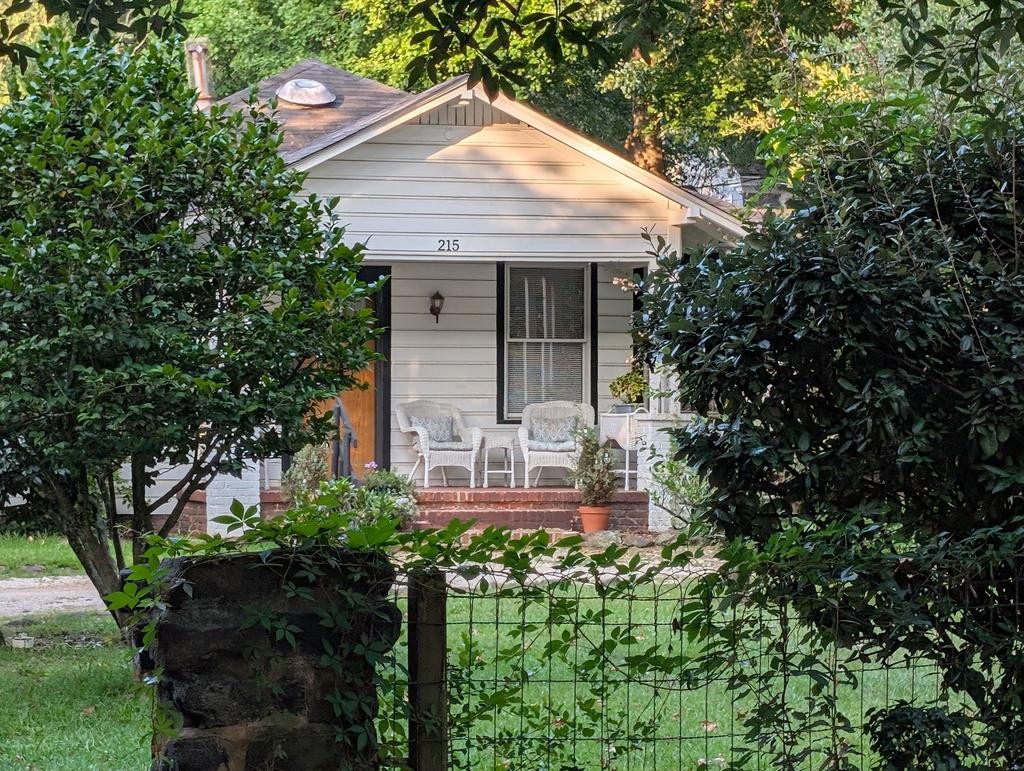
Tuck-A-Way ca 1928
Tuck-A-Way, constructed circa 1928, is a picturesque Winter Colony cottage located on South Boundary Avenue SE in Aiken, South Carolina. Built during the final decade of significant Winter Colony development, the residence reflects the continued popularity of Aiken as a premier winter destination for affluent Northeastern families drawn to the city’s equestrian traditions, mild climate, and refined social life. The house occupies a landscaped setting characteristic of the neighborhood, where thoughtfully designed cottages and estates were carefully integrated into the natural environment to create an atmosphere of relaxed elegance.
Architecturally, Tuck-A-Way is representative of the Colonial Revival-inspired domestic architecture that dominated Aiken’s residential construction during the 1920s. The frame dwelling is characterized by its balanced composition, weatherboard exterior, gabled roof, and welcoming porch, all executed with the restrained detailing that distinguished many of the city’s seasonal residences. Designed to provide both comfort and sophistication, the house emphasizes informal living through generous interior spaces and a close relationship to its surrounding gardens and mature trees. Its scale and craftsmanship complement neighboring Winter Colony properties while reinforcing the cohesive architectural character of the district.
Tuck-A-Way is historically significant as a contributing resource within the Aiken Winter Colony Historic District, where it illustrates the city’s remarkable transformation into one of America’s foremost sporting and resort communities during the late nineteenth and early twentieth centuries. Constructed at the height of Aiken’s national prominence as a center for polo, fox hunting, horse racing, and other equestrian pursuits, the residence represents the enduring appeal of the Winter Colony lifestyle. Today, Tuck-A-Way continues to contribute to the historic streetscape and architectural legacy of Aiken, preserving the character and atmosphere that have long distinguished the city’s nationally significant Winter Colony neighborhoods.