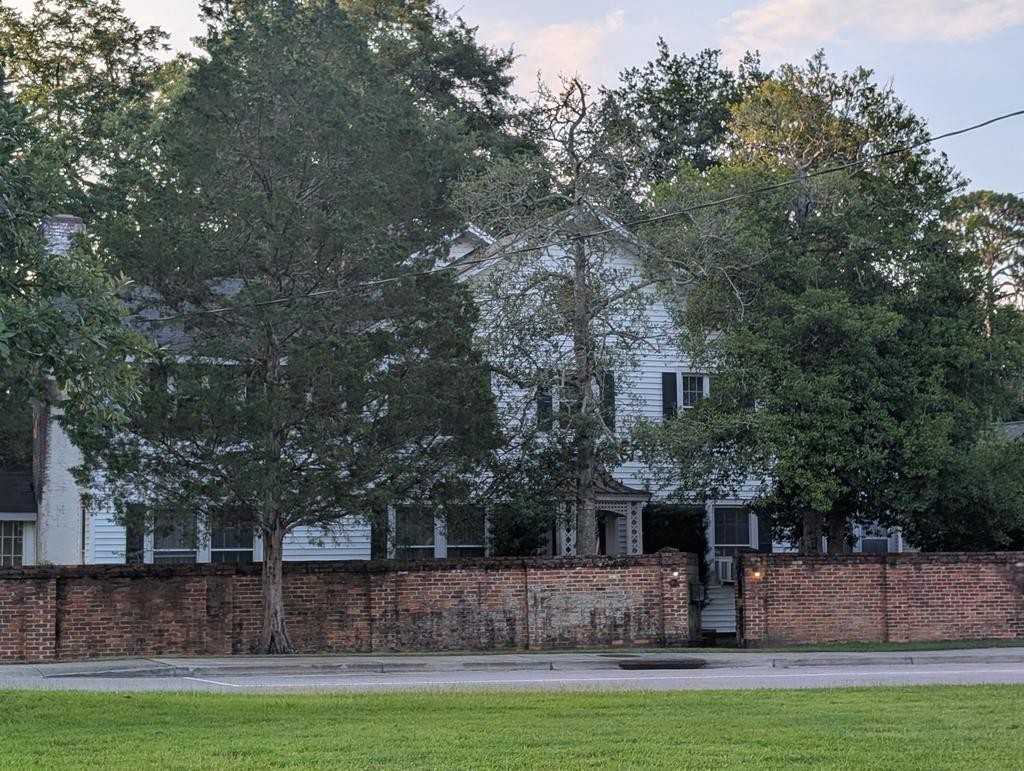
The Windows ca 1850
The Windows, constructed circa 1850, is among the oldest surviving residences in Aiken and represents the city’s earliest period of development following its establishment as a health resort and railroad community during the mid-nineteenth century. Located on South Boundary Avenue, the house predates much of the surrounding Winter Colony development and reflects the evolution of Aiken from a modest summer retreat into one of the nation’s most celebrated winter sporting resorts. Over the course of its history, the residence has been carefully maintained and adapted while retaining its historic character and continuing to serve as a prominent landmark within one of Aiken’s most distinguished residential neighborhoods.
Architecturally, The Windows is a substantial frame residence that exhibits characteristics of the Greek Revival tradition, tempered by later Victorian and Colonial Revival influences acquired through successive alterations during the late nineteenth and early twentieth centuries. The dwelling features a symmetrical composition, weatherboard siding, broad porches, and tall sash windows that provide abundant natural light and ventilation—features well suited to Aiken’s mild climate. Its generous setbacks, mature landscaping, and relationship to neighboring historic residences reinforce the picturesque qualities that have long defined South Boundary Avenue. The evolution of the house over time reflects changing architectural tastes while preserving the essential form and craftsmanship of the original mid-nineteenth-century structure.
The Windows is historically significant for its association with Aiken’s earliest residential growth and its continued role in the development of the city’s nationally recognized Winter Colony. As wealthy seasonal visitors transformed Aiken during the late nineteenth and early twentieth centuries, earlier residences such as The Windows were incorporated into an expanding landscape of cottages, estates, stables, and sporting facilities that gave the community its distinctive identity. Today, the house remains an important contributing resource to Aiken’s historic architectural fabric, illustrating nearly a century of residential evolution while embodying the city’s unique blend of antebellum heritage and Winter Colony tradition.