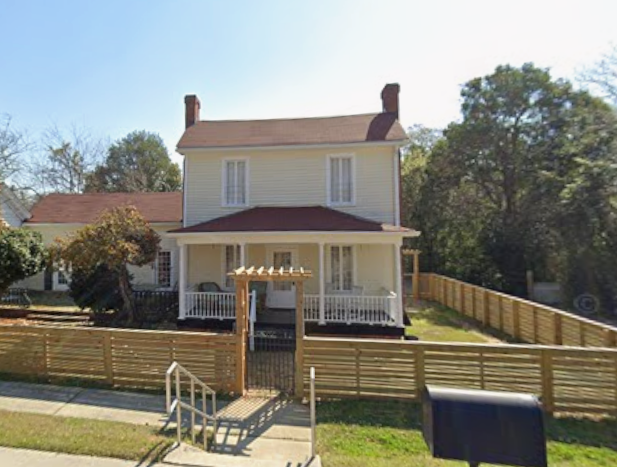
Tea Tray ca 1890
Constructed circa 1890, Tea Tray is a notable historic residence associated with the early development of Aiken’s Winter Colony and the city’s transformation into one of the South’s most fashionable winter resorts. Built during the late nineteenth century, the cottage reflects the architectural traditions and lifestyle preferences of seasonal residents who were drawn to Aiken’s mild climate, scenic landscapes, and opportunities for outdoor recreation. With its picturesque character and association with the residential growth of the period, Tea Tray contributes to the historic fabric of Aiken’s distinguished neighborhoods.
Architecturally, Tea Tray represents the informal elegance commonly associated with late nineteenth-century resort cottages. The residence displays characteristics of Victorian-era domestic design, including wood-frame construction, balanced proportions, generous porch spaces, and carefully arranged windows that provide natural light and ventilation. The use of traditional materials and restrained decorative detailing reflects the craftsmanship of the period while creating a comfortable and welcoming atmosphere. Like many Aiken cottages of its era, the design emphasizes a close relationship between interior spaces and the surrounding landscape, allowing residents to enjoy the region’s pleasant climate.
The construction of Tea Tray coincided with the rise of Aiken’s Winter Colony, when affluent families from the Northeast established seasonal homes throughout the community. These residences became centers of hospitality and social activity, supporting the traditions of riding, hunting, golfing, and informal gatherings that defined winter life in Aiken. The cottage’s scale and character reflect the preference for comfortable, gracious retreats rather than imposing urban residences, a quality that remains one of the defining features of Aiken’s historic residential landscape.
Today, Tea Tray remains an important example of Aiken’s late nineteenth-century residential heritage. Its architectural character, association with the Winter Colony era, and contribution to the city’s historic streetscape preserve an important link to the period when Aiken gained national recognition as a premier winter resort community. The cottage continues to embody the charm, craftsmanship, and relaxed elegance that have long defined Aiken’s historic neighborhoods.