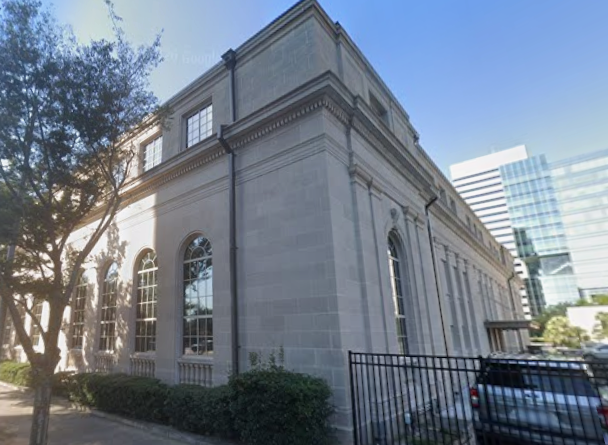
Supreme Court of SC ca 1921
The South Carolina Supreme Court building in Columbia, dating to approximately 1921, represents the importance of the judicial branch of state government and the continued development of Columbia as the political and institutional center of South Carolina. Constructed during the early twentieth century, the building reflects a period when state government was expanding its facilities and adopting more monumental architectural forms to express stability, permanence, and civic authority. As the home of the state’s highest court, the property has played an important role in the administration of justice and in the legal history of South Carolina.
Architecturally, the building reflects the restrained classicism favored for important governmental and institutional structures during the early twentieth century. Its formal composition, carefully proportioned elevations, monumental entrance, and emphasis on symmetry communicate the dignity and authority expected of a judicial institution. Classical architectural traditions were particularly appropriate for courthouses and government buildings because they conveyed associations with order, law, reason, and democratic government. The building’s substantial construction and formal detailing reinforce its civic role within Columbia’s governmental district.
The early 1920s were an important period in the physical and institutional growth of Columbia. The city had developed considerably from its nineteenth-century beginnings, becoming a major center of state government, education, commerce, and professional activity. The construction of a substantial facility for the Supreme Court reflected this transformation and demonstrated the importance placed upon providing the state’s judiciary with an appropriate permanent setting. The building formed part of a broader concentration of governmental and institutional architecture that gave central Columbia its distinctive civic character.
The Supreme Court itself has a much longer history than the building. South Carolina’s highest court evolved from the state’s earlier judicial systems and became a central institution in interpreting the state constitution and laws. Cases heard before the court have addressed matters ranging from property and taxation to business, government, education, and individual rights. Through its decisions, the court has influenced the development of South Carolina law and has provided an important constitutional check within the state’s system of government.
The building also represents the professionalization and modernization of the judicial system during the early twentieth century. By this period, legal institutions were becoming increasingly specialized, with judges, attorneys, clerks, and other court personnel working within more formal administrative structures. A dedicated Supreme Court facility provided an appropriate environment for hearings, legal research, record keeping, and the administrative functions associated with the state’s highest judicial authority.
Its Columbia setting adds another layer of significance. Located within the capital, the Supreme Court building forms part of the physical landscape through which the three branches of South Carolina government are represented. Together with the State House and other governmental buildings, it illustrates the concentration of political and judicial power within the capital and the importance of monumental architecture in defining Columbia’s civic identity.
The Supreme Court of South Carolina building is therefore significant as both an architectural and institutional landmark. Dating to approximately 1921, it embodies the early twentieth-century commitment to monumental civic architecture while serving a vital governmental function. More importantly, its long association with South Carolina’s highest court connects the physical building to generations of judicial decisions and legal developments that have shaped the state. As a surviving component of Columbia’s historic governmental landscape, the property provides a tangible expression of law, justice, and the continuing evolution of South Carolina’s public institutions.