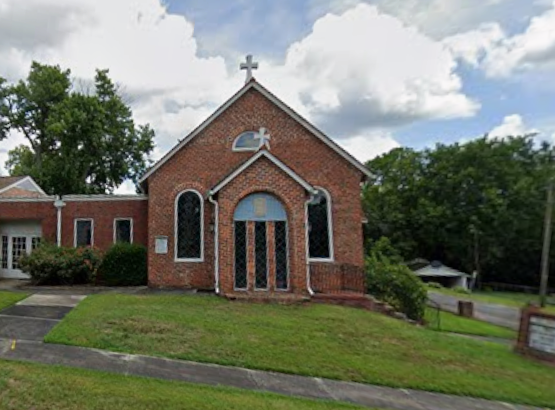
St. Joseph’s Catholic Church (ca. 1839)
The St. Joseph’s Catholic Church (ca. 1839) stands as one of the earliest expressions of organized Catholic presence in Chester, reflecting both the quiet expansion of religious diversity and the growing permanence of ecclesiastical architecture in the antebellum South. Established in the years leading up to the American Civil War, the church represents an important milestone in the spiritual and cultural development of the region.
Architecturally, the building is typically associated with early Gothic Revival or restrained vernacular ecclesiastical design, reflecting the modest resources and frontier conditions of its time. The structure would have likely been simple in form, with a rectangular nave constructed of brick or wood framing, emphasizing function, durability, and clarity of worship space rather than elaborate ornamentation.
The façade is generally defined by balanced proportions and a centered entrance, often framed by understated trim or a small entry porch. Windows—frequently tall and narrow help illuminate the interior while hinting at the emerging Gothic influence that would become more pronounced in later 19th-century church architecture. Rooflines are typically steep enough to suggest verticality, symbolically directing attention upward while shedding rain efficiently in the Southern climate.
Inside, St. Joseph’s would have followed a straightforward nave plan, designed to accommodate congregational worship with a central aisle leading toward the altar. Wooden pews, simple plastered walls, and a modest sanctuary arrangement reflect both the humility and devotion of an early parish community. Any decorative elements would have been restrained, focusing attention on liturgical function rather than architectural grandeur.
As one of Chester’s earliest Catholic institutions, St. Joseph’s Catholic Church holds enduring historical significance. It not only reflects the spread of Catholic communities in South Carolina during the 19th century but also stands as a quiet witness to the town’s evolving cultural and religious landscape. Its legacy remains tied to the foundational years of organized worship in the region, marking an important chapter in Chester’s spiritual history.