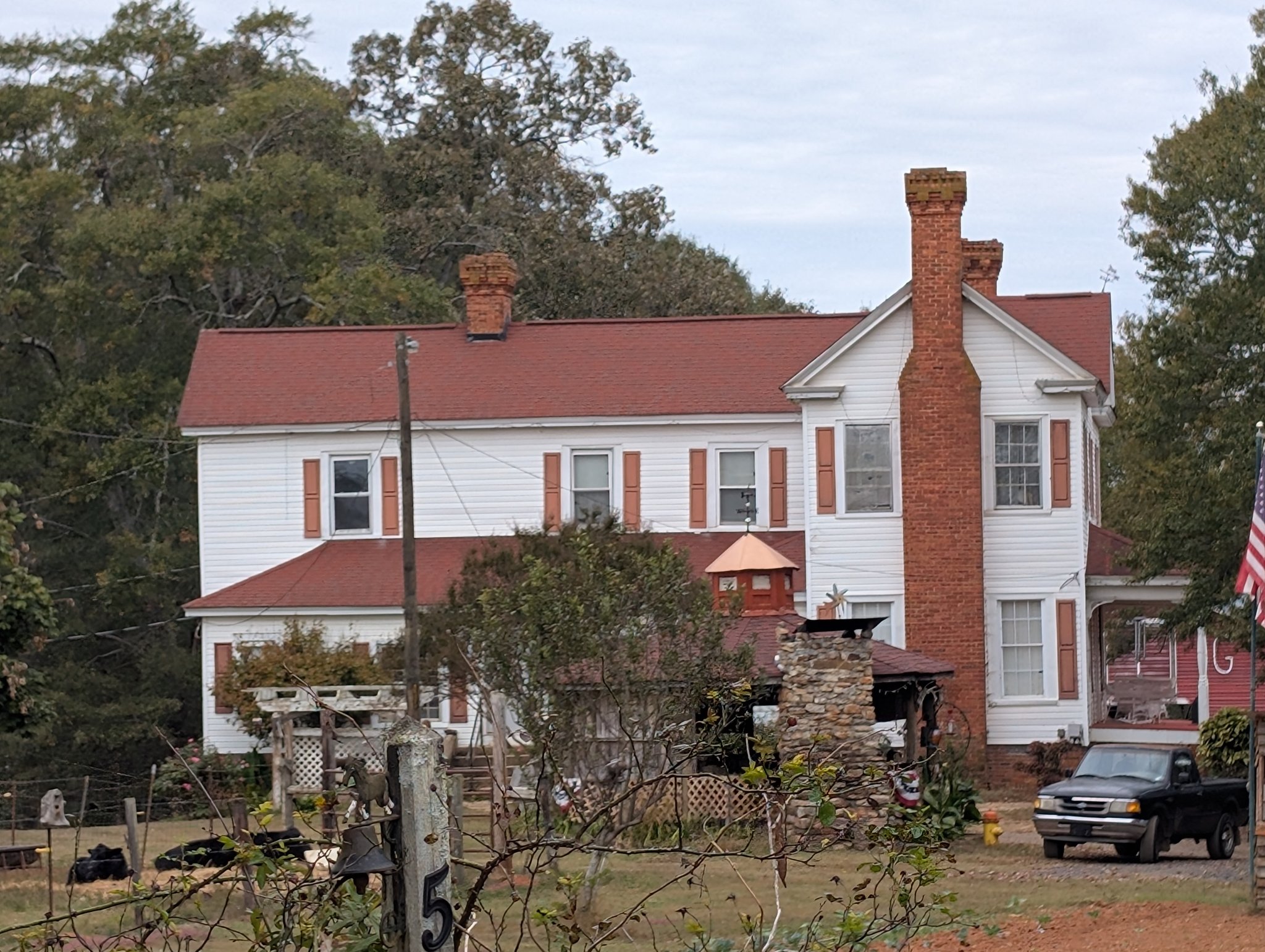
Sheriff Mill Complex in Easley
The Sheriff Mill Complex in Easley, South Carolina, is a rare surviving testament to the region’s early industrial and agricultural enterprise, reflecting the self-sufficient spirit that shaped life in the South Carolina Piedmont during the nineteenth century. Established in the mid-1800s along the steady waters of Georges Creek, the complex grew from a simple gristmill into a small but vital center of rural commerce and community life for the surrounding farming families of Pickens County.
The mill itself, built of heavy timber framing and resting on a sturdy stone foundation, was powered by an overshot waterwheel that harnessed the reliable flow of the creek. Farmers from miles around brought their corn and wheat to be ground into meal and flour—an essential service in an age when local mills formed the backbone of rural economies. Over time, the Sheriff Mill expanded to include auxiliary structures such as a cotton gin, sawmill, and miller’s residence, creating a self-contained complex that mirrored the economic diversification of the Upcountry in the late nineteenth century.
Beyond its industrial function, the mill became a gathering point—a place where news was exchanged, goods were bartered, and social ties were strengthened. It stood as both a practical and symbolic cornerstone of community identity during an era when water-powered industry linked the agrarian world to the growing currents of modernization.
Though much of the industrial landscape of that era has vanished, the Sheriff Mill Complex remains an evocative reminder of the ingenuity and endurance that defined early life in the Upcountry. Its surviving structures and millrace speak to a time when natural resources and human craftsmanship converged to shape the rhythms of work and community along the creeks and valleys of rural South Carolina.