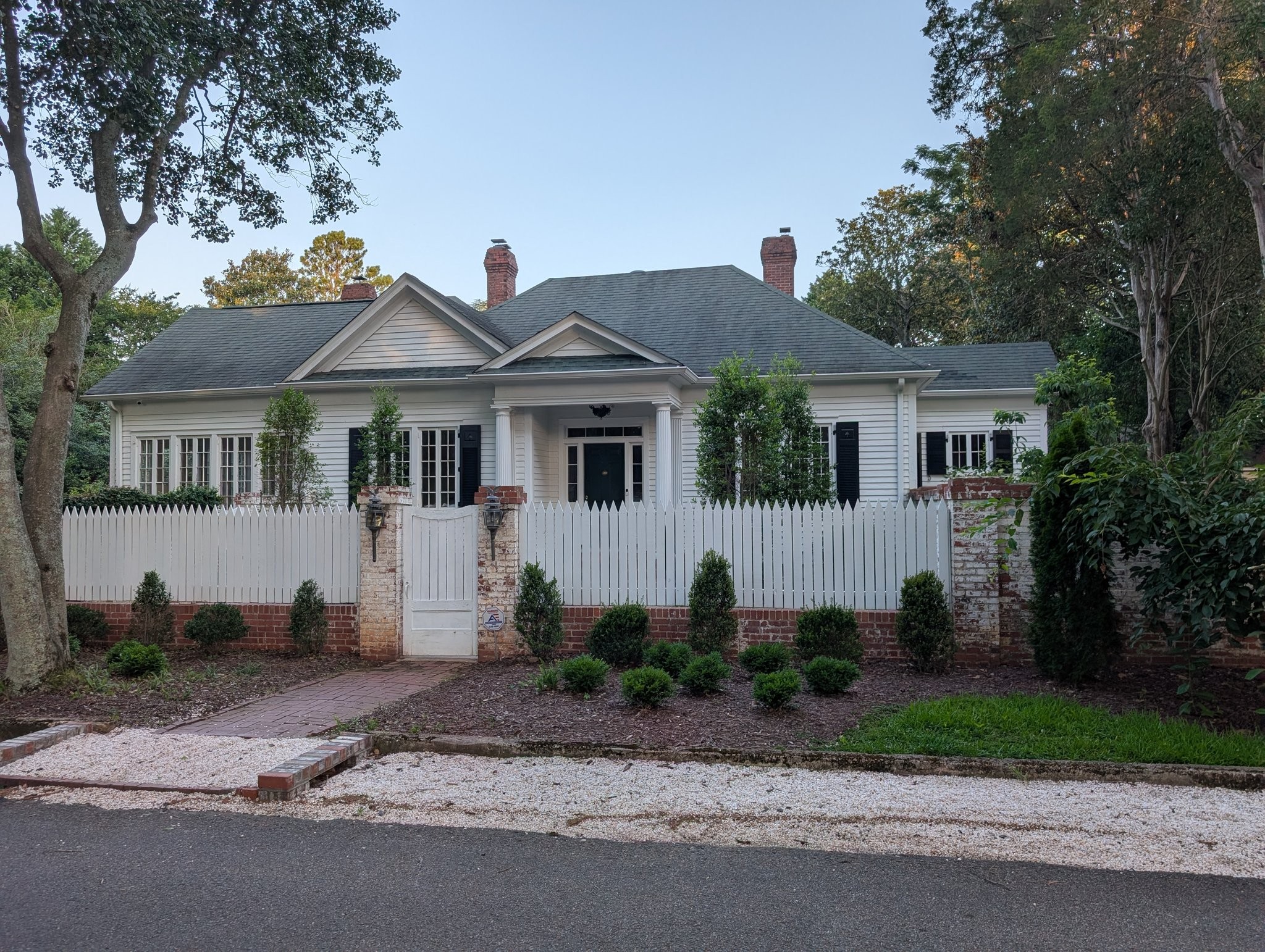
Seven Gables ca 1900 moved 1928
Originally constructed circa 1900 and relocated to its present site in 1928, Seven Gables is a distinctive example of Aiken’s evolving residential landscape and the community’s long-standing tradition of adapting and preserving significant structures as the city grew and changed during the height of the Winter Colony era. The residence bridges two important periods in Aiken’s history: the turn-of-the-century expansion of the resort community and the extensive redevelopment and estate construction that characterized the prosperous years of the 1920s.
Architecturally, Seven Gables derives its character from the picturesque design principles popular during the late Victorian and early Colonial Revival periods. True to its evocative name, the residence is distinguished by its complex roofline featuring multiple intersecting gables that create a varied and visually engaging silhouette. The wood-frame dwelling likely incorporates weatherboard siding, prominent chimneys, decorative trim, and generous porches or verandas that emphasize outdoor living and complement Aiken’s mild winter climate.
The relocation of the house in 1928 reflects a common practice in Aiken during the expansion of the Winter Colony, when older residences were frequently moved rather than demolished to accommodate new development or changing patterns of land use. Such moves preserved important elements of the city’s architectural heritage while allowing historic structures to remain functional and relevant within a rapidly evolving community.
Situated within Aiken’s historic residential fabric, Seven Gables contributes to the layered architectural character that distinguishes the city from many other resort communities. The house stands as a reminder of both the craftsmanship of the early twentieth century and the careful stewardship that enabled many of Aiken’s older residences to survive periods of growth and transformation.
Today, Seven Gables remains an important part of Aiken’s historic streetscape, embodying the picturesque charm, adaptability, and sense of continuity that have long defined the city’s architectural heritage and Winter Colony traditions.