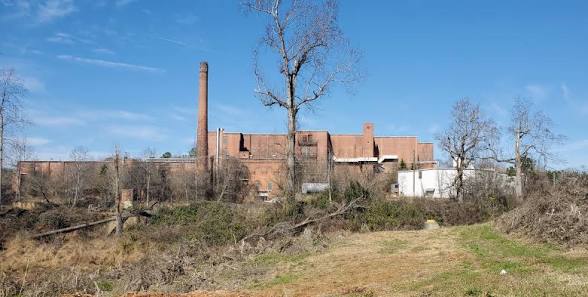
Seneca Cotton Mill
The Seneca Cotton Mill, a once-thriving pillar of industry and community in Oconee County, South Carolina, stands as a solemn yet powerful reminder of the region’s transformation from agrarian roots to industrial ambition. Its story is woven into the broader tapestry of the South’s textile heritage—a story of innovation, hard work, and resilience that shaped generations of families in Seneca and beyond.
Constructed in 1893 along the banks of the Seneca River, the Seneca Cotton Mill emerged during the height of the New South movement, when towns across the Piedmont sought to harness the power of their rivers and the skill of their people to drive economic progress. The mill’s red brick walls and towering smokestack symbolized both modernity and hope—a sign that prosperity could grow from the cotton fields that had long defined the region’s economy.
Inside the mill’s sturdy walls, the rhythmic hum of looms and the steady whir of spindles filled the air as men, women, and even young apprentices worked tirelessly to spin raw cotton into finely woven goods. For the people of Seneca, the mill was more than a workplace; it was a way of life. Families lived in neat mill villages nearby, where houses, schools, and churches sprang up around the factory, forming a close-knit community bound by shared labor and mutual reliance.
Throughout the early 20th century, the Seneca Cotton Mill weathered the economic storms of the Great Depression and the changing tides of industry. During these decades, it served as both an employer and a gathering point—hosting company picnics, social clubs, and community events that shaped the town’s identity. Yet, as textile manufacturing began to shift overseas in the latter half of the century, mills across the Upstate faced decline. The Seneca Mill, once a symbol of progress, gradually fell silent, its machinery stilled and its future uncertain.
Though operations ceased, the mill’s legacy endures in the hearts of those who remember its vital role in shaping Seneca’s history. Its towering ruins—arched windows, weathered brick, and skeletal remains—stand today as hauntingly beautiful relics of a bygone industrial era. Preservation efforts and local interest have kept its memory alive, recognizing the mill not as a symbol of loss, but of endurance and transformation.
The Seneca Cotton Mill’s story mirrors that of the South itself—a journey from the hard labor of the past toward adaptation and renewal. It remains a landmark of heritage, its silent walls whispering the stories of generations who turned cotton and sweat into the fabric of a community that still honors its enduring spirit.