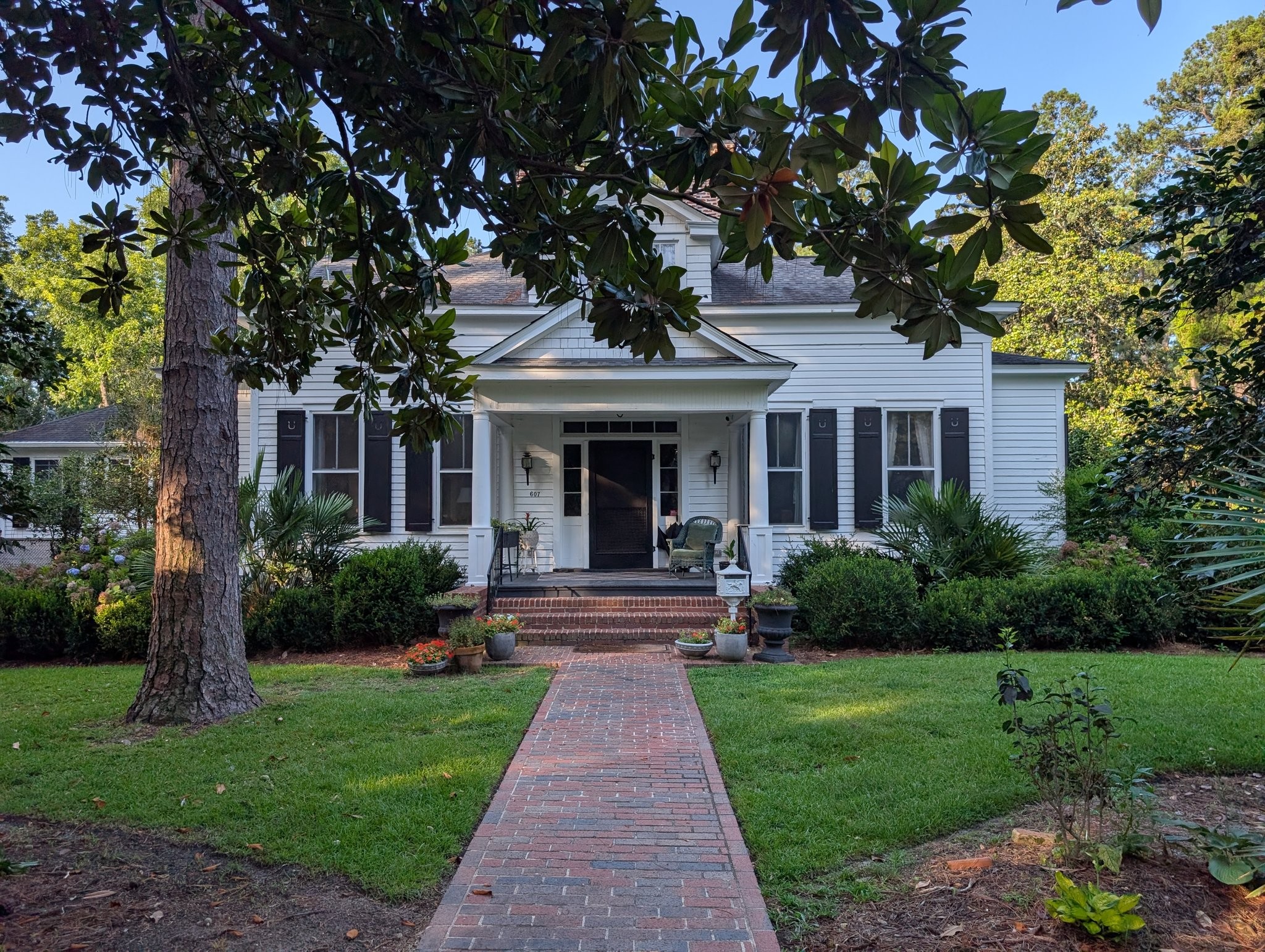
Scanty Shanty ca 1920
Constructed circa 1920, Scanty Shanty is a delightful example of the informal cottage architecture that flourished during Aiken’s celebrated Winter Colony era. Built during a period of continued growth and prosperity for the community, the residence reflects the relaxed sophistication and understated charm that characterized many of the smaller seasonal homes associated with Aiken’s equestrian and sporting traditions.
Despite its whimsical name, Scanty Shanty embodies the thoughtful design and comfortable livability that defined early twentieth-century resort architecture in Aiken. The dwelling likely exhibits characteristics associated with the Colonial Revival and cottage styles popular during the period, including wood-frame construction, weatherboard siding, multi-light sash windows, and broad porches or verandas intended to capitalize on the region’s mild climate and picturesque surroundings. Its modest scale and informal composition stand in contrast to the grand estates of the Winter Colony while maintaining the same emphasis on craftsmanship, hospitality, and connection to the landscape.
The evocative name captures the lighthearted spirit that often accompanied Winter Colony life, when residents and visitors embraced a social calendar filled with polo matches, horse shows, fox hunts, golf tournaments, and gatherings at private clubs and residences. Smaller cottages such as Scanty Shanty frequently served as seasonal retreats, guest accommodations, or companion residences to larger estates, contributing to the diverse architectural character of Aiken’s residential neighborhoods.
Situated within the historic fabric of Aiken’s winter resort community, Scanty Shanty reflects the city’s enduring appeal to families seeking both recreation and repose amid the longleaf pines and sandy roads of South Carolina’s Sandhills region. Today, the cottage remains a charming reminder of the informal elegance and leisurely pace that defined Aiken during the height of the Winter Colony era and continues to contribute to the city’s distinctive architectural heritage.