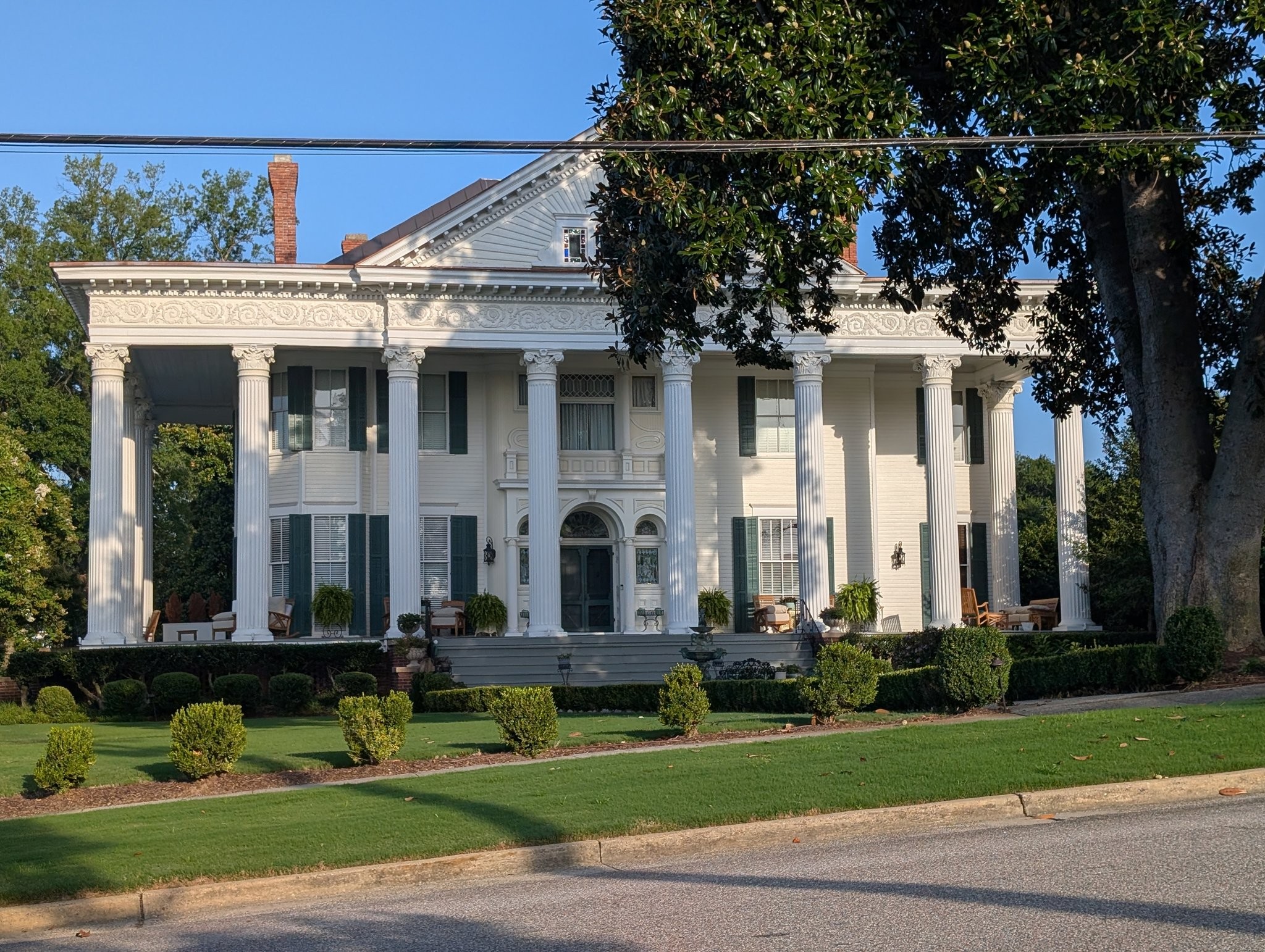
Rosemary Hall ca 1900-1902
Constructed between 1900 and 1902, Rosemary Hall is a notable example of the elegant residential architecture that defined Aiken’s transformation into a fashionable winter colony and resort community at the turn of the twentieth century. Built during the height of Aiken’s popularity among wealthy seasonal visitors from the North, the residence reflects the prosperity, refinement, and social traditions associated with the city’s development as a winter retreat. Like many of Aiken’s grand homes of this period, Rosemary Hall was designed to accommodate both comfortable family living and the gracious entertaining that characterized the lifestyle of its affluent owners and seasonal guests.
The house reflects the architectural influence of the Colonial Revival movement, a style that became increasingly popular in the early twentieth century as Americans looked to reinterpret the elegance and symmetry of earlier colonial architecture. The residence features a balanced façade, classical proportions, large windows, formal entrances, and carefully executed exterior detailing that convey a sense of dignity and permanence. Traditional materials, refined craftsmanship, and a harmonious relationship between the building and its landscaped surroundings reflect the architectural ideals favored by Aiken’s winter residents during this era.
The interior of Rosemary Hall was designed with the comfort and hospitality expected of a prominent seasonal residence. Spacious reception rooms, high ceilings, decorative woodwork, fireplaces, and gracious circulation patterns provided an appropriate setting for entertaining guests and hosting social gatherings. The arrangement of formal and informal spaces illustrates the changing expectations of early twentieth-century domestic life, combining the traditions of the nineteenth-century Southern residence with the modern conveniences sought by wealthy families of the Progressive Era.
Rosemary Hall is closely associated with the period when Aiken became nationally recognized as a winter destination for northern families, equestrians, and members of the social elite seeking the area’s mild climate and relaxed Southern atmosphere. The city’s development during this period brought the construction of numerous impressive residences, cottages, clubs, and recreational facilities, creating a distinctive architectural landscape that continues to define Aiken’s historic character.
Today, Rosemary Hall remains an important part of Aiken’s architectural heritage, representing the elegance and sophistication of the city’s early twentieth-century residential growth. Through its design, craftsmanship, and connection to Aiken’s winter colony era, the house preserves the story of a period when architecture, landscape, and social traditions combined to shape one of South Carolina’s most distinctive communities.