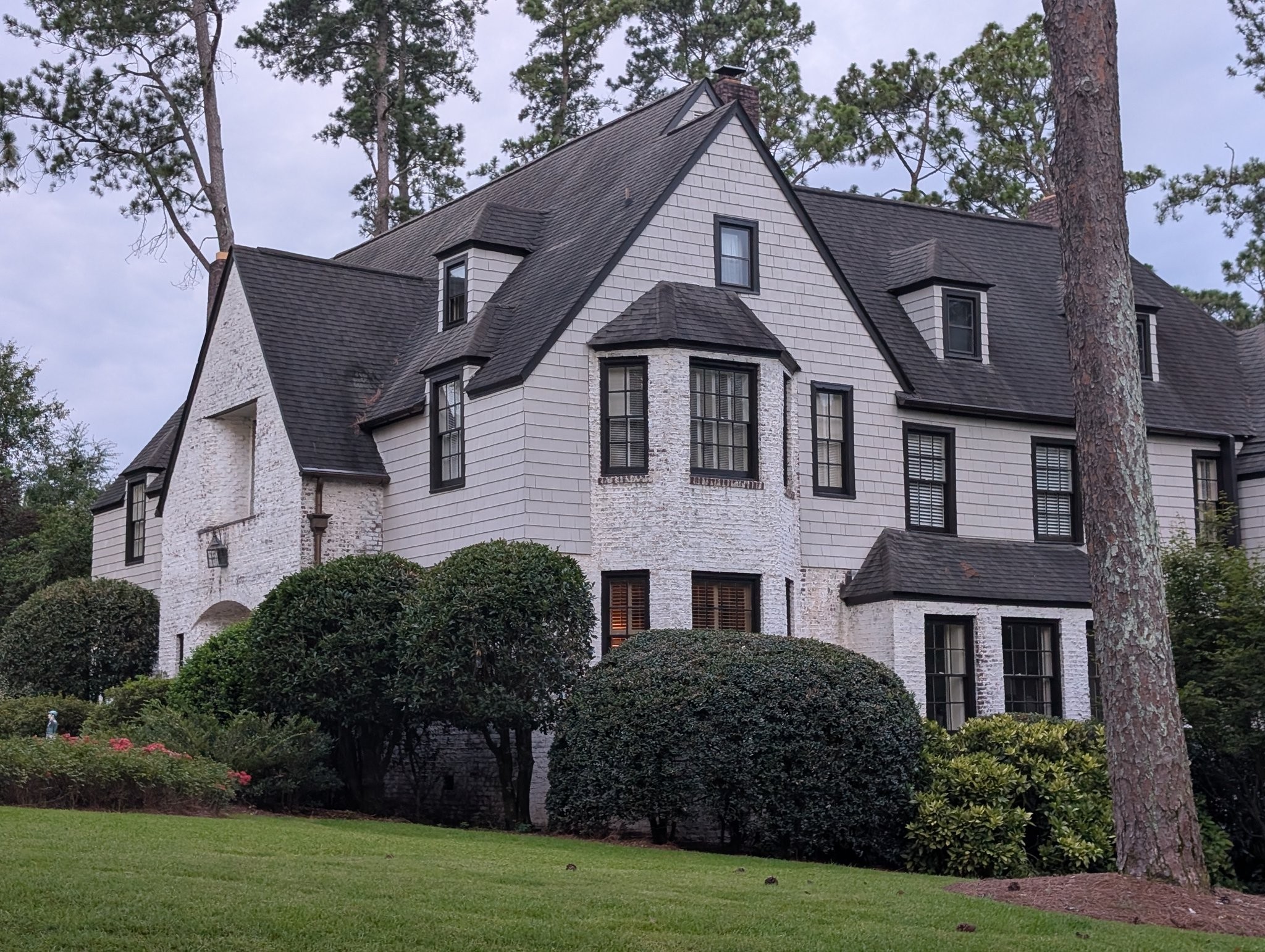
Pine Knoll ca ca 1930
Constructed around 1930, Pine Knoll is a historic residence that reflects the continued architectural evolution of Aiken’s celebrated Winter Colony during the early twentieth century. Built at the end of the 1920s and the beginning of the 1930s, the house represents a later generation of seasonal residences that continued Aiken’s tradition as a fashionable winter retreat for prominent families seeking a combination of Southern charm, outdoor recreation, and refined country living.
Pine Knoll reflects the architectural preferences of the period, when residential design emphasized comfort, practicality, and a harmonious relationship with the surrounding landscape. The home’s name suggests the importance of its natural setting, a characteristic feature of many Aiken properties where mature pine trees, spacious lots, and carefully planned gardens created a peaceful retreat-like atmosphere. The residence demonstrates the continued popularity of traditional revival styles during the period, incorporating elements that conveyed permanence and elegance while accommodating modern expectations for convenience and informal living.
The design of Pine Knoll is representative of the early twentieth-century country house ideal, blending architectural refinement with the relaxed lifestyle associated with Aiken’s Winter Colony. Spacious living areas, connections to outdoor spaces, and a setting designed for entertaining and leisure were central features of homes built during this era. Such residences were intended not only as private retreats but also as places for gatherings, hospitality, and participation in the active social traditions that defined Aiken’s seasonal community.
Pine Knoll was developed during the later years of Aiken’s Winter Colony expansion, when the city had already gained national recognition for its equestrian culture and recreational attractions. Winter residents were drawn to the area for polo, fox hunting, horseback riding, golf, and the social opportunities that accompanied these activities. Homes such as Pine Knoll contributed to the continued vitality of the community, demonstrating that Aiken’s architectural heritage extended beyond the grand estates of the nineteenth century to include carefully designed residences of the early modern era.
Today, Pine Knoll remains a contributing element to Aiken’s rich historic residential character. The property represents the transition from the traditional Winter Colony estates of the late nineteenth century to the more relaxed country residences of the early twentieth century. Through its architecture, setting, and connection to Aiken’s seasonal traditions, Pine Knoll continues to reflect the elegance, craftsmanship, and enduring appeal that have defined the city’s historic landscape for more than a century.