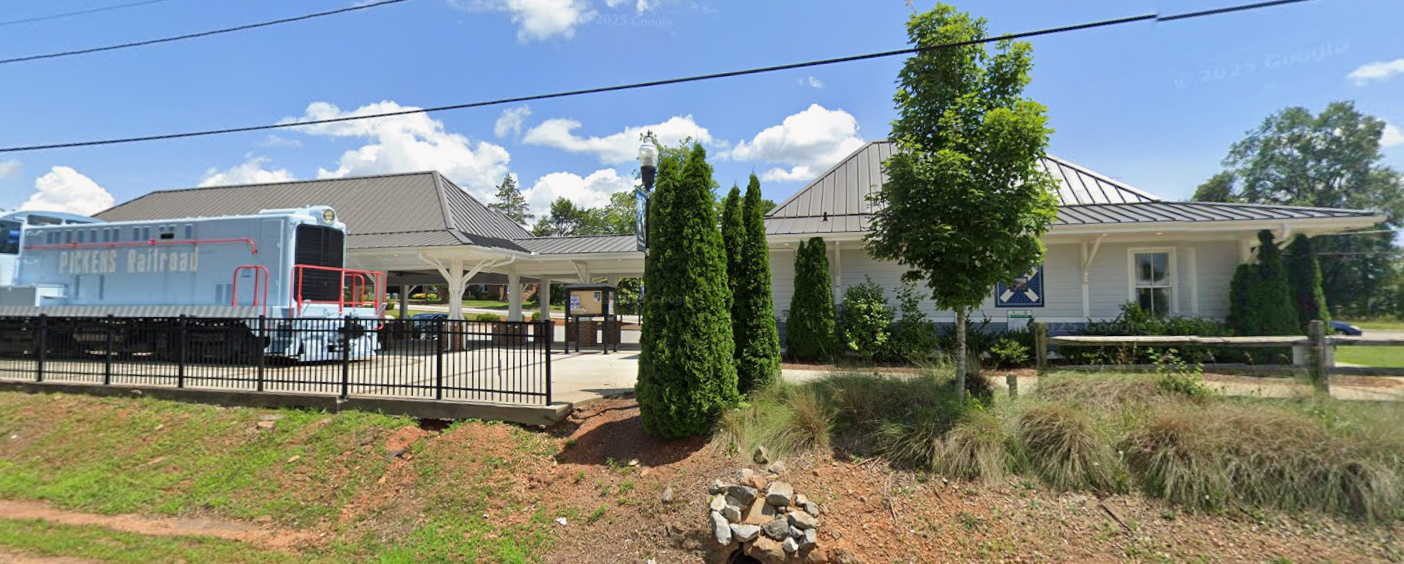
Pickens Railroad
Chartered in the years following the Civil War, the Pickens Railroad emerged as a vital artery of commerce and connection for the western Upstate of South Carolina. Established in 1875, the line was built to link the rural communities of Pickens County with the expanding regional rail network, fostering economic growth in an area rich in agriculture, timber, and later, industry.
Construction of the railroad was driven by local determination and investment. At a time when rail access often meant the difference between prosperity and stagnation, community leaders recognized the necessity of connecting Pickens to the main lines of the Atlanta & Charlotte Air Line Railway. The Pickens Railroad ultimately ran between Easley and Pickens, providing a dependable outlet for cotton, farm products, lumber, and manufactured goods. Its arrival reshaped the economic landscape, opening broader markets and encouraging settlement and development.
Throughout the late nineteenth and early twentieth centuries, the railroad played a central role in daily life. Passenger service carried residents to neighboring towns and beyond, while freight operations supported mills, farms, and small industries that depended upon reliable transportation. The steady rhythm of locomotives arriving and departing became a familiar sound in Pickens County, symbolizing both opportunity and progress.
Unlike many short lines that vanished during periods of consolidation, the Pickens Railroad demonstrated remarkable resilience. It adapted to changing economic conditions and transportation trends, transitioning from steam to diesel power and maintaining freight operations long after passenger service declined. Its continued function into the modern era makes it one of South Carolina’s enduring short-line railroads, preserving a tangible link to the state’s railroading heritage.
Today, the legacy of the Pickens Railroad is reflected not only in surviving track and operations but also in the communities it helped shape. For generations, it provided more than transportation—it offered connection, commerce, and continuity, securing its place as a defining chapter in the industrial and cultural history of the Upstate.