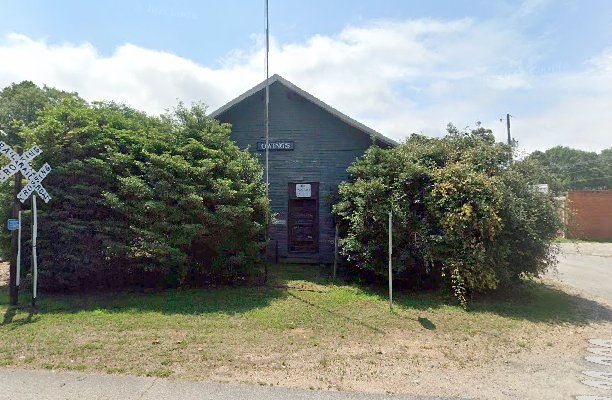
Owings Depot
The Owings Depot was built as part of the railroad expansion in rural South Carolina in the late 1800s. It was constructed sometime between about 1890 and 1896, shortly after Francis Rapley Owings sold land to the Greenville–Laurens Railroad with the express condition that the property be used for a station and “a station be kept there perpetually … at the service of the railroad and public.”
Oral tradition holds that Owings not only sold the land but donated the lumber for the depot’s construction to ensure it was built next to his residence and commercial interests. The depot is a long, rectangular, single-story, wood-frame building with a simple lateral gable roof and wood structural details typical of small, rural Southern railroad depots of the era. Over time, metal siding and a later metal shed addition (circa 1959) covered parts of the original exterior.
Upon completion by 1896, the depot served as both a rail service point and post office, anchoring the community of Owings and facilitating movement of people and goods across Laurens County. Passenger rail service continued through at least 1944, linking local residents to larger towns and markets.
By 1959, passenger service had ceased, reflecting broader declines in rural passenger rail across the U.S. during the mid-20th century. After railroad passenger service ended, the building was rented and repurposed by local individuals — including Doug Stewart and Richard Owings — indicating a shift from strictly railroad-related function to more general community use. The depot’s structure was expanded in the 1930s and later modified, including additions of metal panels that now obscure portions of the original façade.
The Owings Depot is recognized today as a contributing element of the Owings Historic District, reflecting its importance in transportation, local commerce, and community formation in Laurens County during a period when railroads were central to economic life.