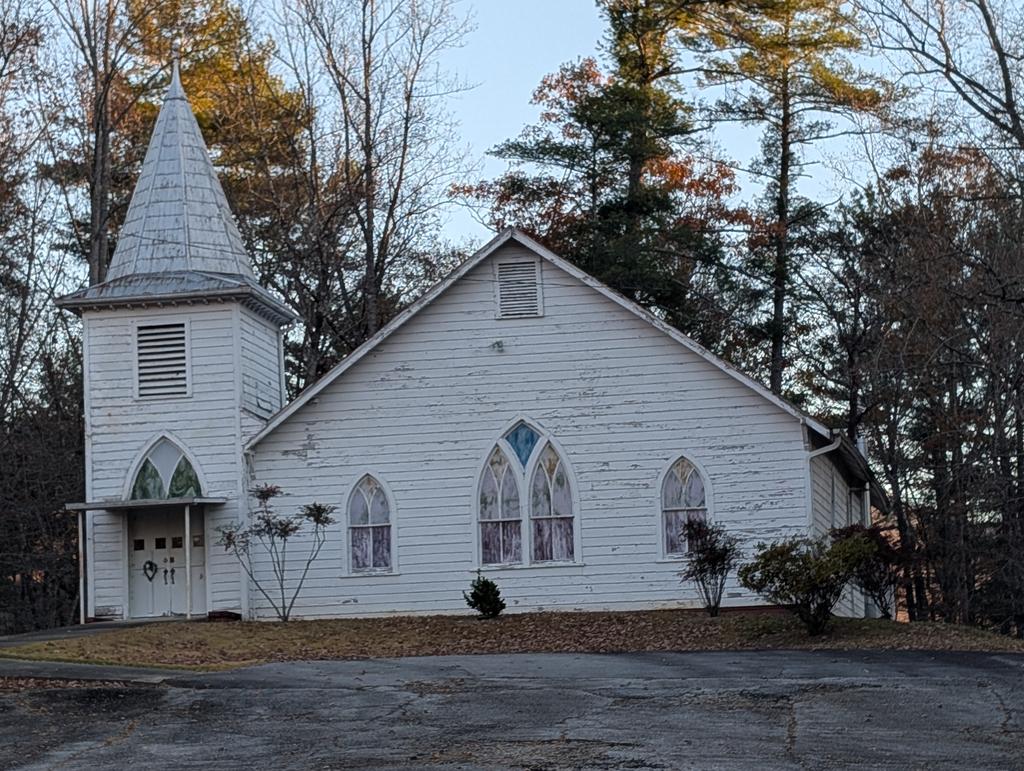
Old Gap Creek Baptist Church
Old Gap Creek Baptist Church is a well-preserved example of rural vernacular ecclesiastical architecture in the Upstate region of South Carolina, illustrating the design principles and construction methods employed by small, community-centered congregations in the late 19th and early 20th centuries. The building embodies simplicity, functionality, and local craftsmanship, reflecting the theological emphasis of Baptist congregations on modesty and spiritual focus over architectural ornamentation.
The church is a one-story, timber-framed structure resting on a low brick or stone pier foundation, which elevates the building slightly above grade to protect against moisture while allowing ventilation. Its rectangular plan is capped by a front-gabled roof, originally covered with wood shingles and later replaced with historically sympathetic materials such as standing-seam metal. The exterior walls are clad in horizontal weatherboard siding, consistent with regional vernacular building practices, and the structure is unadorned except for modest cornerboards and simple trim that highlight its proportions.
Fenestration is symmetrical and functional, consisting of tall, narrow double-hung sash windows that allow ample natural light into the sanctuary. The central entrance on the front façade is typically framed by a simple transom and minimal moldings, reflecting the denomination’s preference for restraint in architectural embellishment. A small stoop or set of wooden steps provides access to the doorway, preserving the building’s approachable and community-oriented character.
The interior retains its original open-plan layout, emphasizing a single large sanctuary space oriented toward the pulpit. Exposed timber framing, wide plank flooring, and plain wooden pews demonstrate both local craftsmanship and the Primitive Baptist emphasis on simplicity in worship spaces. The pulpit, elevated slightly above the main floor, remains unadorned, serving as the spiritual and visual focus of the congregation. The interior spatial organization and finishes convey functionality, clarity of circulation, and acoustic efficiency, all aligned with the building’s intended use.
Old Gap Creek Baptist Church is significant under Criterion C for its architectural integrity as a representative example of rural vernacular church construction in Upstate South Carolina. The building illustrates the aesthetic principles and functional priorities of small Baptist congregations during the late 19th and early 20th centuries, emphasizing simplicity, proportion, and community-centered design. It retains a high degree of integrity in location, design, materials, workmanship, and setting, offering a tangible link to the religious and cultural life of Cleveland’s early residents and serving as a lasting testament to the region’s ecclesiastical heritage.