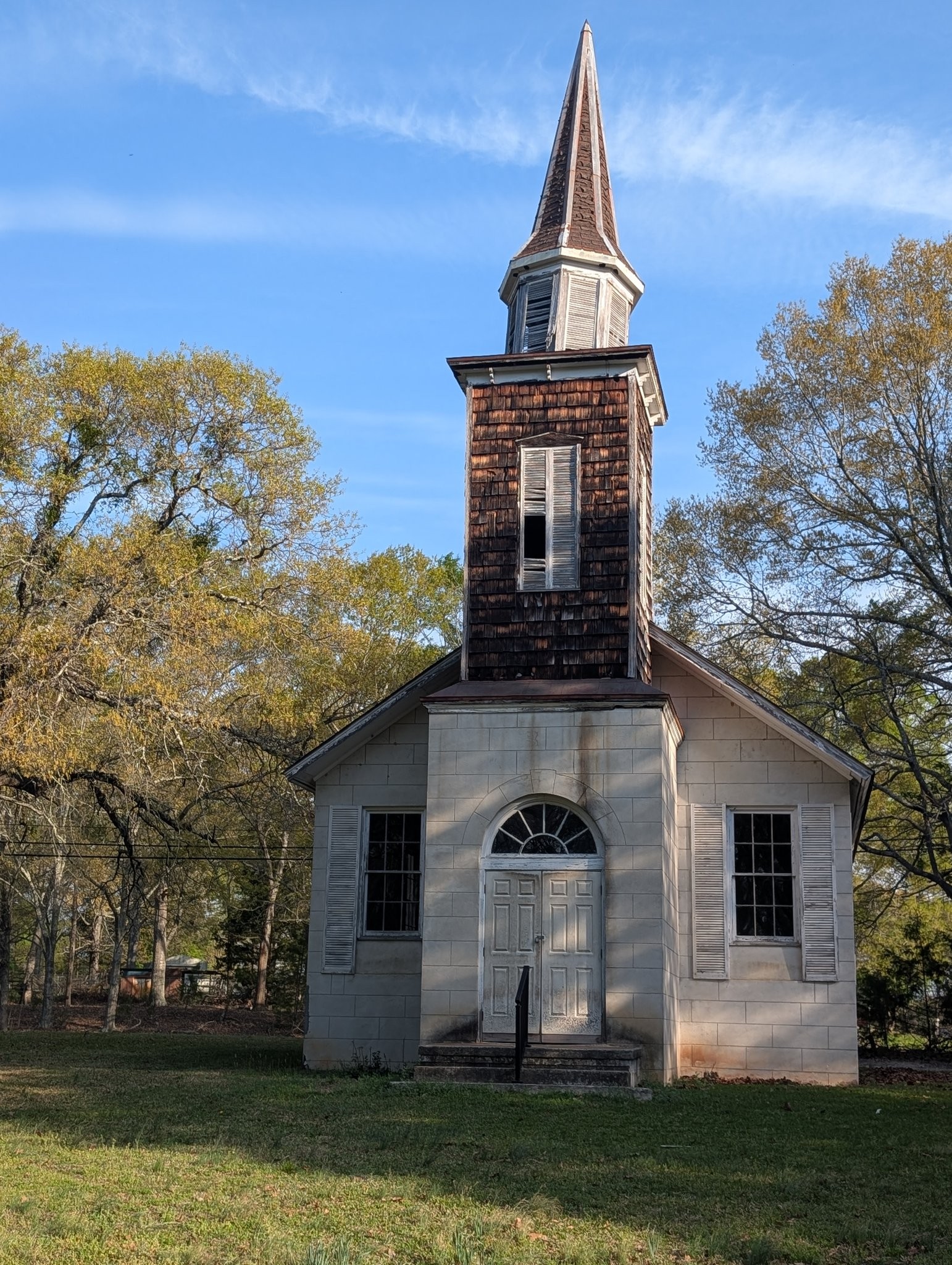
Mount Ariel Church
Mount Ariel Church, established around 1854, stands as a humble yet enduring testament to the spiritual life and community foundations of the mid-nineteenth-century South. Built during a period when churches served not only as places of worship but also as centers of social connection, the structure reflects both the faith and the shared purpose of those who gathered within its walls.
Constructed with simplicity and care, the church likely follows a traditional meetinghouse form, characterized by a rectangular plan, gabled roof, and a straightforward façade. Its design would have emphasized function over ornament, though subtle details such as handcrafted woodwork, tall windows, or a modest entry may hint at the pride and devotion of its builders. Using locally sourced materials, the structure embodies the craftsmanship and resourcefulness of the rural community that brought it into being.
From its earliest days, Mount Ariel Church would have played a central role in the lives of its congregation. It served as a place for worship, reflection, and fellowship, where generations marked life’s milestones baptisms, marriages, and funerals within a shared sacred space. During times of hardship, including the Civil War and its aftermath, the church likely offered both spiritual comfort and a sense of continuity in an uncertain world.
Over the decades, Mount Ariel Church has witnessed the evolution of the surrounding community while remaining rooted in its original purpose. Though the world beyond its doors has changed, the church endures as a symbol of faith, perseverance, and tradition.
Today, Mount Ariel Church remains a meaningful historic landmark, its quiet presence preserving the legacy of those who built and sustained it. It stands not only as an architectural relic of the 1850s but as a living reminder of the enduring role of faith and community in shaping the Southern landscape.