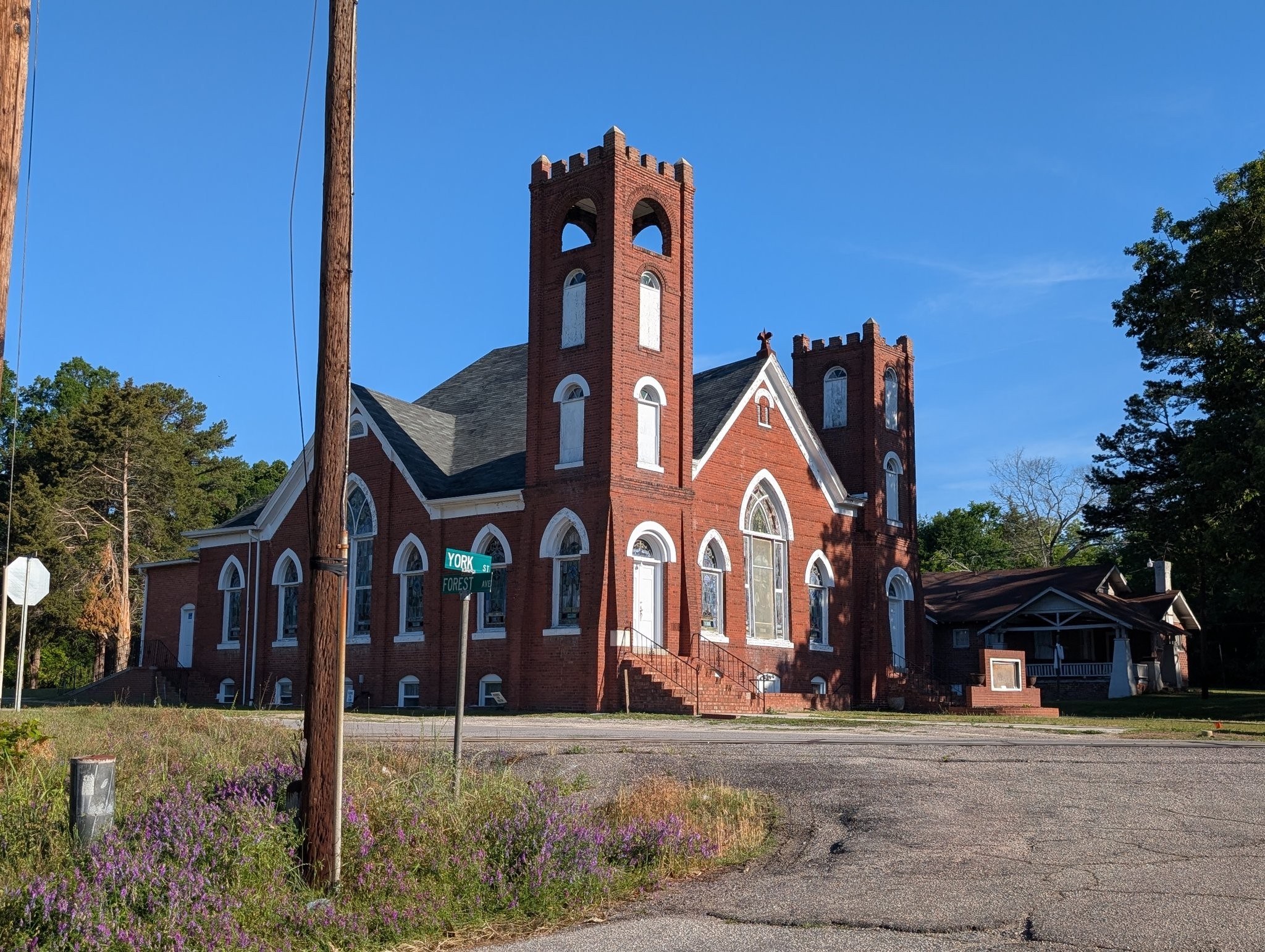
Metropolitan A.M.E. Zion Church
The Metropolitan A.M.E. Zion Church, constructed circa 1912–1913 in Chester, stands as a powerful expression of early twentieth-century ecclesiastical architecture and the enduring spiritual life of its congregation. Built during a period of growth and institutional strengthening for African American communities in the South, the church reflects both sacred purpose and architectural dignity rooted in tradition and resilience.
As part of the broader heritage of the African Methodist Episcopal Zion Church, the structure embodies the denomination’s long-standing commitment to worship, education, and community leadership. Its design likely draws from Gothic Revival influences commonly used in Protestant church architecture of the era, adapted with local materials and craftsmanship.
The exterior presents a stately and grounded composition, often characterized by a rectangular sanctuary form with a front-facing gable or tower element marking the principal entrance. Tall, narrow windows frequently arranged in symmetrical pairs would allow abundant natural light into the sanctuary while reinforcing a sense of vertical aspiration. Brick construction is likely, lending permanence and strength, while restrained decorative detailing such as pointed arch motifs, simple cornices, or modest buttress-like projections would enhance its ecclesiastical character without excessive ornamentation.
The entrance typically serves as a focal point, possibly framed by a modest steeple or bell tower that signals the church’s presence within the surrounding streetscape. These architectural gestures not only define the building’s silhouette but also symbolize its role as a spiritual anchor within the community.
Inside, the sanctuary would be arranged with a clear emphasis on the pulpit and altar area, reflecting the preaching-centered tradition of A.M.E. Zion worship. Wooden pews in orderly rows, high ceilings, and exposed or subtly finished trusses contribute to an atmosphere of reverence and openness. The acoustics and spatial design would support congregational singing, preaching, and communal gathering central elements of the church’s spiritual life.
As a landmark of early twentieth-century faith and community identity in Chester, the Metropolitan A.M.E. Zion Church remains a significant cultural and architectural presence. It stands as both a house of worship and a testament to perseverance, reflecting the history, strength, and enduring legacy of its congregation within the broader story of the region.