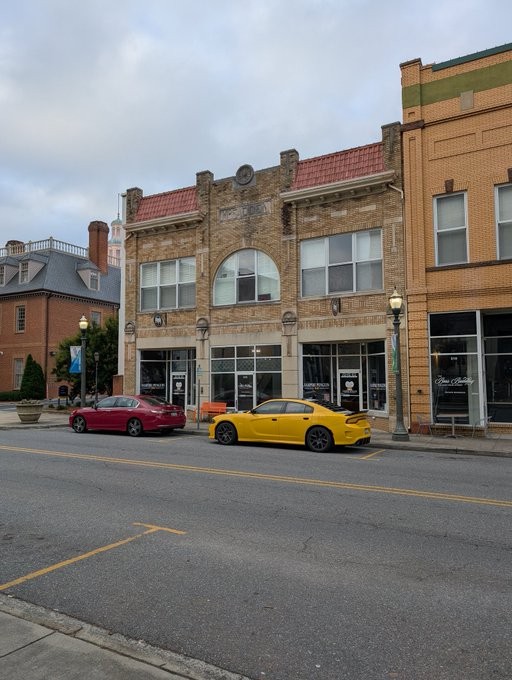
McFadden building ca 1929
The McFadden Building, constructed circa 1929 in downtown Rock Hill, stands as an important representation of the city’s commercial growth during the late 1920s, a period marked by economic optimism and expanding urban development throughout the South Carolina Piedmont. Erected just before the onset of the Great Depression, the building reflected Rock Hill’s emergence as a thriving center of textile manufacturing, banking, retail trade, and professional services. Commercial buildings of this scale and permanence symbolized the confidence local business leaders placed in the city’s future as downtown Rock Hill evolved into a sophisticated regional business district.
Architecturally, the McFadden Building exemplifies the restrained commercial styles popular during the late 1920s, incorporating elements of Classical Revival and early modern commercial design. Constructed primarily of brick with decorative masonry detailing, the structure likely featured large storefront windows, a pronounced cornice, and vertically organized upper façades intended to maximize both function and visual prominence along the streetscape. Buildings of this type were designed to project stability and professionalism while contributing to the cohesive architectural identity of downtown Rock Hill during its peak years of commercial expansion.
The building’s association with the McFadden name reflects the influence of local entrepreneurs and business families who helped shape Rock Hill’s economic development during the early twentieth century. Commercial structures such as the McFadden Building housed retail establishments, offices, and professional enterprises that supported the daily life of a growing urban population. As Rock Hill expanded, downtown buildings became centers of commerce and social interaction, reinforcing Main Street’s role as the heart of civic and economic activity.
Today, the McFadden Building remains an important component of Rock Hill’s historic downtown architectural fabric. Its continued preservation contributes to the character and historical continuity of the city’s commercial district while illustrating the architectural trends and economic ambitions that defined Rock Hill at the close of the 1920s. As a surviving reminder of the city’s vibrant business heritage, the building continues to embody the spirit of growth and enterprise that shaped downtown Rock Hill during one of its most influential eras.