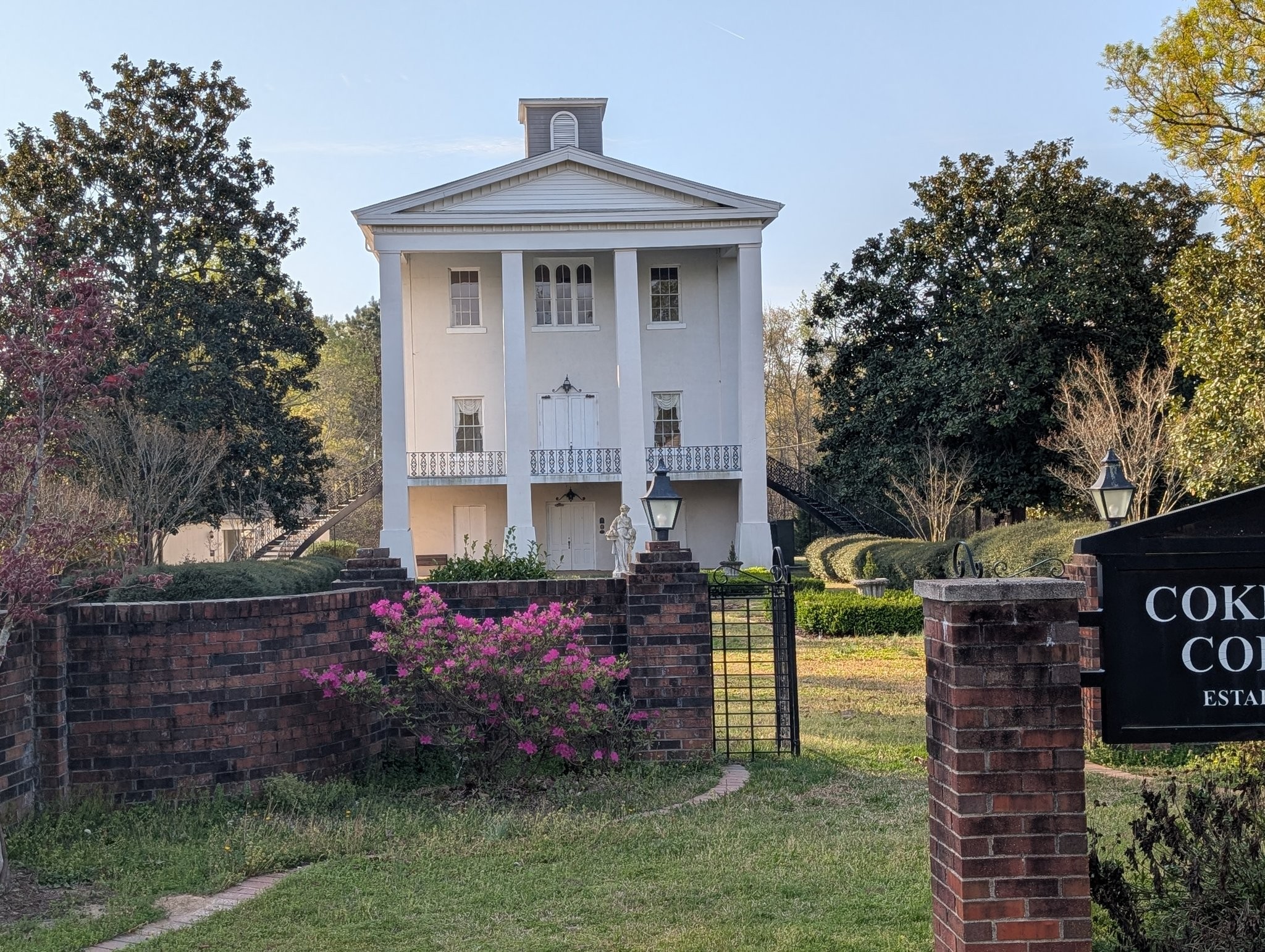
Masonic Female College
The Masonic Female College, established around 1854, stands as a remarkable testament to the growing emphasis on education and opportunity for women in the antebellum South. Founded under the auspices of the Masonic order, the institution reflects both the progressive ideals of its patrons and the architectural sophistication that characterized mid-nineteenth-century academic buildings.
Designed with balance, symmetry, and dignity, the college likely drew from Greek Revival or other popular classical styles of the period. Its façade would have featured tall windows to flood classrooms with natural light, a prominent entrance conveying formality and purpose, and perhaps a columned portico or pedimented gables to signify its institutional stature. Built with local materials and careful craftsmanship, the structure embodied both practicality and a sense of permanence, signaling that education for women was a serious and valued pursuit.
As an educational institution, the Masonic Female College would have served as a hub of intellectual and social life. Within its halls, young women received instruction in literature, mathematics, sciences, and the arts, preparing them for thoughtful engagement in society. Beyond academics, the college offered a space for personal growth, moral development, and community interaction, reflecting the broader vision of the Masonic founders who championed knowledge and civic virtue.
Throughout its history, the building has witnessed significant transformations in the educational landscape and the lives of its students. From its antebellum beginnings through the upheavals of the Civil War and the evolving role of women in the South, the college remained a center of learning and opportunity.
Today, the Masonic Female College endures as a historic landmark, preserving both the architectural elegance and the cultural aspirations of its era. It stands as a tangible reminder of the commitment to education, the advancement of women, and the enduring influence of visionary institutions in shaping Southern society.