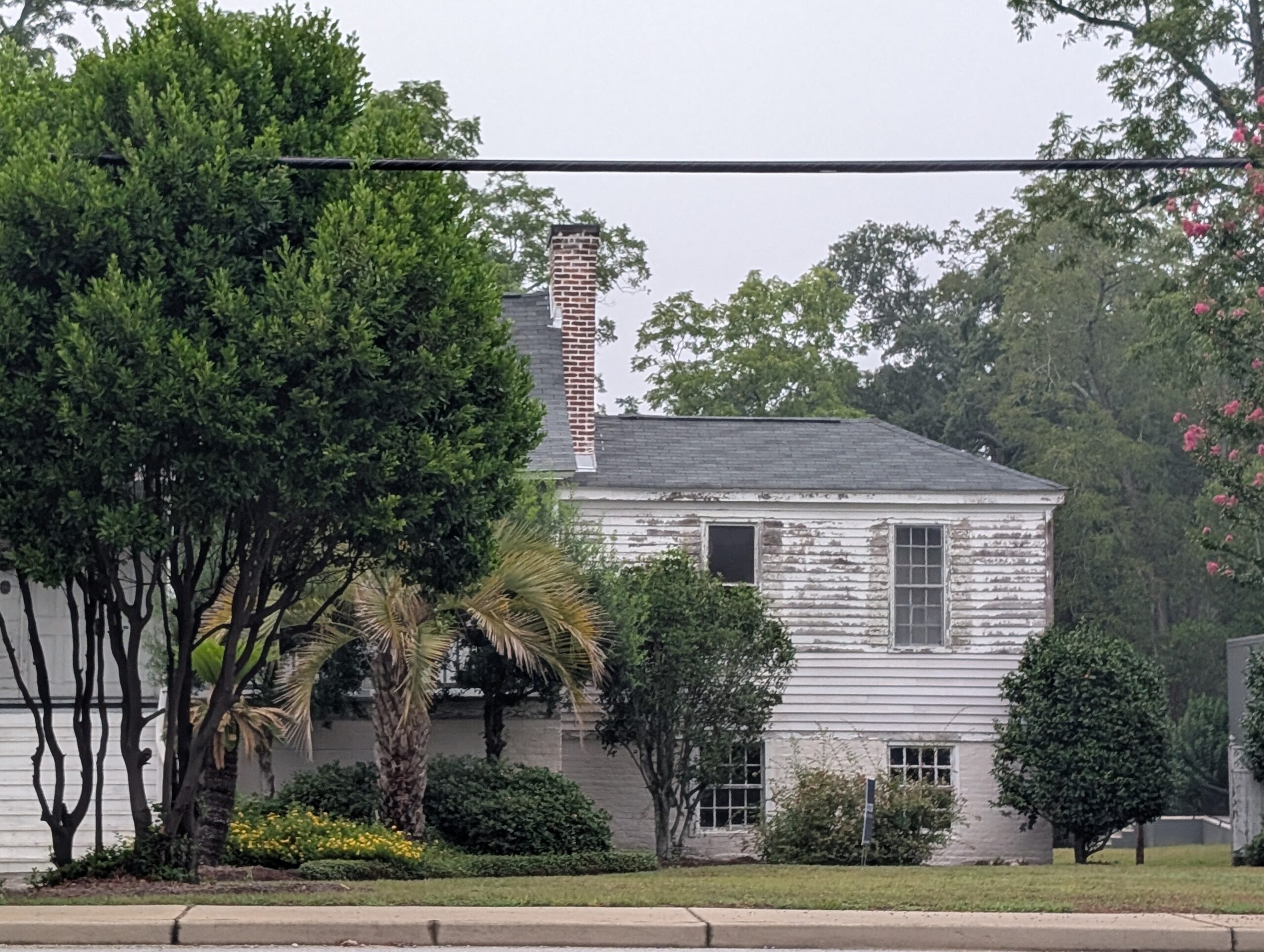
Lemuel Boozer house ca 1828-1830
Constructed between 1828 and 1830, the Lemuel Boozer House is one of the oldest surviving residences in the Town of Lexington and among the community’s most historically significant landmarks. Also known as the Boozer-Harmon House, the residence was built by Lemuel Boozer (1809–1870), a distinguished attorney, legislator, lieutenant governor of South Carolina, and circuit court judge whose public service helped shape the political landscape of the state during the mid-nineteenth century. Listed in the National Register of Historic Places in 1977, the house is recognized for both its architectural distinction and its close association with one of Lexington’s most influential citizens.
The residence is a one-story clapboard dwelling resting upon a raised brick basement, making it the only surviving nineteenth-century raised cottage in Lexington. The house is distinguished by its low-pitched gable roof extending over a full-width front porch supported by original square columns and balustrades. Symmetrical double entrances with transoms on both the front and rear elevations, exterior end chimneys, nine-over-nine sash windows, and the tall brick pier foundation exemplify the practical elegance of early South Carolina domestic architecture. Interior spaces retain many original finishes, including wide plank walls and ceilings, wainscoting in the central hall and parlor, and a chair rail in the dining room. The residence remains remarkably intact, with only modest additions made during the 1840s, preserving much of its original antebellum character.
Lemuel Boozer enjoyed a distinguished legal and political career, serving in both the South Carolina House of Representatives and Senate before becoming the state’s lieutenant governor and later a circuit judge. Although a prominent public figure and slaveholder, Boozer became known for his opposition to secession and was one of only three South Carolina delegates who refused to leave the 1860 Democratic National Convention in Charleston when the convention fractured over the issue of slavery. Following the Civil War, he demonstrated a commitment to rebuilding his community by establishing a school for formerly enslaved African Americans on the grounds behind his home, reflecting the complex and evolving history of Reconstruction-era Lexington.
Originally, the property included a substantial agricultural complex consisting of a frame barn and several slave cabins, illustrating the operation of a prosperous nineteenth-century household. Although these outbuildings were removed during the 1940s, the main residence survives as an exceptional example of early Lexington architecture. For generations, the house remained in the ownership of Boozer descendants and became widely recognized as one of the community’s defining historic landmarks.
Today, the Lemuel Boozer House stands as a rare and beautifully preserved reminder of Lexington’s earliest years. Through its distinctive raised-cottage design, exceptional state of preservation, and association with one of South Carolina’s most prominent nineteenth-century political figures, the residence provides an invaluable link to the architectural, political, and social history of Lexington County.