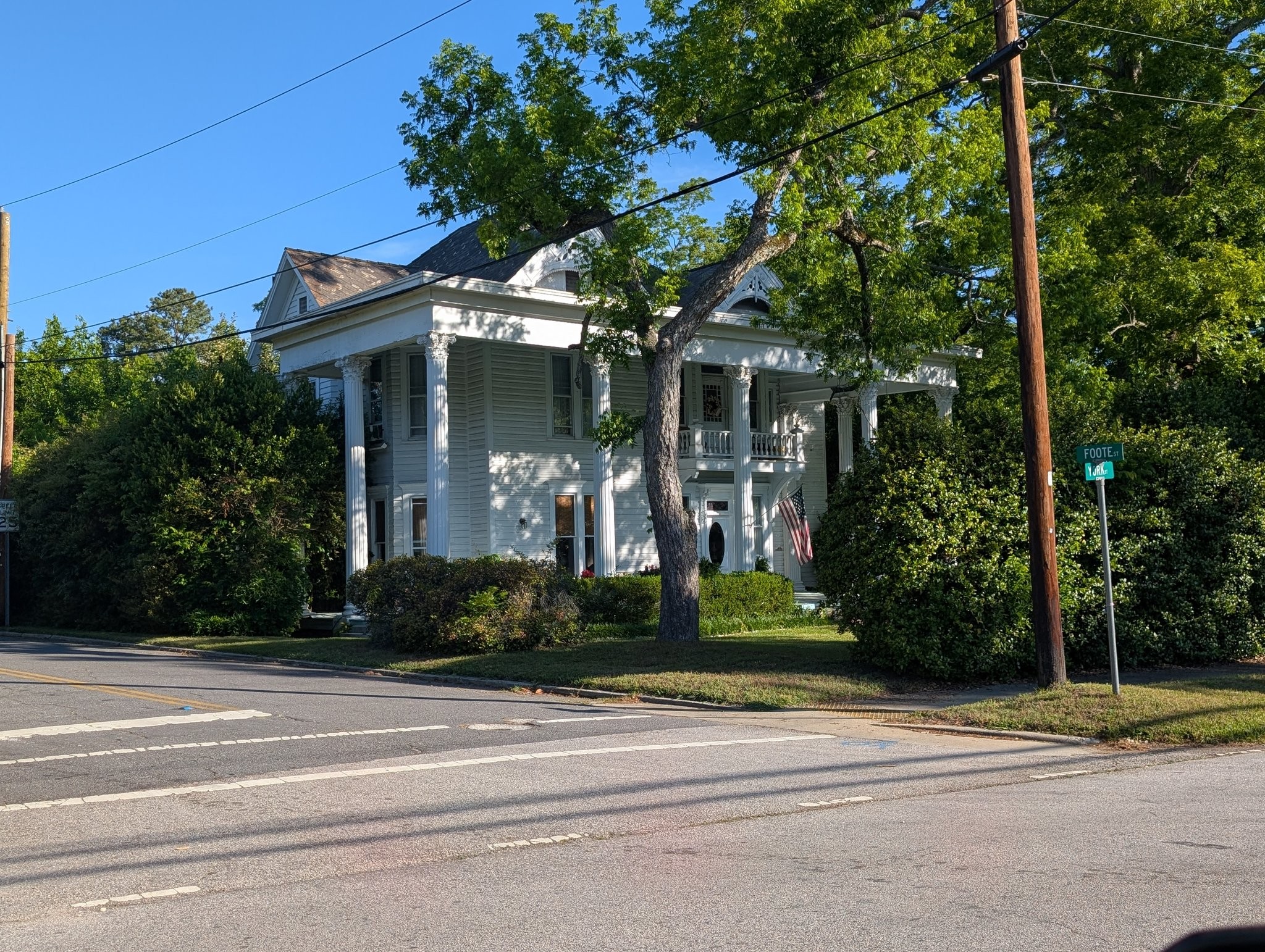
Leard–Latimer House
The Leard–Latimer House, constructed circa 1890 in Chester, stands as a well-composed example of late nineteenth-century residential design, reflecting both the stylistic transition of the period and the growing refinement of domestic architecture in the post-Reconstruction South. Built during a time of renewed local prosperity, the home embodies the blend of ornamentation and practicality that characterized Chester’s residential expansion at the close of the Victorian era.
The exterior likely presents a balanced yet picturesque composition, influenced by the Queen Anne tradition while beginning to show the early influence of more restrained classical detailing. An asymmetrical massing, varied roofline, and prominent front-facing gable would give the structure visual depth and presence. A broad, inviting front porch central to both social life and architectural identity would likely feature turned posts, decorative brackets, and modest spindlework, offering a welcoming transition from public street to private interior.
Exterior materials such as wood siding, possibly accented with patterned shingles in the gable ends, would contribute texture and visual variety. Tall, narrow windows arranged in a measured rhythm would allow natural light to permeate interior spaces while maintaining the vertical emphasis common to the period’s residential design.
Inside, the Leard–Latimer House would have been organized around a series of formal and functional living spaces, including parlors for receiving guests, a central dining room, and more private family chambers. High ceilings, detailed wood trim, and finely crafted mantels would reflect the attention to craftsmanship typical of the era. Interior circulation would balance formality with comfort, allowing rooms to be opened for entertaining or closed for privacy as needed.
As a surviving expression of Chester’s late nineteenth-century architectural development, the Leard–Latimer House contributes meaningfully to the town’s historic residential fabric. It reflects a moment when design, craftsmanship, and social life were closely intertwined, leaving behind a built legacy that continues to speak to the character and history of the community.