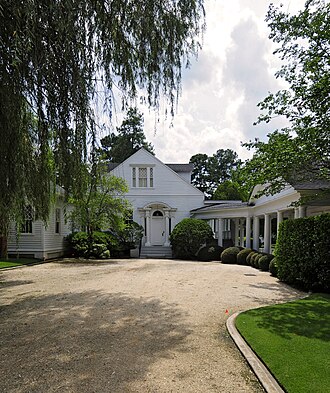
Joye Cottage ca 1897
Constructed circa 1897, Joye Cottage is a notable example of the residential architecture associated with Aiken’s celebrated Winter Colony period and reflects the city’s emergence as one of the South’s most fashionable winter resorts during the late nineteenth century. Built during an era when wealthy seasonal visitors from the Northeast were establishing substantial winter residences throughout Aiken, the cottage illustrates the architectural traditions and lifestyle preferences that shaped the community’s historic character. With its comfortable scale, picturesque setting, and association with the city’s equestrian and social traditions, Joye Cottage contributes to the legacy of the Winter Colony and the distinctive residential landscape that developed during this important period.
Architecturally, Joye Cottage reflects the informal elegance favored for many late nineteenth-century seasonal residences in Aiken. The dwelling exhibits characteristics common to resort cottages of the period, including a wood-frame construction, balanced proportions, generous porches, and an emphasis on natural ventilation and outdoor living. The broad verandas and carefully arranged openings provided shade and comfort during the warmer months while allowing residents to enjoy the mild climate that made Aiken attractive as a winter destination. Decorative details and traditional craftsmanship contribute to the cottage’s refined yet approachable character, blending practicality with the gracious appearance expected of a seasonal retreat.
The cottage represents the social and cultural environment of Aiken’s Winter Colony, when families from northern cities arrived each winter seeking recreation, relaxation, and participation in the community’s renowned sporting traditions. Residences such as Joye Cottage served as more than private homes; they were centers of hospitality where seasonal residents entertained guests, participated in social events, and embraced the outdoor activities that defined Aiken life. The proximity of such homes to stables, riding paths, and sporting venues reinforced the close relationship between architecture, landscape, and equestrian culture.
Today, Joye Cottage remains an important element of Aiken’s historic residential heritage. Its late nineteenth-century origins, architectural character, and association with the Winter Colony era provide valuable insight into the development of Aiken as a premier winter resort community. The cottage continues to represent the craftsmanship, hospitality, and traditions that helped establish Aiken as one of the South’s most distinctive historic places.