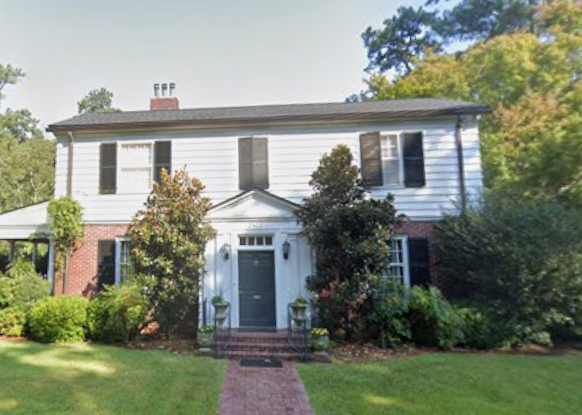
James B Urquhart House ca 1951
The James B. Urquhart House, dating to circa 1951, is a representative example of Columbia’s post-World War II residential architecture and reflects the changing character of domestic design during the early 1950s. Constructed at a time when Columbia was experiencing continued suburban expansion and growing demand for modern single-family housing, the house embodies the period’s preference for comfortable, efficient residences that retained familiar traditional influences while incorporating simplified architectural detailing. Its overall massing, proportions, fenestration, and domestic scale are characteristic of the era, reflecting the transition from the more formal architectural vocabulary of the prewar years toward the increasingly informal and practical approach that shaped American housing in the 1950s. The property’s residential setting further illustrates the development of Columbia’s neighborhoods during this important period of growth.
Historically, the James B. Urquhart House contributes to an understanding of Columbia’s social and architectural development during the early postwar era. The years surrounding 1951 brought significant changes to residential life, including increased automobile ownership, new construction technologies, improved household conveniences, and a growing preference for homes designed around contemporary family needs. Houses such as the Urquhart residence provided established families and professionals with modern accommodations while maintaining a sense of permanence and architectural continuity with earlier Columbia neighborhoods. Through its circa 1951 date, architectural character, scale, and relationship to its surrounding residential environment, the James B. Urquhart House documents the city’s transition into the modern postwar period and remains an important illustration of Columbia’s mid-twentieth-century residential heritage.