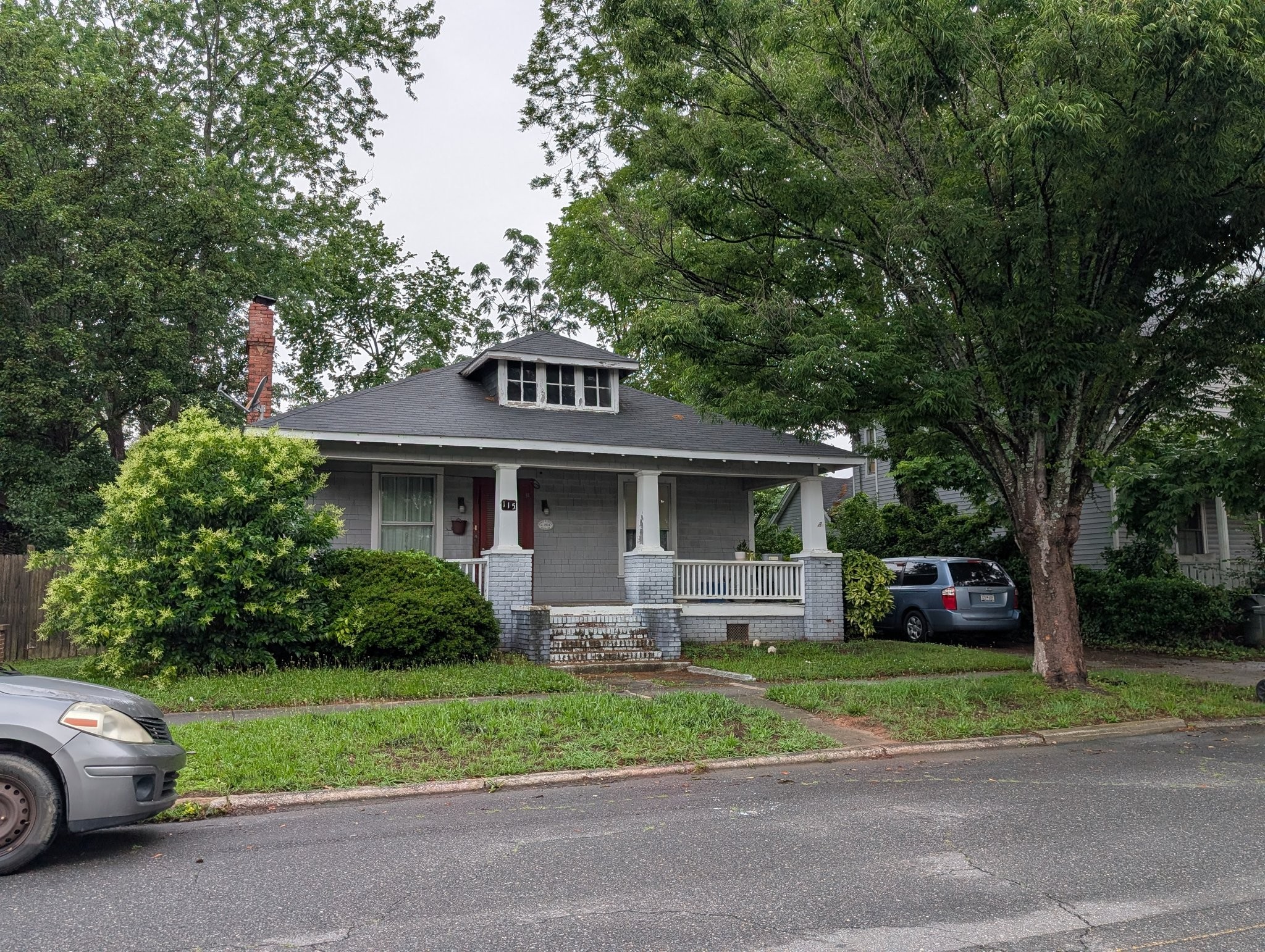
Huey house ca 1925
Constructed around 1925, the Huey House reflects Rock Hill’s continued residential growth during the interwar period, when the city was firmly established as one of South Carolina’s leading textile and railroad centers. Built for members of the Huey family, whose name is associated with York County’s broader civic and commercial history, the residence represents the next chapter in Rock Hill’s evolving domestic architecture—shaped by increased prosperity, improved transportation networks, and the growing influence of nationally popular architectural styles.
The house emerged during a time when Rock Hill’s residential neighborhoods were becoming more formalized and architecturally cohesive. As the city expanded outward from its downtown core, new subdivisions and infill development attracted business leaders, professionals, and mill-affiliated families seeking comfortable and stylish homes that reflected both modern tastes and established Southern residential traditions. The Huey House stands within this context as a product of an era defined by stability, optimism, and incremental urban refinement.
Architecturally, the Huey House likely embodies the restrained elegance of the Colonial Revival and early 20th-century domestic revival styles that were dominant in the 1920s. Homes of this period often featured symmetrical façades, gabled or hipped roofs, classical entry details, multi-pane windows, and inviting porches or porticos that balanced formality with livability. The design emphasized proportion and order, moving away from the more ornate Victorian vocabulary of earlier decades toward a cleaner, historically inspired aesthetic.
The construction of the Huey House coincided with a period of continued industrial strength in Rock Hill, particularly through the textile sector, which supported a growing middle class and sustained demand for well-built residential properties. Neighborhoods of this era reflected a blend of tradition and modernization, where early twentieth-century homes coexisted with newer architectural forms, collectively shaping the city’s distinctive residential character.
Today, the Huey House remains a valuable piece of Rock Hill’s architectural and historical fabric. It offers insight into the city’s interwar development, the evolution of its residential design preferences, and the continued prominence of families whose presence helped guide Rock Hill’s growth into a mature and economically vibrant Southern community.