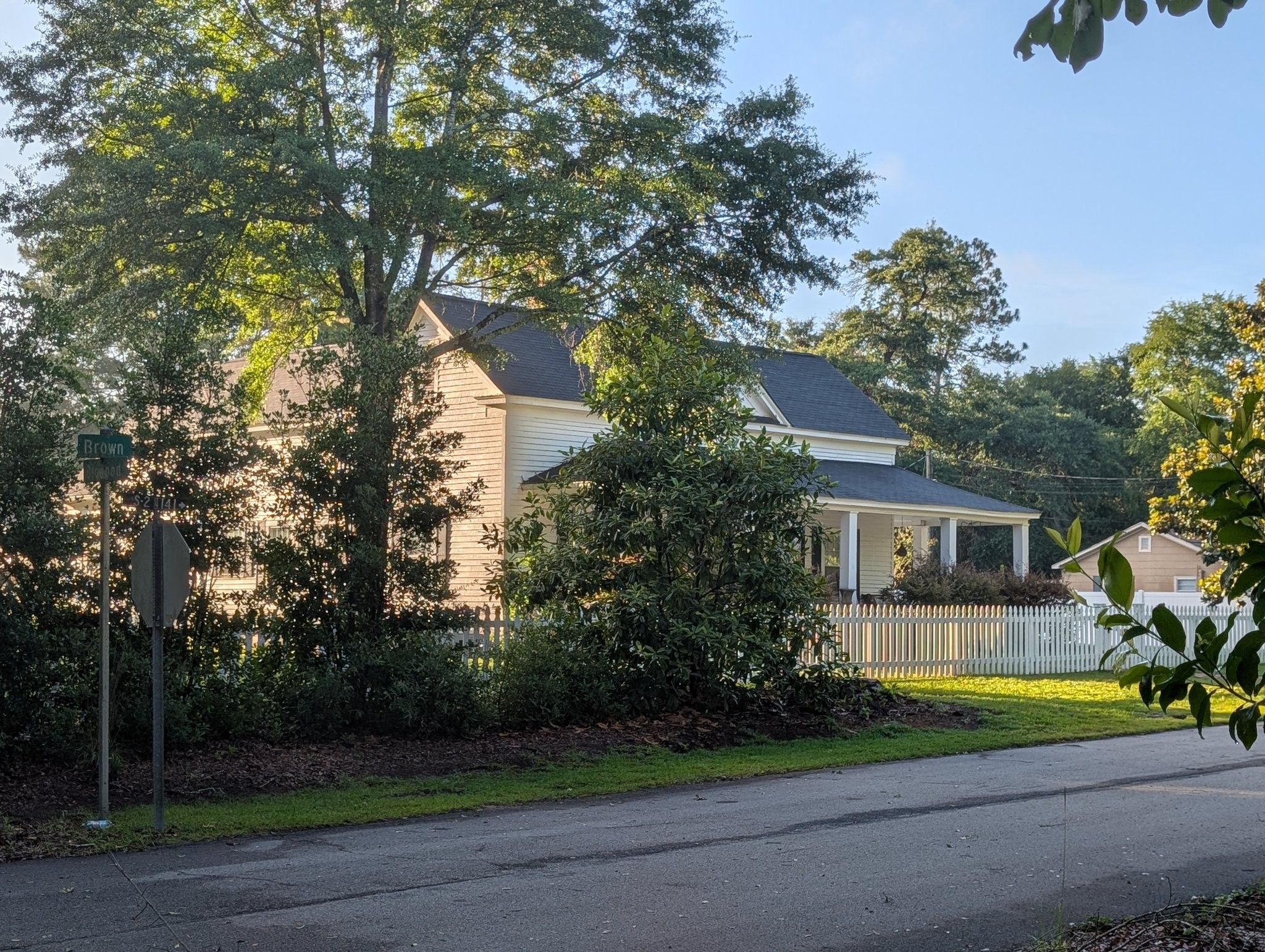
Constructed around 1910, the Henry Sawyer House is a significant residential resource within the Salley Historic District and reflects the prosperity and growth experienced by Salley during the early twentieth century as a thriving railroad and agricultural center. The house is associated with the prominent Sawyer family, one of the town’s influential commercial and civic families whose contributions helped shape Salley’s development during its formative years. The property is listed as a contributing resource within the historic district, which was added to the National Register of Historic Places in 2000.
Architecturally, the Henry Sawyer House embodies the restrained residential styles popular in small South Carolina towns during the first decades of the twentieth century. Typical of the period, the dwelling features a well-balanced façade, a prominent front porch designed as an important social space, and wood-frame construction resting on a raised foundation. Its form and detailing reflect the transition from late Victorian influences to the simpler, more practical residential designs that characterized the early twentieth century. The house contributes to the district’s collection of historic residences that illustrate the evolution of local domestic architecture from the late nineteenth century through the Depression era.
The home occupies a prominent location near the intersection of Brown and Dogwood Streets, where it remains an important visual component of Salley’s historic residential neighborhood. Together with nearby Sawyer family properties and other contributing buildings, it helps convey the historic character of a community that flourished following the arrival of the railroad and the expansion of agricultural commerce.
Today, the Henry Sawyer House stands as a tangible reminder of Salley’s early twentieth-century prosperity and the enduring legacy of one of the town’s leading families. Its preservation enhances the architectural and historical significance of the Salley Historic District and contributes to the understanding of community life in rural South Carolina during a period of growth and modernization.