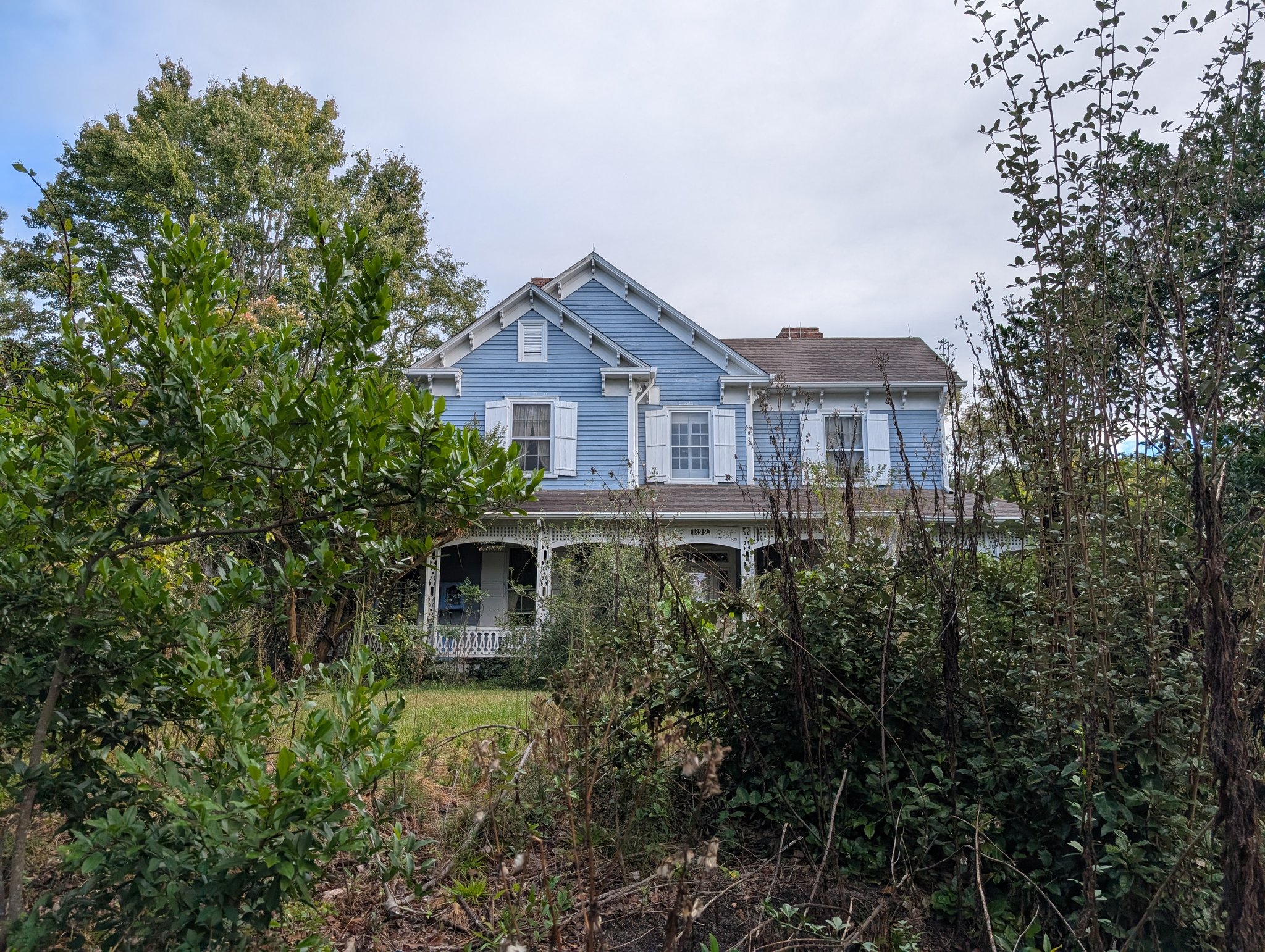
Hatton House in Pomaria
The Hatton House, commonly known as the 1892 House, stands as a distinguished example of late 19th-century vernacular architecture in Pomaria, South Carolina. Constructed around 1892, this two-story frame gabled-ell cottage embodies the Folk Victorian style, characterized by its ornate millwork and decorative trim. The house was designed by local contractor Calvin Cannon, with much of the exterior detailing crafted by master carpenter G.B. Aull, both prominent figures in Pomaria’s architectural history.
The Hatton House is notable for being the first residence in the Pomaria area to be electrified, utilizing a Delco battery-operated system before rural electrification reached the region in 1926. This advancement reflects the community’s embrace of modern technology during a period of significant transformation.
The property also includes two contributing structures: the Delco House, which housed the equipment for the home’s early electrical system, and a circa 1875 cabin known as “Uncle Tobias’s Cabin,” a surviving example of post-bellum Black housing. These additions enrich the site’s historical narrative, offering insights into the lives of the individuals who shaped Pomaria’s development.
Listed on the National Register of Historic Places on October 1, 1990, the Hatton House remains a testament to the architectural and cultural heritage of Pomaria. Its preservation allows for the continued appreciation of the craftsmanship and historical significance that define this unique rural community.