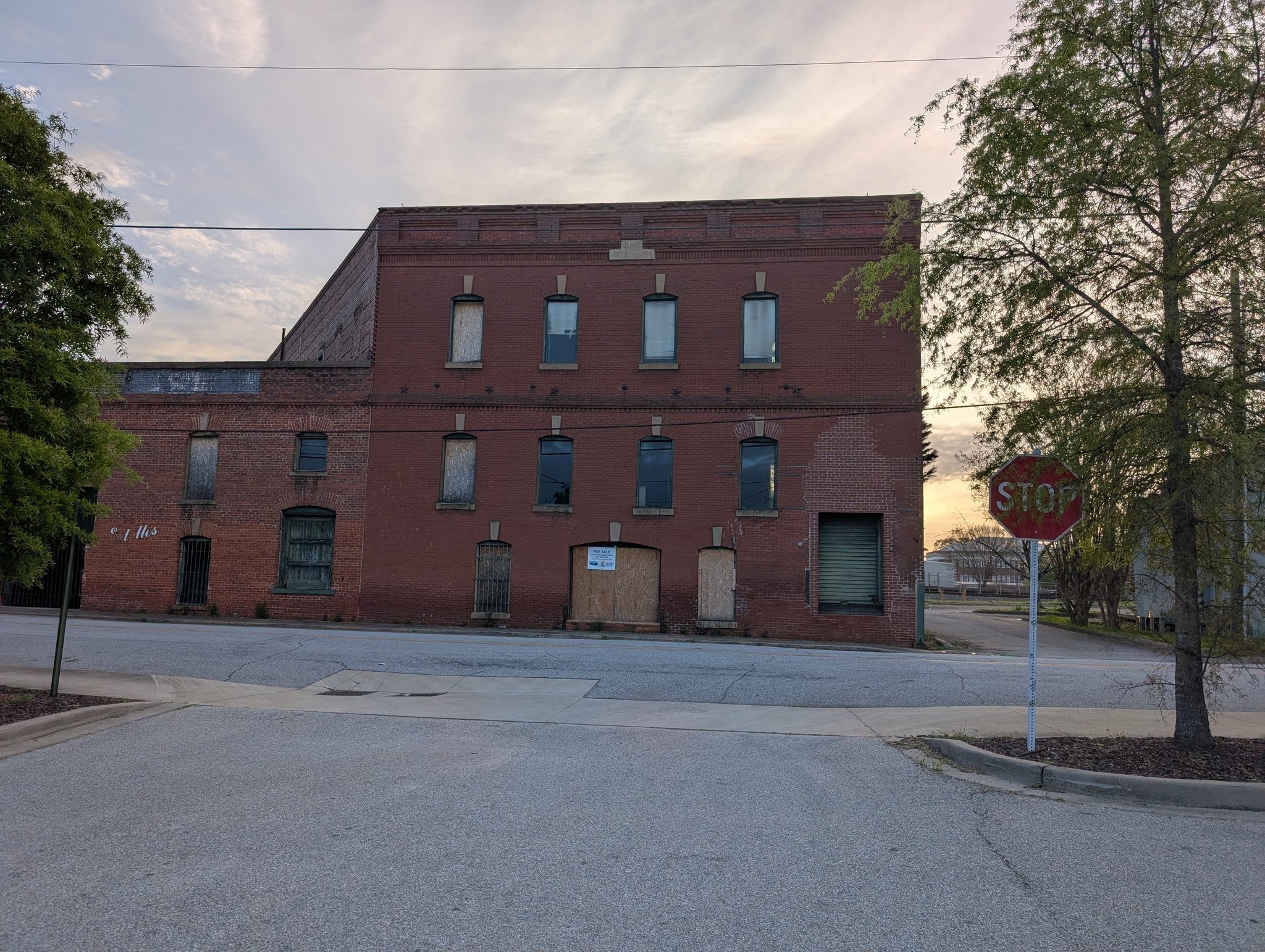
Hames Wholesale Grocery
Hames Wholesale Grocery, established around 1878 in the thriving town of Union, emerged during a formative period of rebuilding and renewal in the years following the Civil War. As Union and the surrounding region worked to restore economic stability, enterprises such as this played a vital role in reconnecting rural producers, merchants, and consumers through dependable channels of trade.
Founded by the Hames family likely prominent participants in the area’s commercial life the business served as a wholesale supplier, distributing staple goods to smaller general stores throughout Union County and beyond. In an era when rail lines and wagon routes were essential lifelines, wholesale groceries functioned as critical intermediaries, ensuring that communities had access to flour, sugar, coffee, salt, and other necessities of daily living.
Architecturally, the Hames Wholesale Grocery building would have reflected the straightforward, utilitarian style typical of late nineteenth-century commercial warehouses. Constructed of brick or heavy timber, the structure likely featured a broad, open interior plan designed for storage and efficient handling of goods. Large loading doors, simple fenestration, and minimal ornamentation emphasized function over form, while its sturdy construction signaled reliability and permanence in a recovering economy.
Its location within Union’s commercial district would have placed it near transportation corridors particularly rail connections that expanded significantly in the late 1800s allowing goods to move in and out with increasing speed and efficiency. The presence of such a wholesale operation underscores Union’s importance as a regional trade center during this period, linking agricultural production with broader markets.
Over time, Hames Wholesale Grocery became more than just a business; it stood as a symbol of resilience and enterprise in the post-Reconstruction South. Through its daily operations, it helped sustain livelihoods, support local merchants, and contribute to the steady rebuilding of community life.