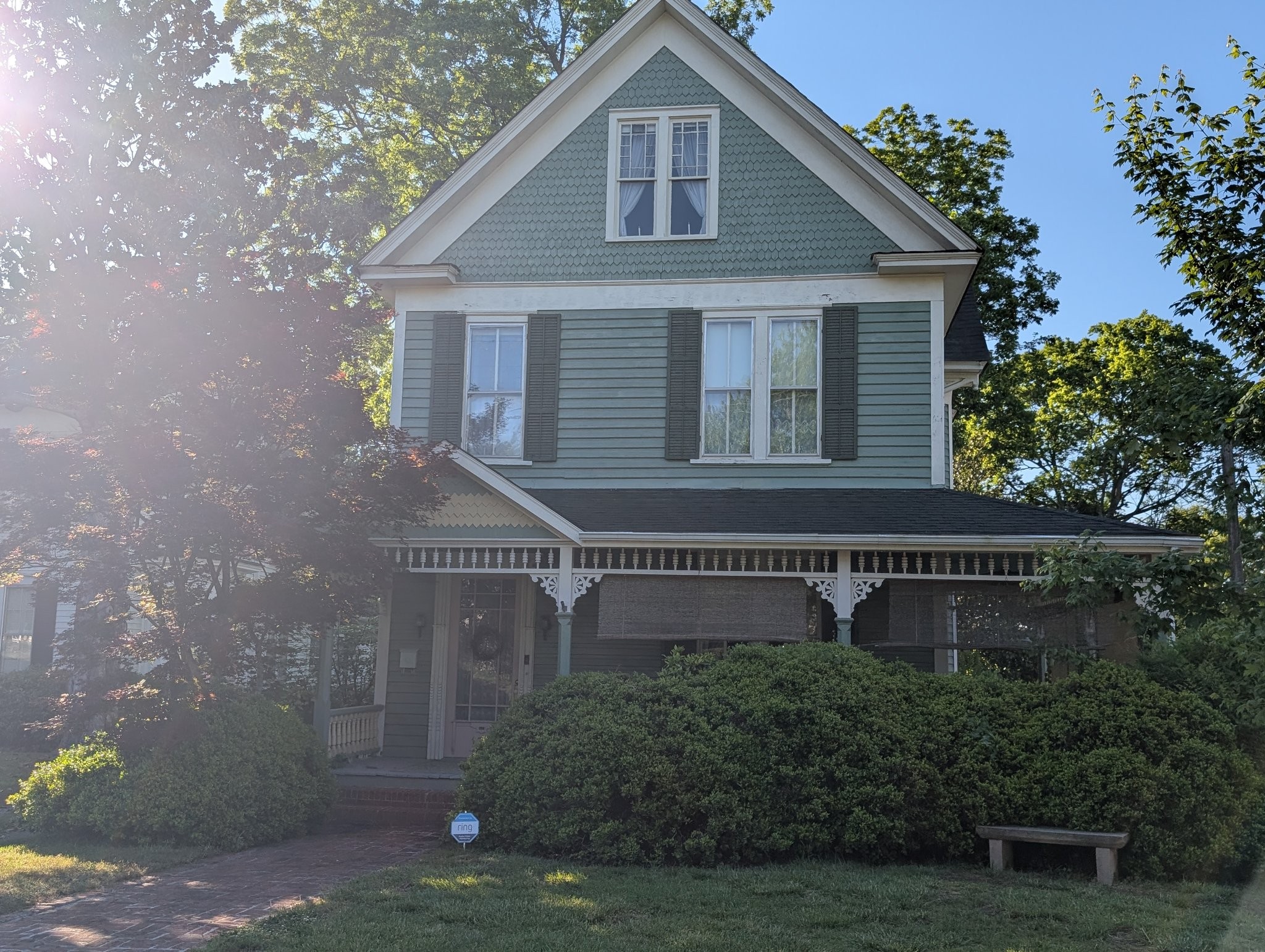
Grace Gage House
The Grace Gage House, constructed circa 1890 in Chester, stands as a refined example of late nineteenth-century residential architecture, reflecting a period when craftsmanship, ornamentation, and domestic comfort were carefully balanced in Southern home design. Built during a time of steady growth and transition, the residence embodies the stylistic richness and optimism of the Victorian era in Chester’s architectural landscape.
The exterior likely presents a picturesque and asymmetrical form characteristic of the Queen Anne tradition, with varied rooflines, projecting bays, and a welcoming front porch that serves as both a social and architectural focal point. Decorative woodwork such as turned porch posts, spindle friezes, and patterned shingles would have added texture and visual complexity, while gabled roof elements and ornamental trim reinforced the home’s expressive character.
Windows are thoughtfully composed, likely a mix of tall double-hung sash units and possibly decorative panes in select locations, allowing natural light to animate the interior while contributing to the façade’s rhythm and balance. The overall massing of the structure suggests a home designed not only for appearance but also for comfortable ventilation and practical living in the Southern climate.
Inside, the Grace Gage House would have featured a formal yet fluid arrangement of rooms, with parlors, dining areas, and private family spaces organized to support both entertaining and everyday life. High ceilings, detailed millwork, hardwood floors, and intricately crafted mantels would have underscored the attention to detail typical of the period. Transitions between rooms may have been softened with pocket doors or wide cased openings, allowing flexibility in use while maintaining a sense of elegance.
As a product of Chester’s late nineteenth-century development, the Grace Gage House remains a tangible link to the town’s architectural and cultural heritage. Its design reflects the craftsmanship, aesthetic values, and domestic ideals of its time, contributing enduring character to the historic fabric of the community.