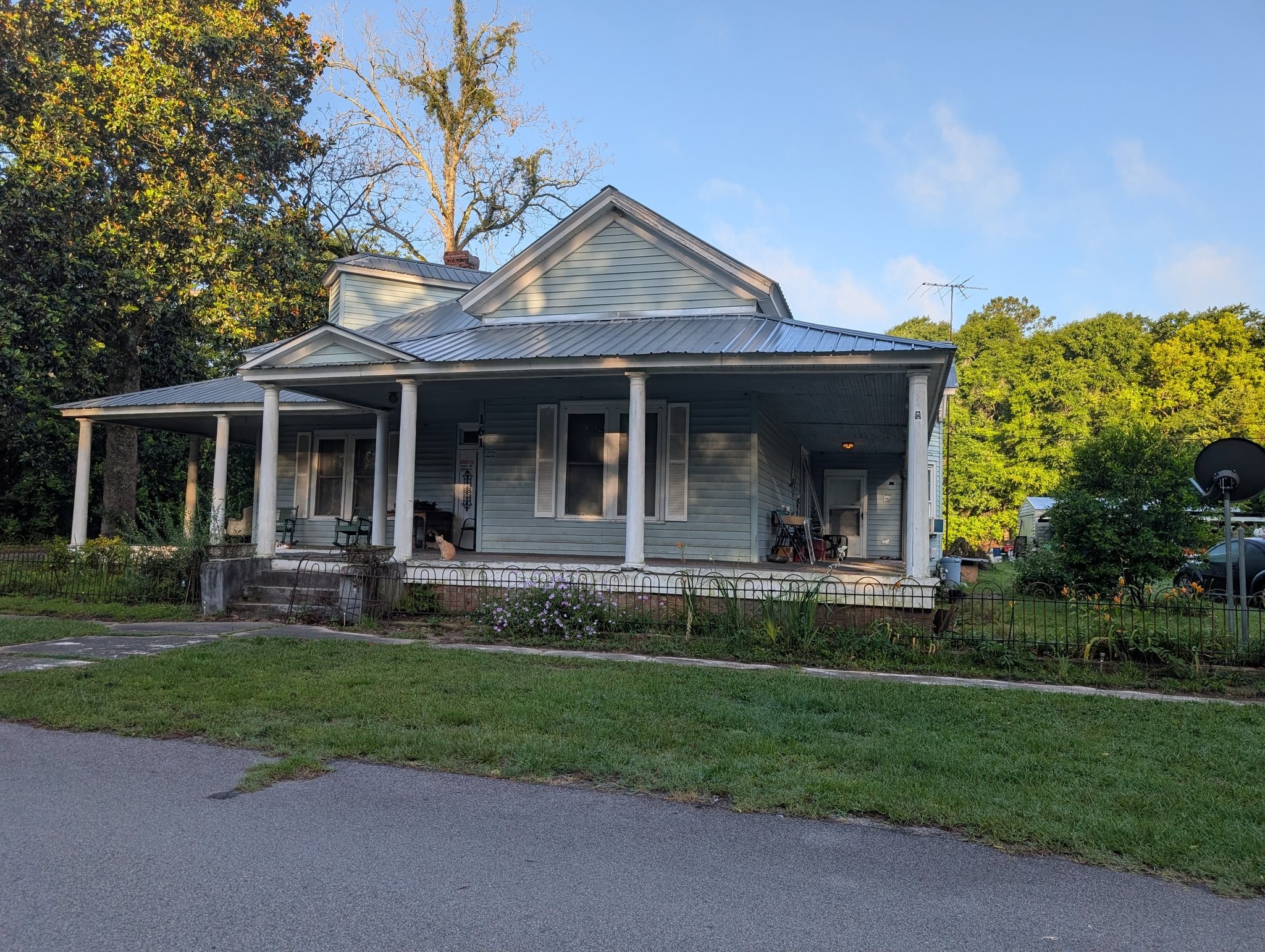
George Sawyer house ca 1910
Constructed circa 1910, the George Sawyer House is a handsome example of the residential architecture that emerged in Salley during the town’s most prosperous period of growth in the early twentieth century. Built at a time when the community was benefiting from the economic advantages of railroad transportation and a thriving agricultural economy, the residence reflects the confidence and stability enjoyed by many of Salley’s established families. The house remains an important contributor to the town’s historic character and serves as a reminder of the residential development that accompanied Salley’s commercial success.
Architecturally, the George Sawyer House displays the balanced proportions and craftsmanship characteristic of homes constructed during the transitional period between the Victorian era and the growing popularity of Colonial Revival influences. Its well-defined form, inviting porches, and decorative details exemplify the emphasis on comfort, elegance, and durability that marked residential construction during this period. Designed to accommodate both family life and social gatherings, the house reflects the values of a community that placed great importance on home, family, and civic engagement.
The residence is associated with George Sawyer, a member of a family that contributed to the economic and social fabric of Salley during the early twentieth century. Like many substantial homes of the era, the house symbolized achievement, permanence, and community standing. It occupied an important place within the residential streetscape, helping to define the character of the neighborhood while illustrating the aspirations of the town’s growing professional and business classes.
Throughout the decades, the George Sawyer House has remained a prominent feature of Salley’s historic landscape. Its continued preservation provides a valuable link to the period when the town was flourishing as a center of commerce and agriculture. Today, the residence stands as an enduring example of early twentieth-century domestic architecture and serves as a testament to the craftsmanship, prosperity, and community spirit that shaped Salley’s development during one of the most significant chapters in its history.