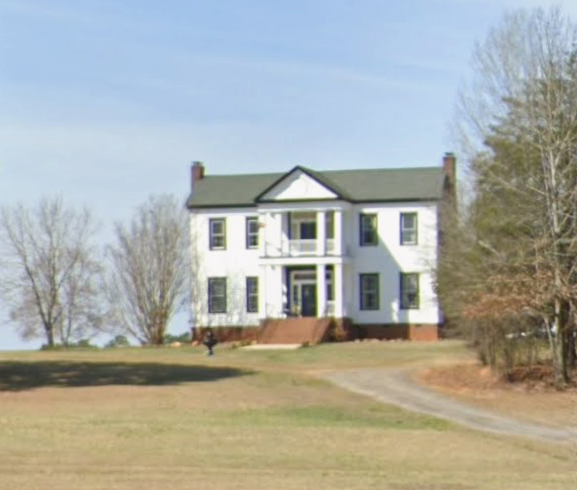
Fort-Taylor House ca 1855
The Fort-Taylor House is a significant surviving antebellum residence in the Batesburg-Leesville area, representing the domestic architecture, agricultural traditions, and social history of the community during the middle nineteenth century. Constructed around 1855 by builder West Hare for Colonel John Lee, a prominent planter and tavern owner, the house was originally built as a residence for his daughter, Elizabeth Lee. The home reflects the prosperity of the Lee family and the importance of Leesville’s early settlement period, when the community was closely tied to stagecoach travel, agriculture, and local commerce.
The house is a substantial frame farmhouse exhibiting the simplicity and symmetry typical of antebellum rural architecture in the South. Its design reflects the influence of the Greek Revival tradition, popular throughout South Carolina during the mid-1800s, with an emphasis on balanced proportions, classical detailing, and a dignified presentation. The residence’s broad façade, traditional floor plan, and carefully crafted woodwork illustrate the craftsmanship of the period and the transition from early settlement houses to more refined plantation-era homes.
Originally located approximately one-quarter mile from its present site, the Fort-Taylor House was later moved as part of a preservation effort. The relocation allowed the historic structure to be restored and preserved while maintaining its architectural character and connection to the surrounding landscape. Restoration work highlighted the craftsmanship of the original construction, including its hand-finished wood details, spacious interior arrangement, and nineteenth-century building techniques.
The house is closely connected to the history of Colonel John Lee, whose family played an important role in the development of Leesville. Lee inherited a tavern established by his father, Andrew Lee, and local tradition holds that President George Washington stopped at the Lee family tavern during his 1791 Southern tour. The Lee family’s influence contributed to the growth and identity of the community that eventually became known as Leesville.
Following Elizabeth Lee’s marriage first to Dr. Hugh Spencer Lee and later to Henry Arthur Fort, the residence became associated with the Fort family name. Oral history surrounding the home includes stories from the Civil War era, including a local tradition that General William T. Sherman visited the property during his march through South Carolina. Such stories, whether documented or preserved through family tradition, add to the cultural significance of the house as a witness to generations of local history.
Architecturally and historically, the Fort-Taylor House serves as an important reminder of Batesburg-Leesville’s antebellum heritage. It embodies the lifestyle of nineteenth-century planters, the craftsmanship of rural South Carolina builders, and the enduring influence of families who shaped the early development of the region. Today, the house remains a valued example of preservation efforts dedicated to protecting the architectural legacy and historic memory of Lexington County.