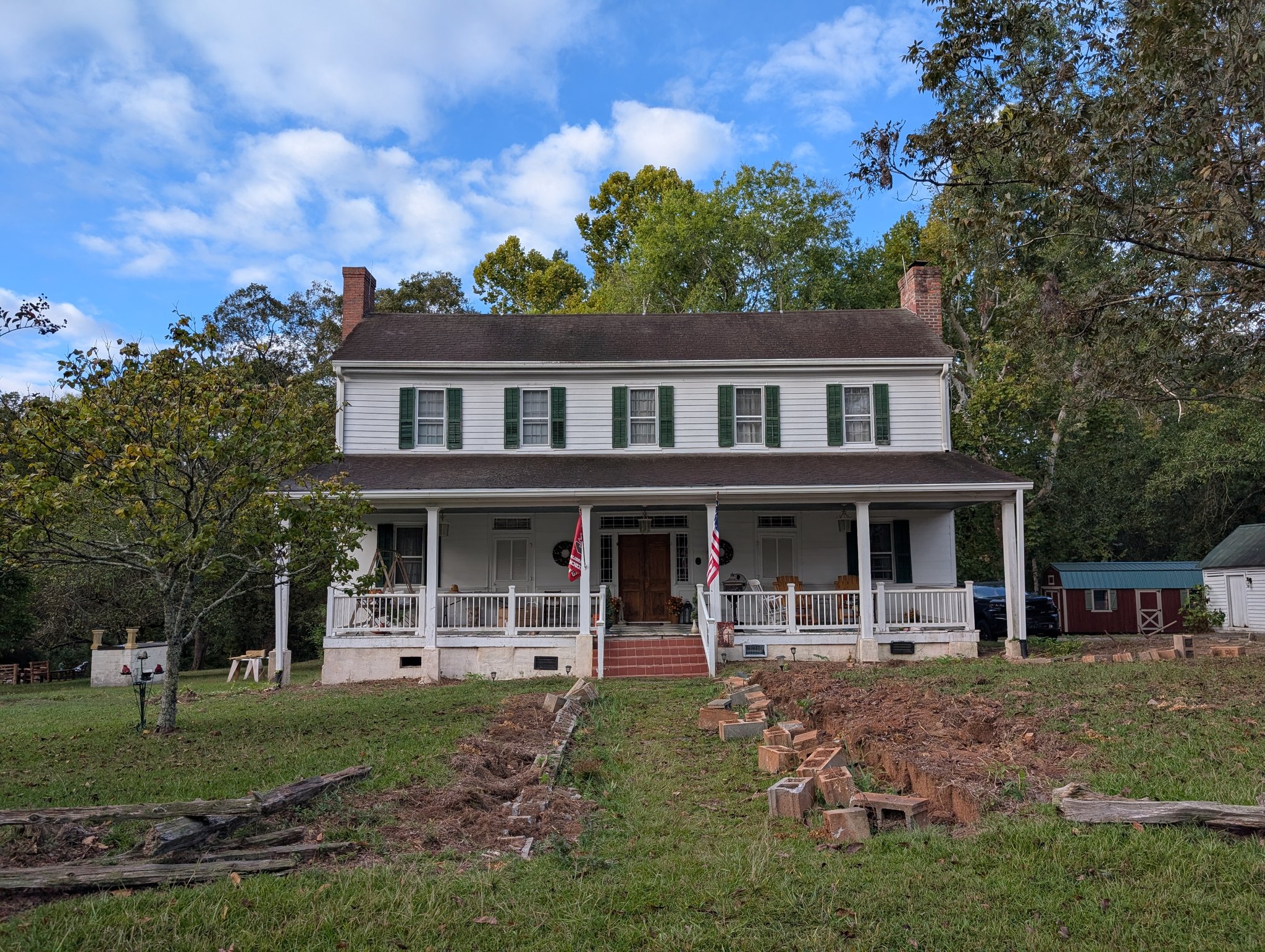
Folk-Holloway House in Pomaria
Folk-Holloway House in Pomaria stands as a graceful testament to the architectural, cultural, and familial legacies woven into South Carolina’s rural heritage. Built around 1835 for John Adam Folk, the house is an elegant example of the “Carolina I-house” form—a two-story, single-pile frame dwelling—blending the refined motifs of the Federal and Greek Revival styles with vernacular sensibilities.
From the outset, the Folk family was central to the local economy and society. John Adam Folk (1799–1855) was both a farmer and a merchant, employing the home as the nucleus of agricultural operations, commercial endeavors, and regional influence. The house’s unusual triple entry—three front doors side by side—distinguishes it architecturally and hints at the functional ambitions and status of its owner.
Over time, the property passed into the hands of the Holloway family through Martha H. Folk’s marriage to Thomas W. Holloway, marking an important familial transition that linked two prominent local lineages. Thomas Holloway proved to be a civic actor, serving in roles such as town intendent (mayor) and helping establish the formal boundaries of Pomaria at his death; local lore says the town’s charter drew a circle centered on a stake in front of this house.
Inside, the house preserves original features such as wide plank flooring, pegged joinery, classical moldings, and mantelpieces inspired by period pattern books—a physical narrative of craftsmanship, taste, and evolving generations. Though modest compared to grand plantation mansions, the Folk-Holloway House stands out because of such integrity, the coherence of its architectural vocabulary, and its ability to convey the aspirations and daily life of a prosperous upcountry family in the antebellum and postbellum eras.
By 1992, the house’s significance was formally recognized when it was added to the National Register of Historic Places. Today, its stately façade and preserved interior places evoke not only the artistry of early 19th-century building but also the social, economic, and generational narratives that shaped Pomaria and the Dutch Fork region.