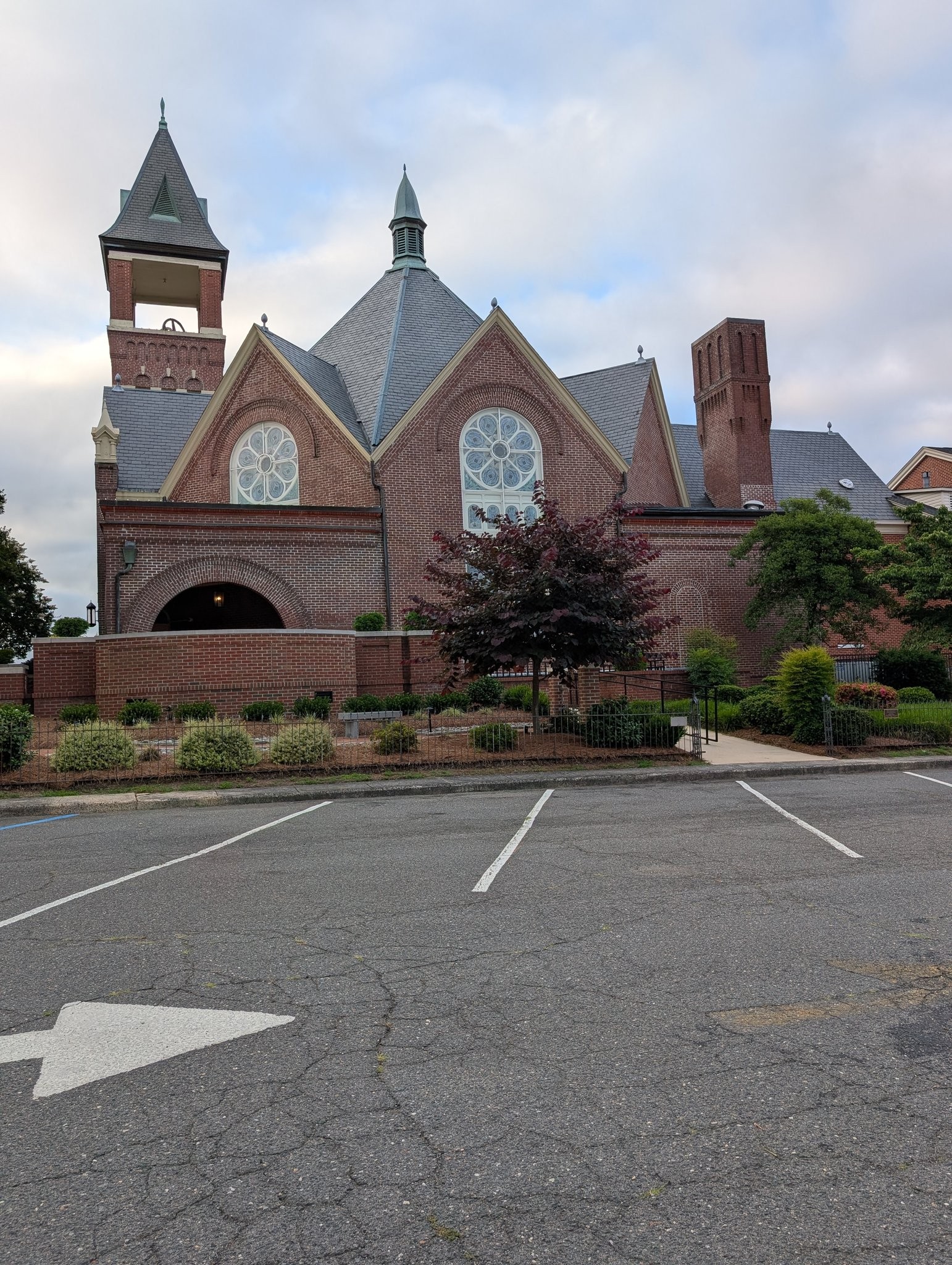
First Presbyterian Church ca 1869
First Presbyterian Church, established in 1869 in Rock Hill, stands among the city’s oldest and most historically significant religious institutions, reflecting the emergence of Rock Hill during the Reconstruction era following the Civil War. Organized only a few years after the arrival of the Charlotte and South Carolina Railroad transformed the small crossroads community into a growing commercial town, the congregation became an important spiritual and civic presence during a formative period in the city’s development. The church’s establishment symbolized both stability and optimism as Rock Hill began its transition into a regional center of trade, education, and industry.
The church building, constructed during the late nineteenth century and expanded over time, reflects the architectural traditions commonly associated with Presbyterian congregations throughout the South. Influenced by Gothic Revival ecclesiastical design, the structure features pointed-arch windows, steep rooflines, and restrained decorative detailing that emphasize simplicity, dignity, and permanence. The sanctuary’s carefully proportioned design and prominent location within the community reinforced the role of churches as central landmarks in the cultural and social life of growing Southern towns.
Throughout its history, First Presbyterian Church played a vital role in the educational and civic development of Rock Hill. The congregation supported charitable outreach, missionary programs, youth education, and community initiatives while serving generations of local families during periods of growth, hardship, and social change. Many of Rock Hill’s early civic leaders, educators, and business figures were associated with the church, further linking the institution to the broader historical development of the city.
As Rock Hill expanded during the textile boom of the late nineteenth and early twentieth centuries, First Presbyterian Church remained a steady and influential presence within the community. Its continued growth mirrored the city’s transformation from a small railroad village into one of the principal urban centers of the South Carolina Piedmont. Today, the church remains an enduring symbol of Rock Hill’s religious heritage and historic identity, preserving both the architectural character and community traditions that have shaped the city for more than a century.