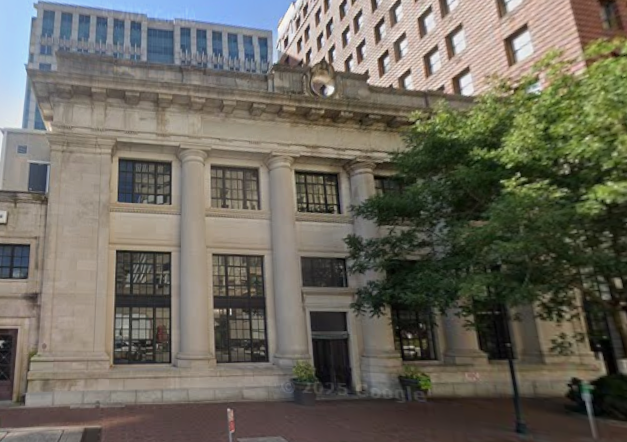
First National Bank ca 1924
The First National Bank building, dating to approximately 1924, represents Columbia’s prosperity, commercial expansion, and growing importance as a regional financial center during the 1920s. Constructed during a period of economic optimism and rapid modernization, the building reflected the confidence of banks and business leaders who were investing in substantial downtown architecture. Its presence contributed to the increasingly urban character of Columbia’s central business district, where banks, department stores, office buildings, hotels, and professional establishments were reshaping the cityscape.
The development of a national bank in Columbia was closely connected to the city’s expanding economy. By the early twentieth century, Columbia had evolved beyond its traditional role as South Carolina’s political capital and had become an important center for manufacturing, wholesale trade, transportation, agriculture, and professional services. Financial institutions played a fundamental role in this growth by providing capital for businesses, real estate development, industrial investment, and personal banking. A prominent First National Bank building therefore served both a practical financial function and a highly visible expression of economic stability.
Architecturally, the circa-1924 building belongs to the era of monumental commercial architecture that transformed American downtowns. Banks of the period frequently adopted Classical Revival-inspired designs, using symmetrical façades, strong vertical divisions, monumental entrances, and carefully proportioned decorative details to communicate permanence and security. Stone, brick, terra-cotta, and other durable materials were commonly used to reinforce the impression that a financial institution was built to endure. The architectural language was deliberate: solidity and order were intended to inspire confidence among depositors and investors.
The building’s vertical and formal presence also reflects the changing scale of Columbia during the 1920s. Earlier commercial buildings had generally been limited in height and ornament, but the growth of modern construction technology made larger office and banking structures possible. Steel-frame construction, elevators, electric lighting, improved plumbing, and modern heating and ventilation systems allowed downtown buildings to accommodate increasingly complex business operations. The First National Bank building thus represented both architectural progress and the modernization of banking practices.
Inside, a bank of this period would typically have featured a carefully organized public banking room, private offices, teller facilities, bookkeeping areas, and secure spaces for records and valuables. High ceilings, large windows, decorative finishes, and substantial counters could combine efficiency with an atmosphere of dignity. Security was especially important, with vaults and other protective features incorporated into the building’s design. The contrast between open public banking areas and restricted work and security spaces reflected the increasingly professional nature of American financial institutions.
The history of the First National Bank is also connected to Columbia’s role as a center of commerce in the 1920s. Banks provided the financial infrastructure necessary for expanding businesses, residential construction, manufacturing, and trade. Their fortunes were closely tied to the economic conditions of the city and the wider state, including the agricultural and textile industries that remained major components of South Carolina’s economy. The bank therefore stood at the intersection of local business activity and the broader economic forces shaping the state.
The building’s circa-1924 date places it within a particularly important period of Columbia’s architectural development. Downtown Columbia was acquiring a distinctly modern appearance, with new office buildings and commercial structures standing alongside older nineteenth-century buildings. The First National Bank building contributed to this evolving skyline and helped establish the central business district as the financial and commercial heart of the capital.
The First National Bank is therefore significant for its representation of Columbia’s financial and architectural development during the 1920s. Its monumental design expressed the ideals of permanence, prosperity, and institutional confidence that characterized American banking architecture of the era. More broadly, the building provides a tangible reminder of the economic forces that helped transform Columbia into a modern Southern city and of the important role financial institutions played in supporting its growth.