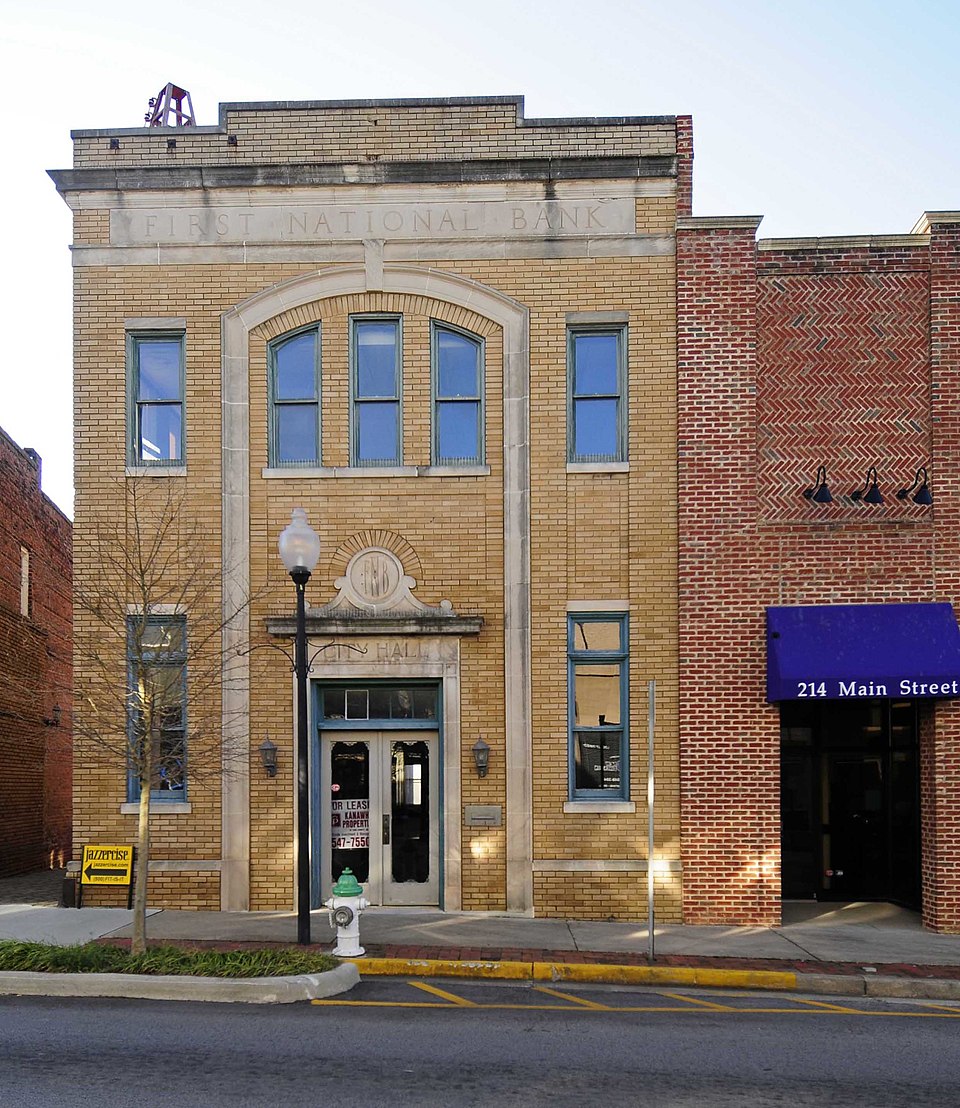
First National Bank building ca 1920
The First National Bank building, constructed circa 1920 in Fort Mill, stands as an enduring symbol of the town’s early twentieth-century commercial growth and financial stability during the height of Fort Mill’s textile-era prosperity. Erected during a period when the community was rapidly expanding through industrial development and railroad commerce, the bank represented both economic confidence and the increasing sophistication of Fort Mill’s downtown business district. As one of the town’s most important financial institutions, the First National Bank played a central role in supporting local businesses, agricultural enterprises, textile operations, and residential growth throughout the region.
Architecturally, the building reflects the restrained Classical Revival commercial style commonly associated with financial institutions during the early twentieth century. Its solid masonry construction, balanced proportions, and dignified façade conveyed permanence, security, and trust—qualities considered essential for banking establishments of the era. Traditional features such as symmetrical storefront arrangements, decorative brickwork, stone or cast concrete detailing, large display windows, and a prominent entrance emphasized the building’s civic importance while complementing the surrounding commercial streetscape of downtown Fort Mill.
The bank emerged during a transformative period in Fort Mill’s history when textile manufacturing fueled unprecedented economic expansion. Financial institutions such as First National Bank provided critical capital for industrial investment, commercial development, and infrastructure improvements that shaped the modern character of the town. The building therefore represents not only a place of commerce, but also the broader economic optimism that defined Fort Mill during the early decades of the twentieth century.
Over the years, the First National Bank building has remained an important architectural anchor within the historic downtown district. Its continued presence contributes to the historic character and visual continuity of Main Street while serving as a reminder of the commercial vitality that accompanied Fort Mill’s rise as one of York County’s leading industrial communities. Today, the structure stands as a significant piece of Fort Mill’s architectural and economic heritage, reflecting the enduring relationship between community growth, local enterprise, and historic preservation.