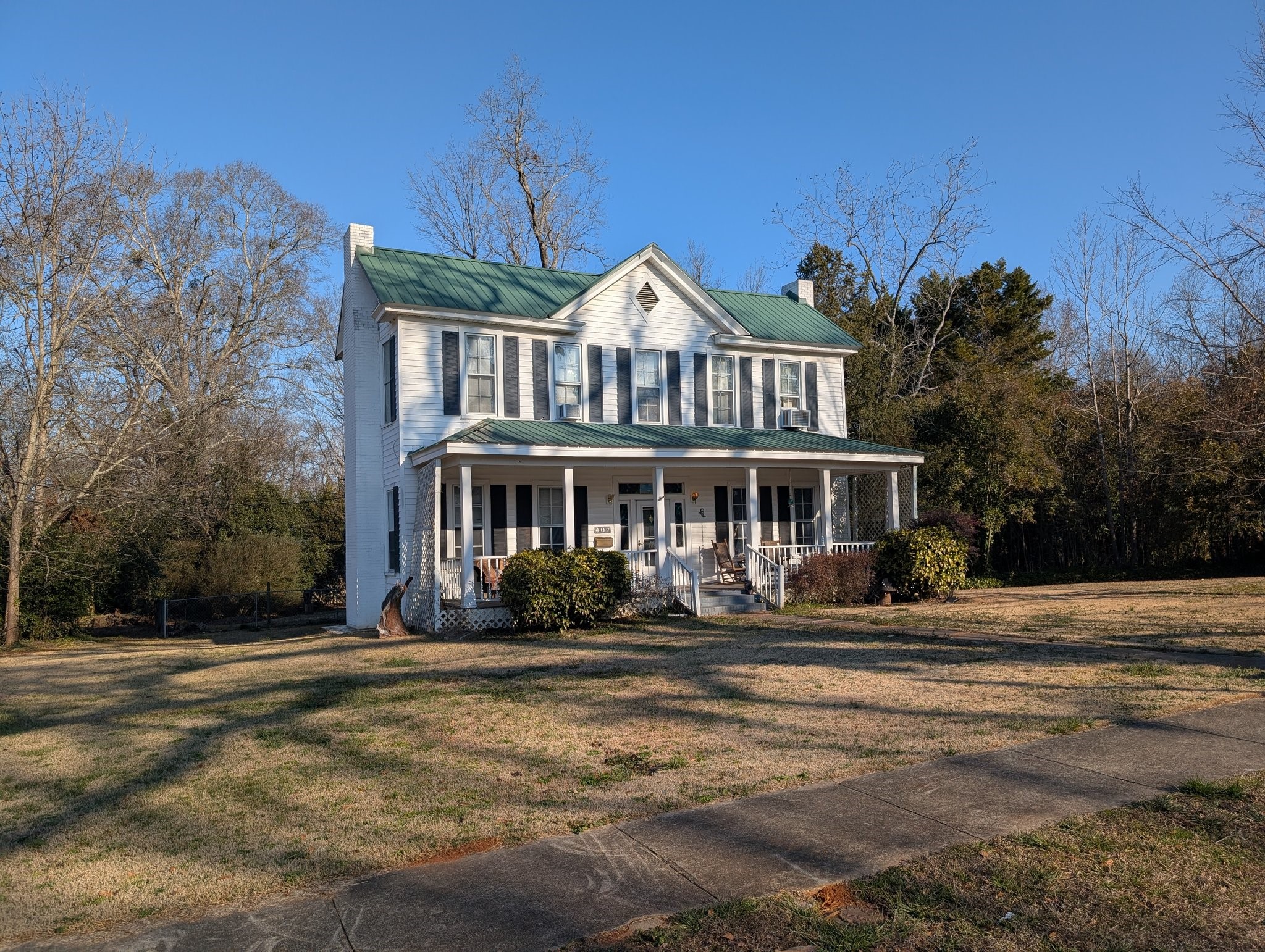
Enright–Roche House
The Enright–Roche House stands as a quietly elegant example of late nineteenth-century residential architecture in historic Abbeville, reflecting the prosperity, craftsmanship, and evolving social character of the town during a period of steady growth and refinement. Located within Abbeville’s nationally recognized historic district, the house contributes to the architectural continuity that defines one of South Carolina’s best-preserved courthouse towns.
Constructed in the late 1800s, the Enright–Roche House exhibits stylistic influences typical of upper-middle-class Southern homes of the post–Reconstruction era. Its form, proportions, and decorative detailing reflect the transition from earlier vernacular traditions toward more formalized architectural expression, a trend that mirrored Abbeville’s civic and economic stability following the Civil War.
The residence is historically associated with the Enright and Roche families, both of whom were part of Abbeville’s professional and mercantile community. These families contributed to the town’s commercial life and civic development during a time when Abbeville served as a vital agricultural, legal, and trading center for the surrounding region. Their home became a visible symbol of social standing and local engagement.
Architecturally, the house is characterized by balanced massing, refined woodwork, and decorative elements that convey both permanence and comfort. Typical features include broad porches, tall windows, and interior layouts designed to accommodate both family life and formal entertaining. Such design choices reflected prevailing social customs and the importance of hospitality within Southern communities.
As part of Abbeville’s Historic District, the Enright–Roche House contributes to a streetscape that collectively tells the story of the town’s nineteenth- and early twentieth-century growth. The preservation of this residence ensures that the craftsmanship, architectural trends, and lived experiences of Abbeville’s past remain visible to present and future generations. Today, the house stands as a testament to the enduring legacy of the families who shaped the town’s cultural and economic foundation.