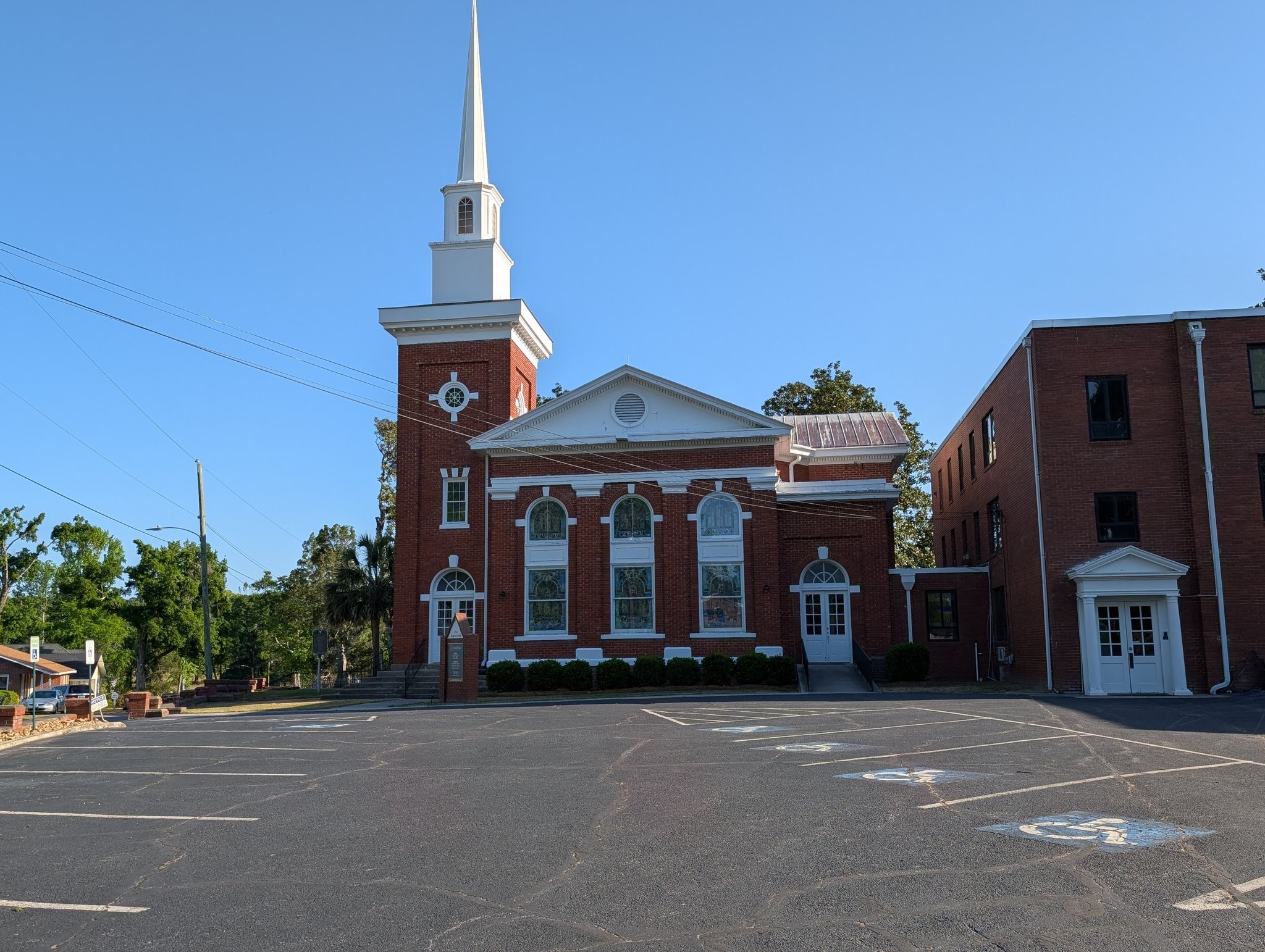
Edgefield Church of Our Savior
Gracefully set within the historic fabric of Edgefield, Edgefield Church of Our Savior formally known as Church of Our Saviour stands as a refined expression of Episcopal tradition and late nineteenth-century craftsmanship. Organized in the 1870s as part of the broader expansion of the Episcopal Church in rural South Carolina, the congregation sought to establish a permanent spiritual home that would reflect both reverence and architectural distinction.
Completed around 1882, the sanctuary embodies the Gothic Revival style, a design movement closely associated with Episcopal worship for its emphasis on verticality, light, and symbolism. The church’s steeply pitched rooflines, pointed-arch windows, and carefully proportioned façade evoke a sense of upward movement and quiet dignity, while its wooden frame construction speaks to the materials and methods readily available in a small Southern town.
The interior continues this sense of restrained beauty. Exposed woodwork, simple yet elegant detailing, and filtered natural light create a contemplative atmosphere suited to the Episcopal liturgy. The spatial arrangement focused on the altar and chancel reinforces the sacramental traditions of the denomination, offering a setting that is both intimate and reverent.
Surrounding the church, the grounds contribute to its enduring presence within the community. Mature trees and a sense of enclosure lend the site a timeless quality, while its placement within Edgefield connects it to a broader historic landscape shaped by centuries of civic, religious, and cultural development.
Throughout its history, the Church of Our Saviour has remained a steady thread in the town’s spiritual life. Though modest in scale, it reflects a larger story of faith carried into rural communities, of architectural ideals adapted to local contexts, and of a congregation whose legacy continues to resonate within Edgefield’s historic character.