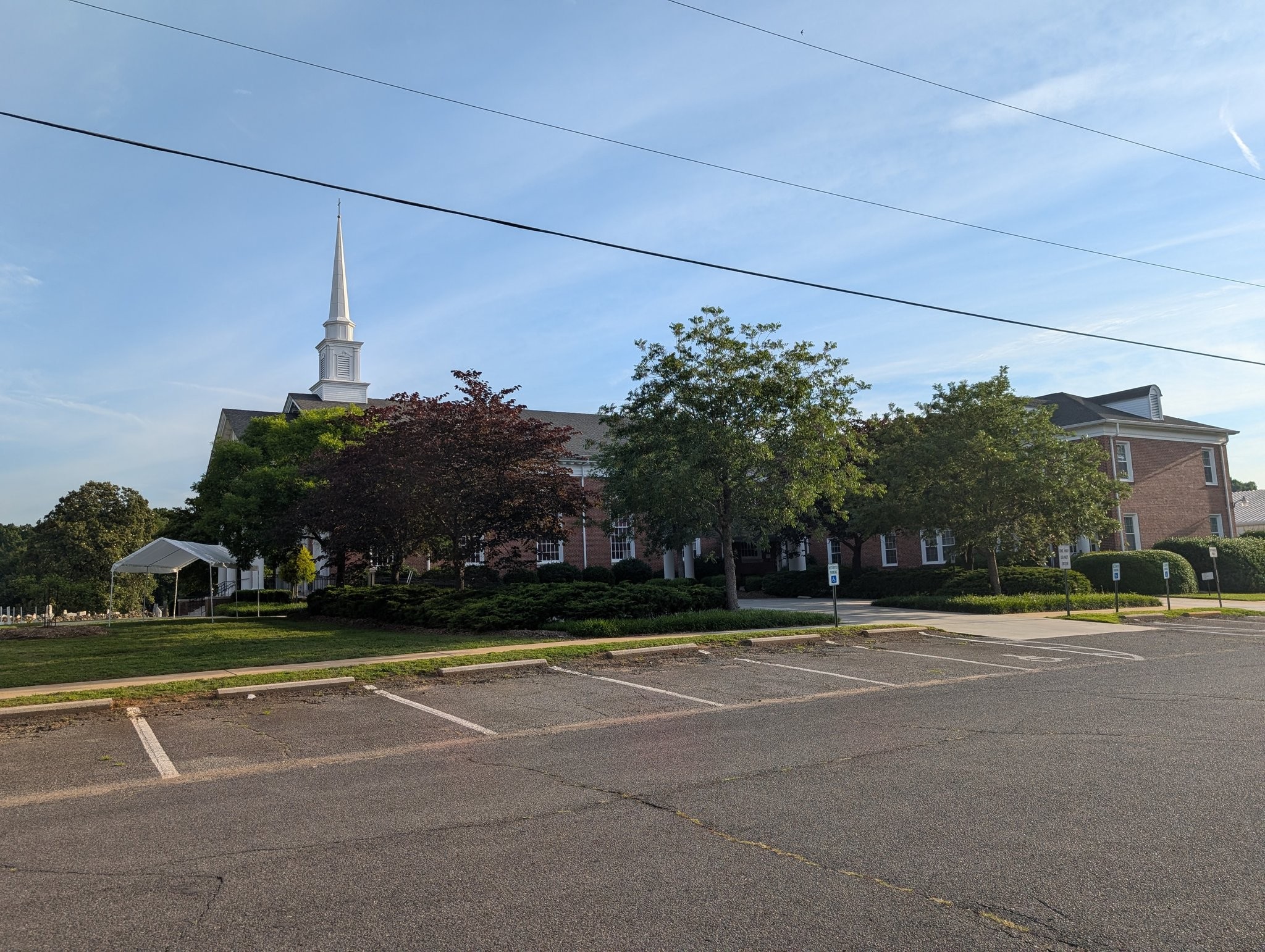
Ebenezer Academy ca 1860
The Ebenezer Academy, established circa 1860 in the Rock Hill area of York County, South Carolina, stands as an important early example of antebellum educational development in the upper Piedmont region. Built on the eve of the Civil War, the academy reflects the growing local emphasis on formal education for rural communities that were transitioning from subsistence agriculture toward a more diversified, market-connected economy. Serving as both a school and a community institution, Ebenezer Academy was closely tied to the social and religious life of the surrounding Ebenezer community, where churches, farms, and small crossroads settlements formed the backbone of daily life.
Architecturally, the original academy building would have been a modest, functional frame structure typical of mid-nineteenth-century rural schools in South Carolina. Construction likely featured weatherboard siding, a simple gable roof, symmetrical fenestration, and a one-room or limited-multiple-room interior plan designed to accommodate mixed-age instruction. Large windows provided essential natural light, while a central wood-burning stove served as the primary source of heat during colder months. The building’s form emphasized utility and durability over ornamentation, reflecting its role as a practical civic resource rather than a stylistic statement.
The academy functioned as an important educational center for children in the surrounding countryside, offering instruction in basic literacy, arithmetic, moral philosophy, and classical subjects typical of the period’s curriculum. In many such academies, instruction was influenced by local clergy or community-educated teachers, and the school often doubled as a venue for community gatherings, religious meetings, and civic discussions. Ebenezer Academy thus played a dual role as both an intellectual and social hub in the prewar rural landscape.
Historically, the establishment of Ebenezer Academy around 1860 places it at a pivotal moment in South Carolina’s history. The outbreak of the Civil War shortly thereafter would have disrupted regular schooling, and like many rural academies of the era, its operations were likely suspended, altered, or significantly reduced during the conflict and Reconstruction period. Its legacy, however, reflects the broader antebellum commitment to expanding educational access in local communities despite limited resources.
Within the broader narrative of Rock Hill and York County’s development, Ebenezer Academy represents the early foundations of public and community-supported education that would later evolve into more formalized school systems. It stands as a reminder of the region’s efforts to cultivate learning, civic identity, and social cohesion during a period of profound political and economic change in the American South.