Earle R. Taylor House
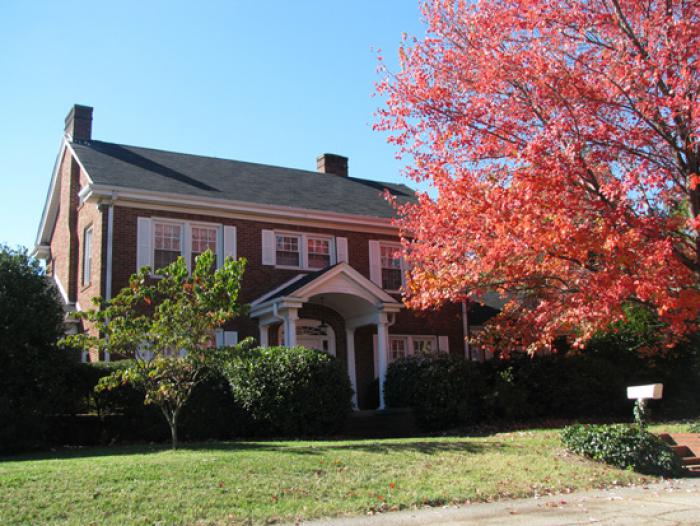
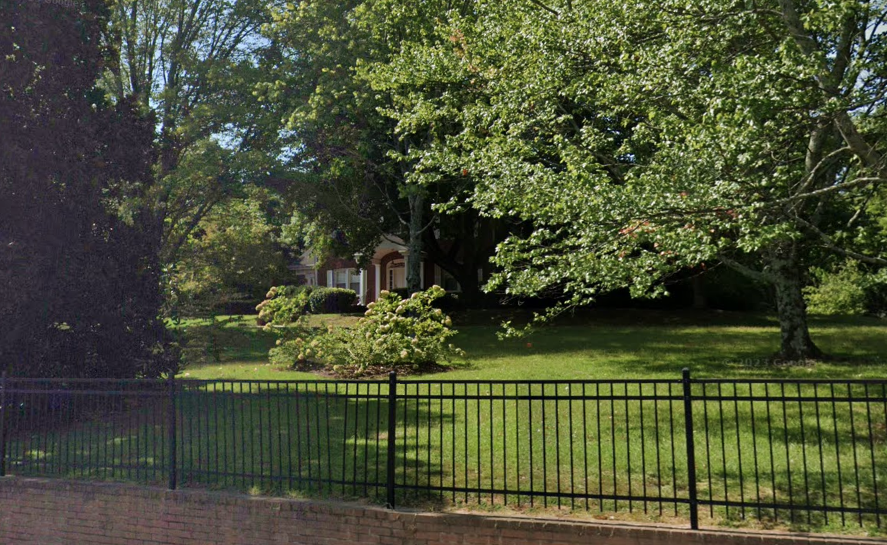
Perched atop a gentle hill at 1001 Locust Hill Road, the two-story brick Colonial Revival mansion was erected in 1939, a design attributed to local architect Thomas Keating. Its dignified symmetry, traditional proportions, and elevated position reflect both aesthetic ambition and the social standing of the Taylor family in mid‑20th‑century Upstate South Carolina.
The house occupies the core of what was once a sprawling 900-acre farm, complete with orchards, cotton fields, and cattle pastures. The Taylor family pioneered peach agriculture in the region—James Pashcal Taylor, Earle’s father, planted the first 500 peach trees around 1898, and by 1917 Earle himself had begun shipping peaches north by rail. At its peak, the estate supported 30,000 peach and apple trees, alongside cattle and cotton, cementing its place in the region’s agricultural evolution.
Just across a highway stands an unusually well-preserved peach packing shed circa 1925, with an adjoining office building from around 1935. The shed is a striking two-story open‑wood frame structure with one-story shed wings, wood siding, a metal roof, and block foundation. Picked fruit was brought here for sorting and packing—this facility remains a rare intact example of early 20th‑century peach processing architecture in the upstate
A contributing frame garage built in 1949 sits just behind the house, underscoring the estate’s continued growth and modernization through mid-century.
The property was recognized for its agricultural and architectural significance with its inclusion on the National Register of Historic Places in June 2012. It serves as both a testament to the rise of commercial peach farming in South Carolina and a refined snapshot of Colonial Revival architecture applied in a rural context.
In essence, the Earle R. Taylor House and its adjacent packing shed stand as living chapters of Greer’s peach-growing heritage. From its stately brick residence on a rolling hill to its utilitarian packing shed below, the property captures the intersection of innovation, architecture, and agrarian enterprise that shaped early-20th-century Upstate South Carolina.