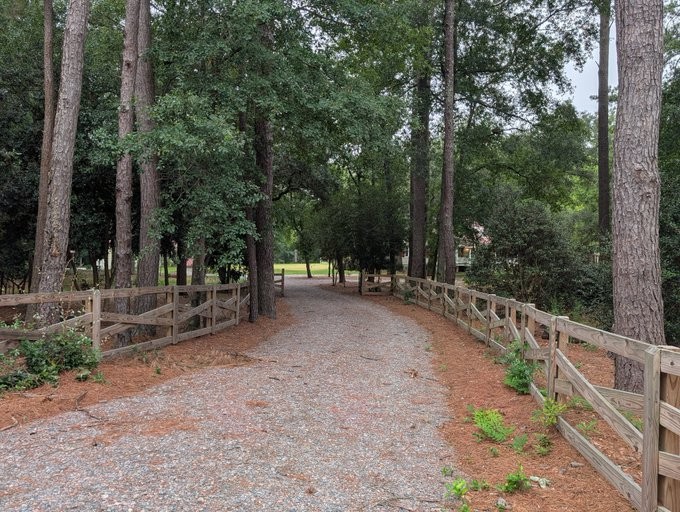
Dawson -Vanderhorst house ca 1785
Constructed around 1785, the Dawson–Vanderhorst House is one of the oldest surviving residences in Aiken County and a remarkable example of late eighteenth-century South Carolina domestic architecture. Originally built in the years following the American Revolution, the house predates the founding of the City of Aiken by nearly fifty years and represents the earliest phase of European settlement and plantation development in the region. Through its long history, the residence has remained an important link to South Carolina’s colonial and early national periods, reflecting the craftsmanship, traditions, and rural lifestyle of the late eighteenth century.
The house is an excellent example of the Carolina Plantation form, incorporating elements of Georgian architecture adapted to the climate and materials of the South Carolina backcountry. Constructed of heavy timber framing with weatherboard siding, the dwelling features balanced proportions, a central hall floor plan, steeply pitched roof, and large end chimneys that were characteristic of substantial plantation homes of the era. Expansive porches and generous window openings were later incorporated to improve ventilation and provide comfortable outdoor living spaces, while interior woodwork and traditional joinery demonstrate the exceptional craftsmanship of early builders. Although the residence has undergone careful alterations over time, it retains the architectural integrity and historic character that define its eighteenth-century origins.
The Dawson–Vanderhorst House is associated with two prominent South Carolina families whose stewardship of the property spanned generations. As the center of a working plantation, the house witnessed the evolution of the surrounding countryside from frontier settlement to an established agricultural landscape supported by the labor of enslaved African Americans. It endured the political, economic, and social changes brought about by the Revolutionary era, the rise of plantation agriculture, the Civil War, and Reconstruction, preserving a tangible record of more than two centuries of South Carolina history.
Today, the Dawson–Vanderhorst House stands as one of Aiken County’s most significant historic residences. Its exceptional age, architectural distinction, and historical associations make it an invaluable cultural resource that illustrates the county’s development long before Aiken emerged as a celebrated Winter Colony and equestrian center. Carefully preserved, the house continues to embody the enduring legacy of early South Carolina architecture and serves as an important reminder of the region’s complex and multifaceted past.