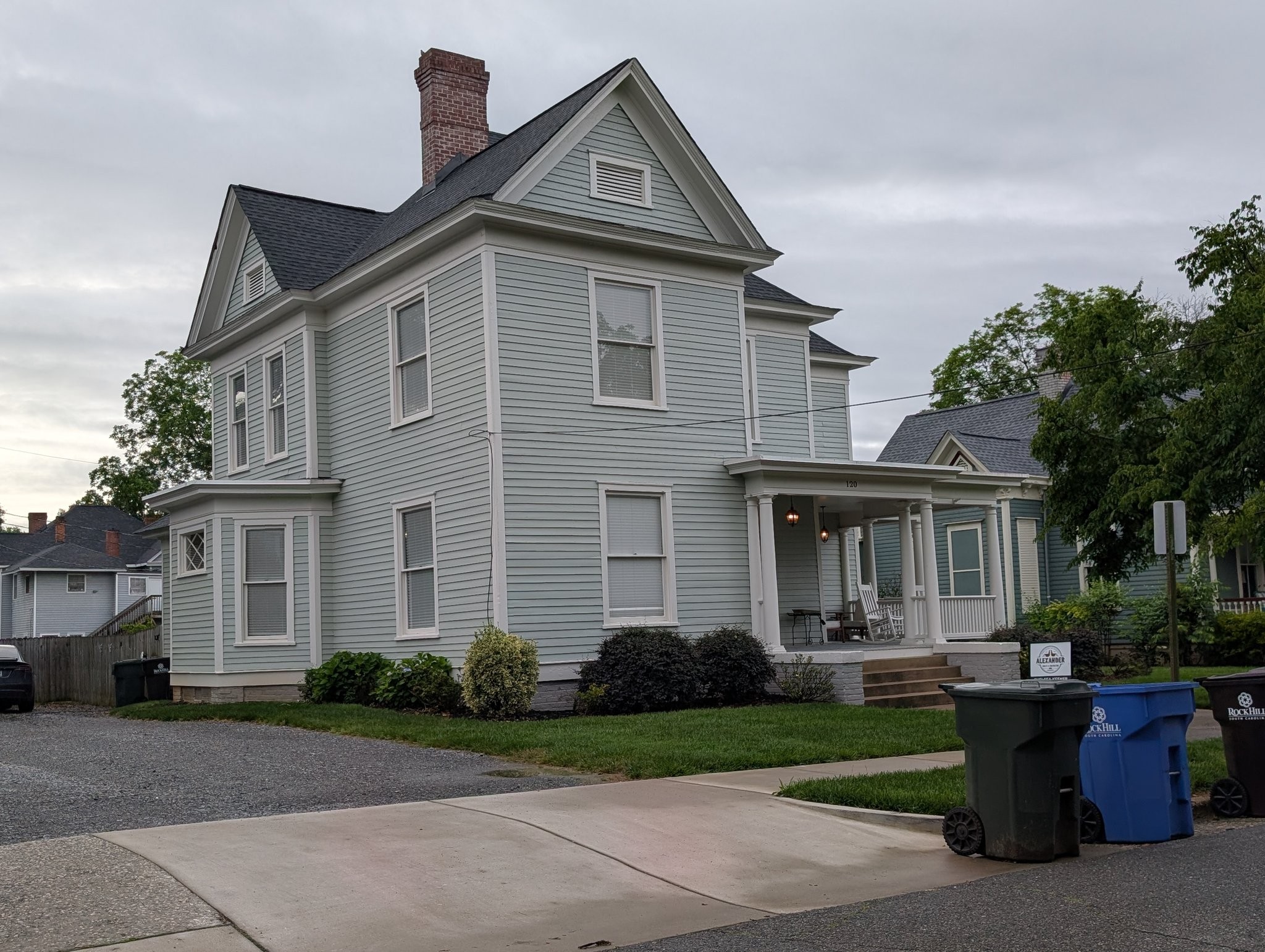
Constructed around 1910, the Dacus House reflects the prosperity and residential expansion that characterized Rock Hill during the first decades of the twentieth century. Built during a period when the city was experiencing rapid growth fueled by textile manufacturing, railroad commerce, and expanding business opportunities, the residence stands as a representative example of the substantial homes erected by members of Rock Hill’s emerging professional and business class. The house is associated with the Dacus family, a name long connected to York County history and community development, and serves as a reminder of the families whose contributions helped shape the city’s growth and identity.
Architecturally, the Dacus House embodies the transitional design trends popular during the early twentieth century. Residences of this period often combined the decorative qualities of the late Victorian era with the more orderly forms and classical details associated with the Colonial Revival and Classical Revival styles. Broad porches, symmetrical or semi-symmetrical facades, prominent rooflines, and carefully crafted woodwork were common features that conveyed both elegance and permanence. The Dacus House exemplifies the quality craftsmanship and attention to detail that distinguished many of Rock Hill’s finest residences during this era of prosperity.
The construction of the Dacus House coincided with one of the most transformative periods in Rock Hill’s history. New industries, improved transportation networks, and a growing population created demand for attractive residential neighborhoods where civic leaders, merchants, and professionals established homes that reflected their success and commitment to the community. Houses such as the Dacus residence contributed to the development of the city’s historic streetscapes and helped define the character of Rock Hill’s most desirable residential districts.
Today, the Dacus House remains an important part of Rock Hill’s architectural and cultural heritage. Through its association with an established local family and its representation of early twentieth-century residential design, the property provides valuable insight into the social history, economic development, and architectural evolution of the city. As a surviving example of the homes that accompanied Rock Hill’s rise as a regional center of commerce and industry, the Dacus House continues to contribute to the understanding and appreciation of the community’s historic legacy.