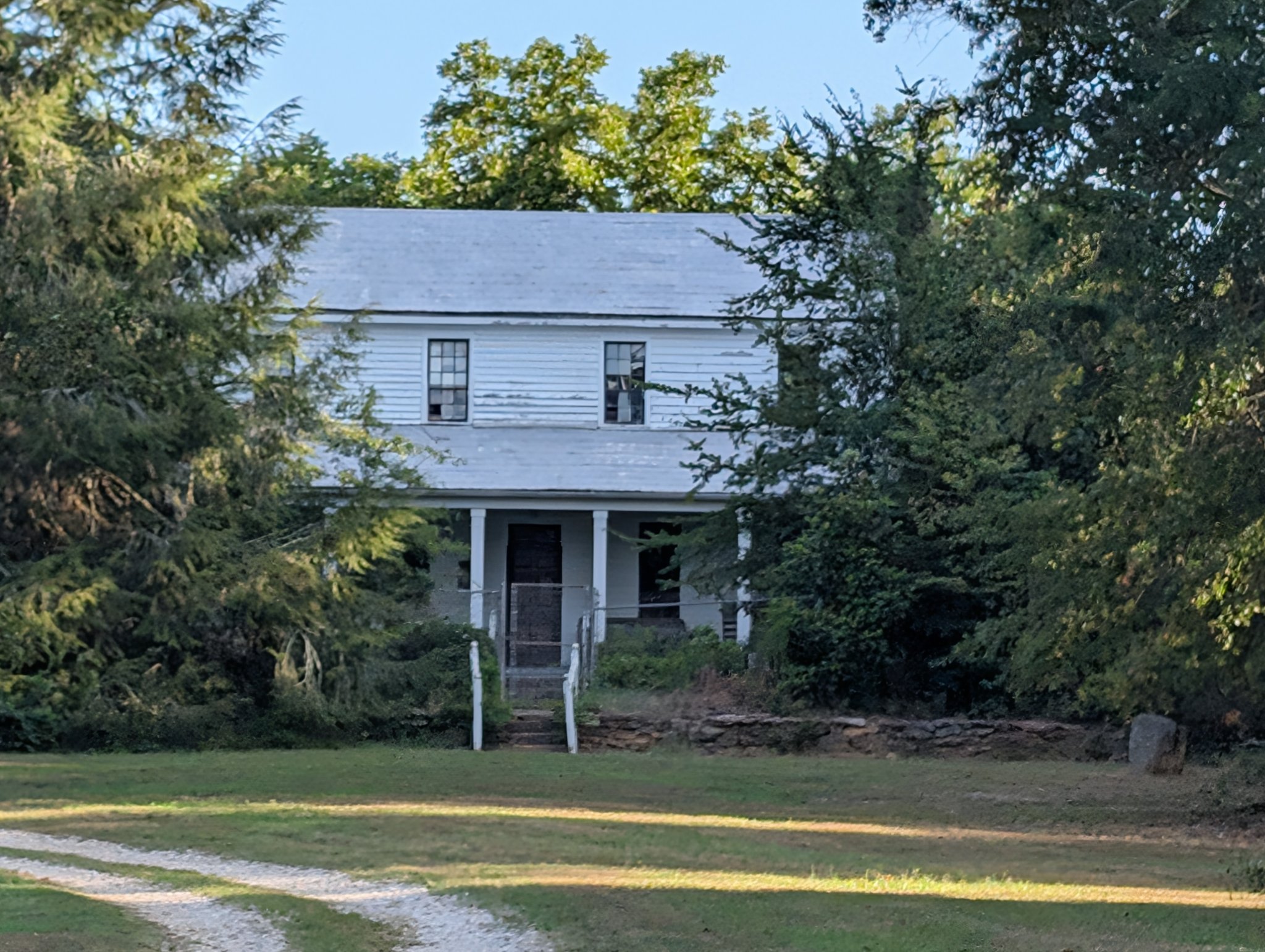
Cureton-Huff House
Built around 1820 for prosperous farmer John Moon Cureton, this two-story frame farmhouse exemplifies early 19th-century Upcountry architecture and high craftsmanship in rich vernacular tradition. The home was originally configured in a hall‑and‑parlor layout but was later reoriented into a more formal central‑hall plan as tastes evolved—both typical patterns for the era.
Despite adaptations over time—including retrofitted bathrooms, a modern kitchen, dining area, and office—the Cureton‑Huff House retains much of its Federal‑period detailing. Notable interior features include mantels and cornice work inspired by Asher Benjamin’s architectural pattern books, sunburst motifs, reeded lumber, and delicate chevron ornamentation—evidence of aesthetic awareness even in rural settings.
The property comprises a cluster of well-preserved outbuildings such as a carriage house, blacksmith shop, barns, animal pens, and corn cribs—most dating from the early twentieth century—along with a family cemetery bordered by a low stone wall, reinforcing the site’s continuity and agricultural heritage .
Listed on the National Register of Historic Places on January 13, 1983, the Cureton‑Huff House is valued for its architectural significance and cultural insight into the rural life of an upper-middle-income farming family in the Antebellum Piedmont South.
In essence, the Cureton-Huff House weaves together architectural purpose and rural identity—its robust timber framing, off-the-grid charm, and subtle decorative flourishes echo a bygone era when family, farming, and regional craftsmanship collided in enduring form. Let me know if you’d like more on its agricultural operation, ownership history, or comparisons to other Piedmont vernacular houses!