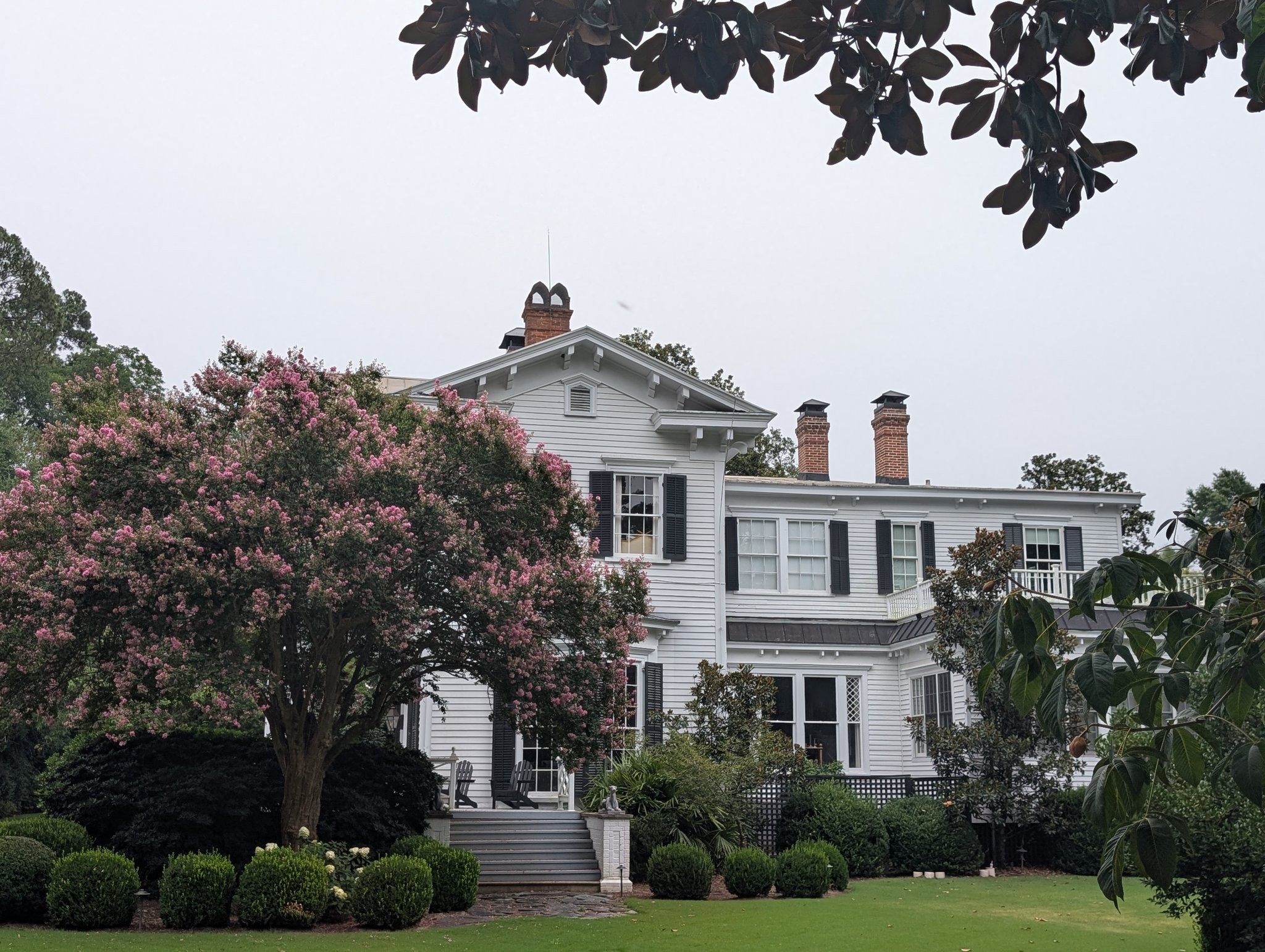
Constructed around 1815, the Crossways Plantation House is one of the oldest surviving plantation residences in Aiken County and a significant example of early nineteenth-century plantation architecture in South Carolina’s Sandhills region. Built decades before the founding of the City of Aiken in 1835, the house reflects the agricultural development of the area when large plantations devoted to cotton cultivation dominated the landscape. Its long history provides a tangible connection to the region’s antebellum economy and the evolution of rural life in western South Carolina.
The plantation house is a substantial frame dwelling that embodies the restrained elegance and practical design associated with early Southern domestic architecture. Influenced by the Federal style, the residence is characterized by its balanced proportions, symmetrical façade, and refined yet understated detailing. Broad porches, generous central halls, and large windows were incorporated to improve ventilation and comfort in the warm South Carolina climate, while the craftsmanship evident in its heavy timber framing, woodwork, and traditional construction techniques speaks to the quality of early nineteenth-century building practices. Over time, the house experienced alterations that reflected changing tastes and functional needs, yet it retained the architectural character and historic integrity that define its early origins.
As the centerpiece of Crossways Plantation, the residence served as the operational and social heart of a large agricultural enterprise sustained by the labor of enslaved African Americans prior to the Civil War. The property witnessed the dramatic transformation of the surrounding region through the antebellum period, the Civil War, Reconstruction, and the emergence of nearby Aiken as a nationally recognized winter resort. Unlike many plantation houses that were lost to time, Crossways survived these transitions, preserving an important record of South Carolina’s rural heritage and the complex history of plantation life.
Today, the Crossways Plantation House remains a rare and valuable survivor of Aiken County’s early architectural and agricultural history. Its age, architectural significance, and historical associations make it an important cultural resource that illustrates the development of the region long before Aiken became known for its Winter Colony and equestrian traditions. As one of the county’s enduring historic landmarks, Crossways continues to represent more than two centuries of South Carolina history through its architecture, craftsmanship, and remarkable preservation.