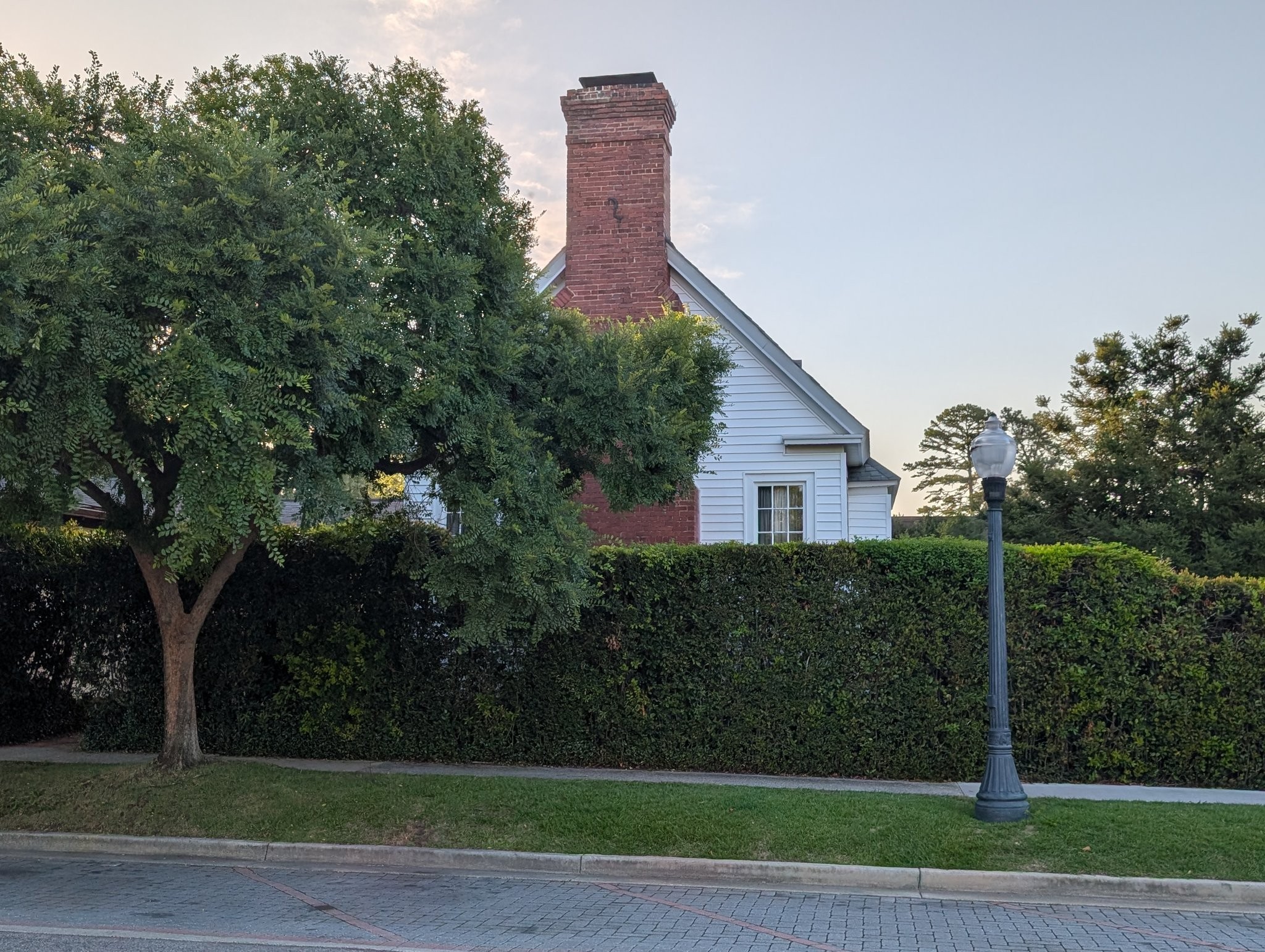
Court Tennis Building ca 1902
Constructed circa 1902, the Court Tennis Building is one of Aiken’s most distinctive recreational structures and an important reminder of the sporting traditions that flourished during the city’s celebrated Winter Colony era. Built to accommodate the leisure pursuits of wealthy northern residents who wintered in Aiken, the building reflects the prominence of court tennis—also known as real tennis, the historic predecessor to modern lawn tennis—among members of America’s social elite during the late nineteenth and early twentieth centuries.
Architecturally, the structure was designed with function as its primary consideration, featuring a large enclosed playing court surrounded by substantial masonry walls and high interior spaces necessary for the unique demands of the game. The simple yet dignified design reflects the utilitarian elegance characteristic of many sporting buildings associated with the Winter Colony, where equestrian facilities, polo grounds, golf courses, and tennis courts formed an integral part of daily social life. The building’s materials, massing, and restrained detailing allowed it to blend harmoniously with the surrounding estates and recreational facilities that defined Aiken’s winter resort landscape.
The Court Tennis Building occupied a significant role within the social fabric of the Winter Colony, serving as both an athletic venue and a gathering place for residents and visitors who participated in Aiken’s active sporting culture. Alongside polo matches, fox hunts, steeplechases, and horse shows, court tennis contributed to the reputation of Aiken as one of the nation’s premier winter playgrounds for affluent sportsmen and society families.
Today, the Court Tennis Building remains a rare survivor from this remarkable period in Aiken’s history and stands as a tangible link to the recreational traditions that helped shape the city’s identity. Its continued presence contributes to the historic character of the Winter Colony district and preserves an important chapter in the architectural and sporting heritage of Aiken, South Carolina.